
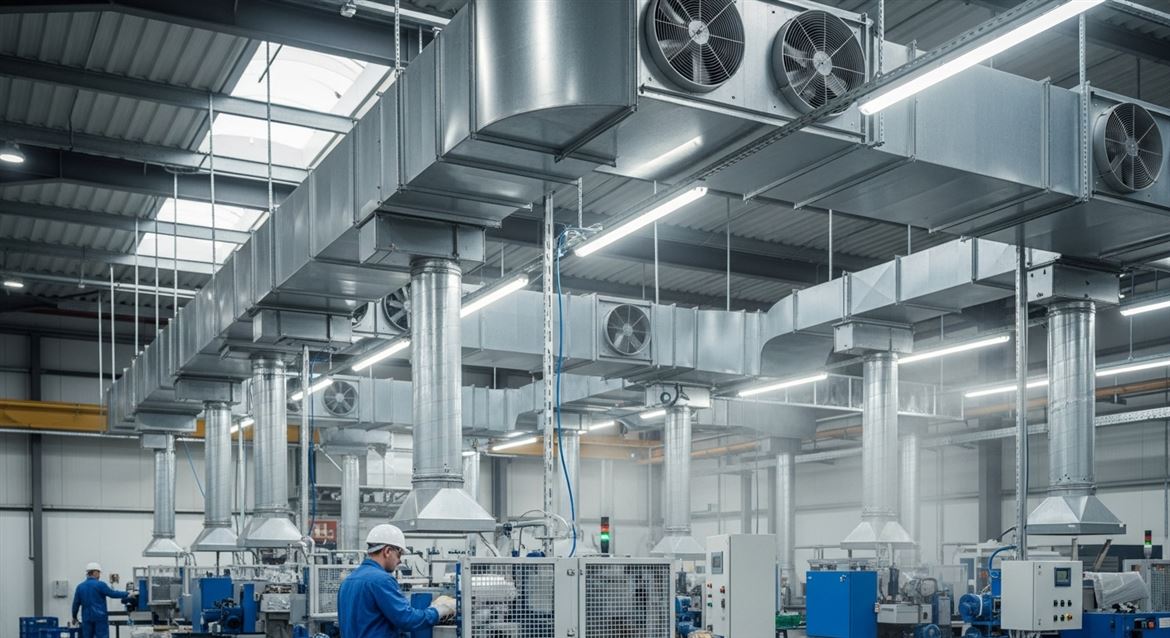

An industrial ventilation system is a powerful ventilation solution designed to keep air quality under control in production facilities, factories, workshops and industrial spaces. These systems effectively exhaust polluted air, dust, gases or chemical vapors from the environment, protecting employee health and increasing the efficiency of the production process. They also balance factors such as temperature, humidity and air circulation to create a safe working environment.
Ventilation systems used in industrial environments not only provide comfort, but are also essential for meeting occupational safety standards. Especially in facilities with intensive production, controlling harmful particles in the air extends machine life and provides energy savings. For this reason, industrial ventilation plays an important role in the sustainable production policies of businesses.
Modern ventilation systems are equipped with advanced filtration and automation technologies. In this way, air quality is continuously measured, the system is automatically activated when needed, and airflow is optimized according to ambient conditions. This technology-oriented approach both increases energy efficiency and reduces maintenance costs.
What Are Industrial Ventilation Systems Used For?
Industrial ventilation systems ensure clean airflow in industrial areas, protecting employee health while increasing production efficiency. In environments where high levels of heat, dust, smoke and chemical gases accumulate, these systems continuously renew the air and improve working conditions. In this way, both machine performance is preserved and workplace accidents are reduced.
Main benefits provided by industrial ventilation systems:
- Remove harmful gases and particles from the environment.
- Maintain temperature balance and increase employee comfort.
- Reduce the risk of fire and explosion in production areas.
- Extend the service life of machinery and equipment.
- Support energy efficiency and reduce operating costs.
- Maintain control over air quality and ensure compliance with legal standards.
These systems do more than simply renew the air; they stand out as an investment that directly affects the quality of the production process. A properly designed ventilation system supports the sustainability of the business while also increasing employee satisfaction. Offering tailored solutions for every scale, from factories to workshops, makes industrial ventilation an indispensable element of modern facilities.
Where Are Industrial Ventilation Systems Used?
Industrial ventilation systems are used in all industrial areas where production intensity is high and air quality must be continuously controlled. Although each sector has different working conditions, the aim is the same: to create a safe, efficient and healthy working environment. By continuously renewing the ambient air, these systems both ensure employee comfort and help the production process continue without interruption.
Common application areas of industrial ventilation:
- Factories and production plants: Provide air circulation in environments with high levels of dust, smoke, vapor and chemical gases.
- Workshops and metalworking areas: Ensure the extraction of harmful gases generated by processes such as welding, cutting or painting.
- Food production facilities: Maintain hygiene conditions and optimize humidity and odor control.
- Automotive and chemical industries: Help remove chemical vapors and exhaust gases from the environment.
- Warehouses and logistics centers: Maintain temperature balance in large-volume spaces and preserve material quality without deterioration.
- Textile factories: Reduce the accumulation of fibers, yarn and dust, improving production quality.
A properly planned ventilation system is specially designed according to the needs of each sector. Selecting a system suitable for the intended application increases energy efficiency and strengthens the long-term sustainability of the business. Especially in high-production facilities, effective ventilation is critically important for both employee health and production safety.
Types and Features of Industrial Ventilation Systems
Industrial ventilation systems consist of various models designed for different needs and working conditions. The purpose of each system is to provide air circulation in a way that suits the size of the space, the desired air quality and the production process. These systems are generally classified as roof-mounted, duct-type, wall-mounted and helicopter-fan models. Each offers optimum performance in different environments and, when correctly selected, both increases energy efficiency and reduces maintenance costs.
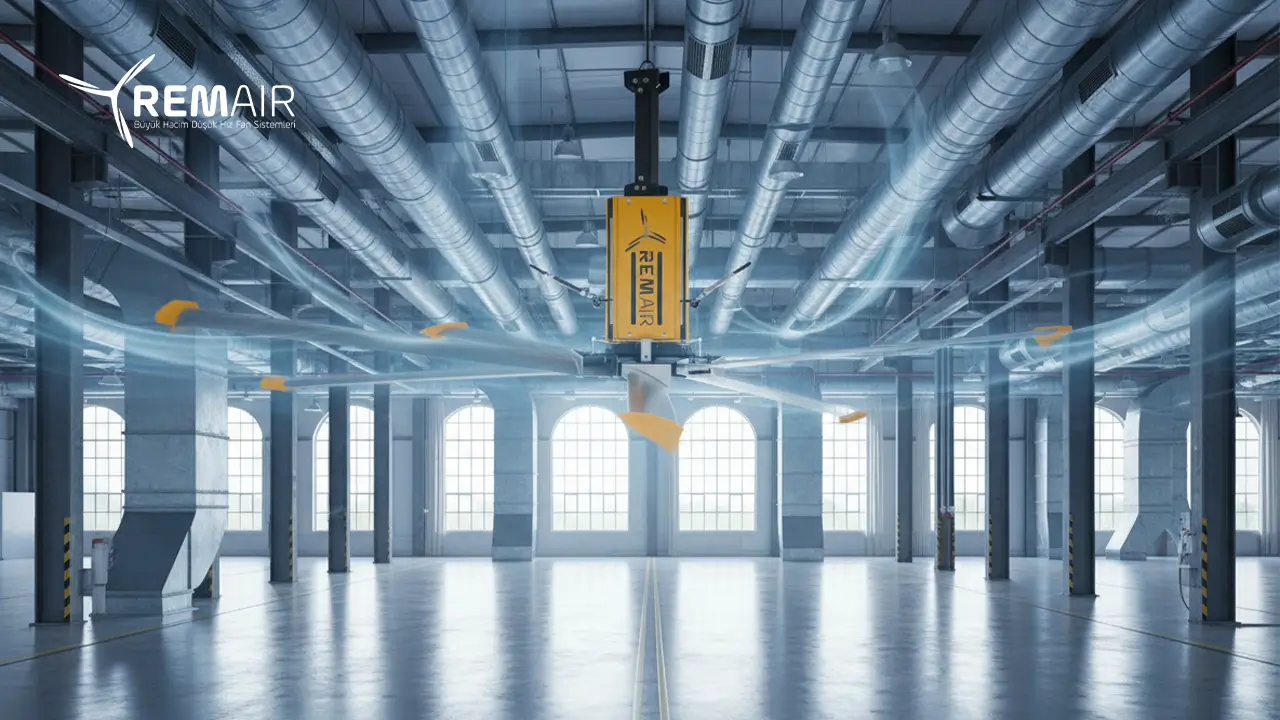
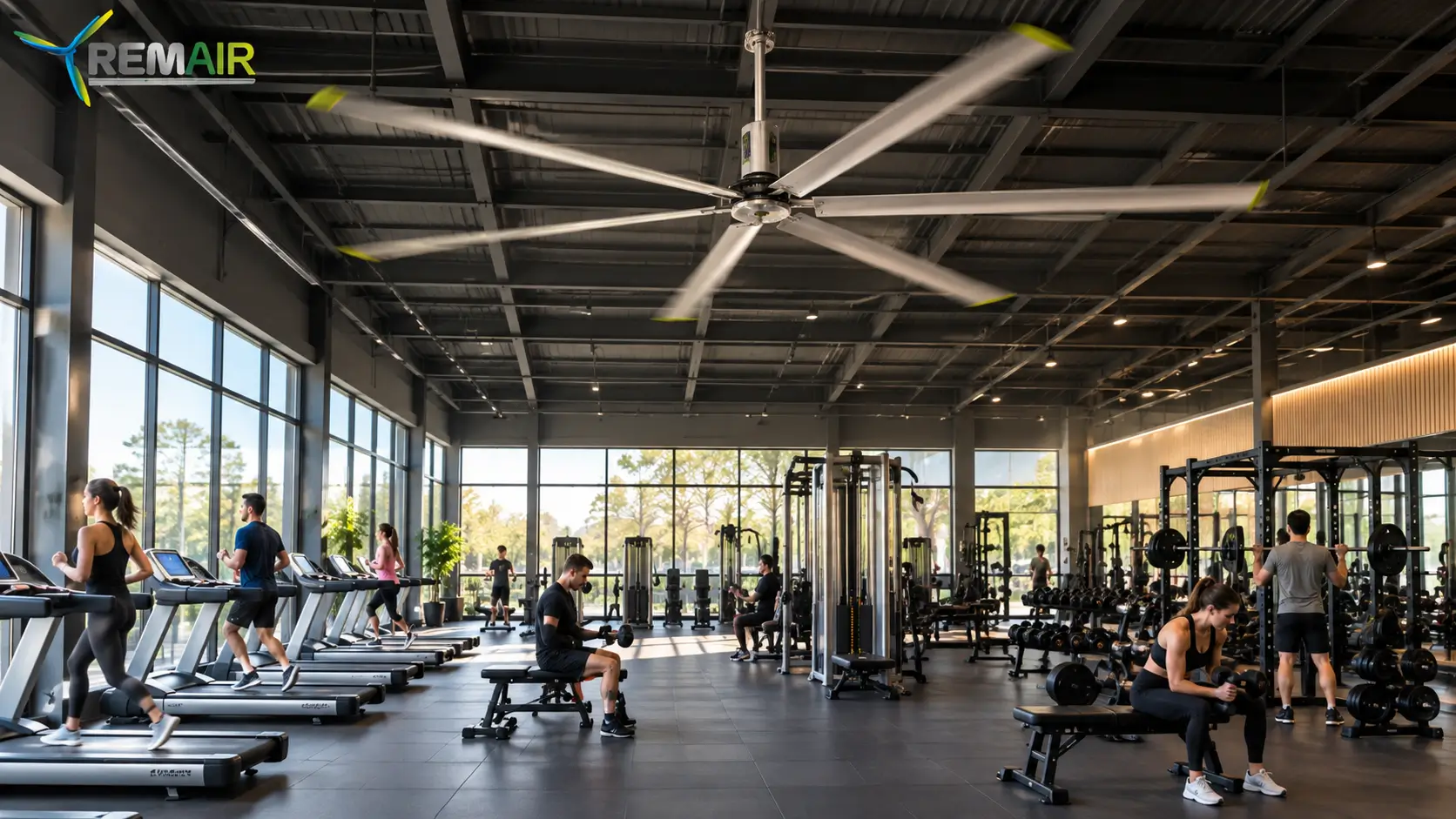
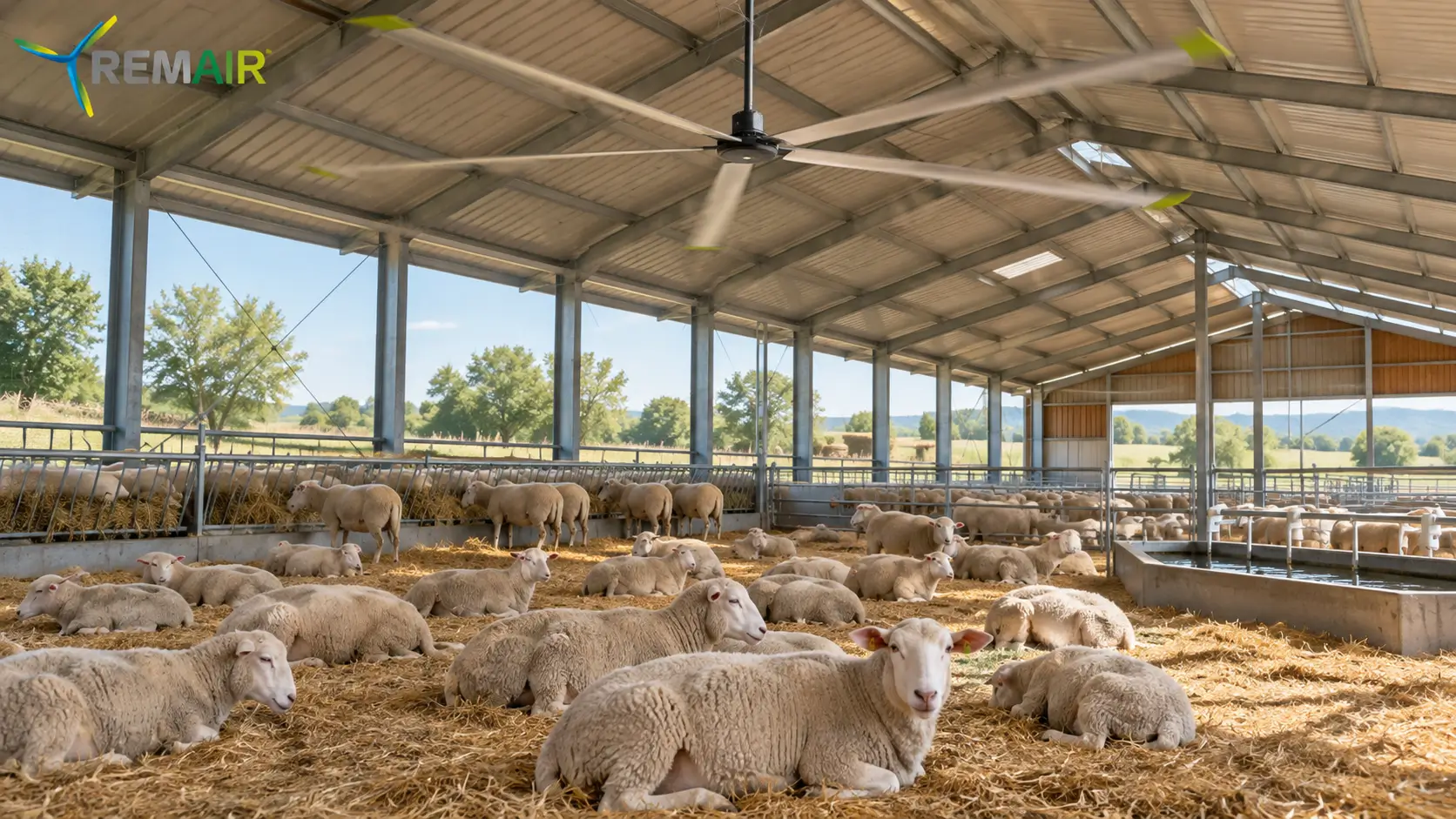
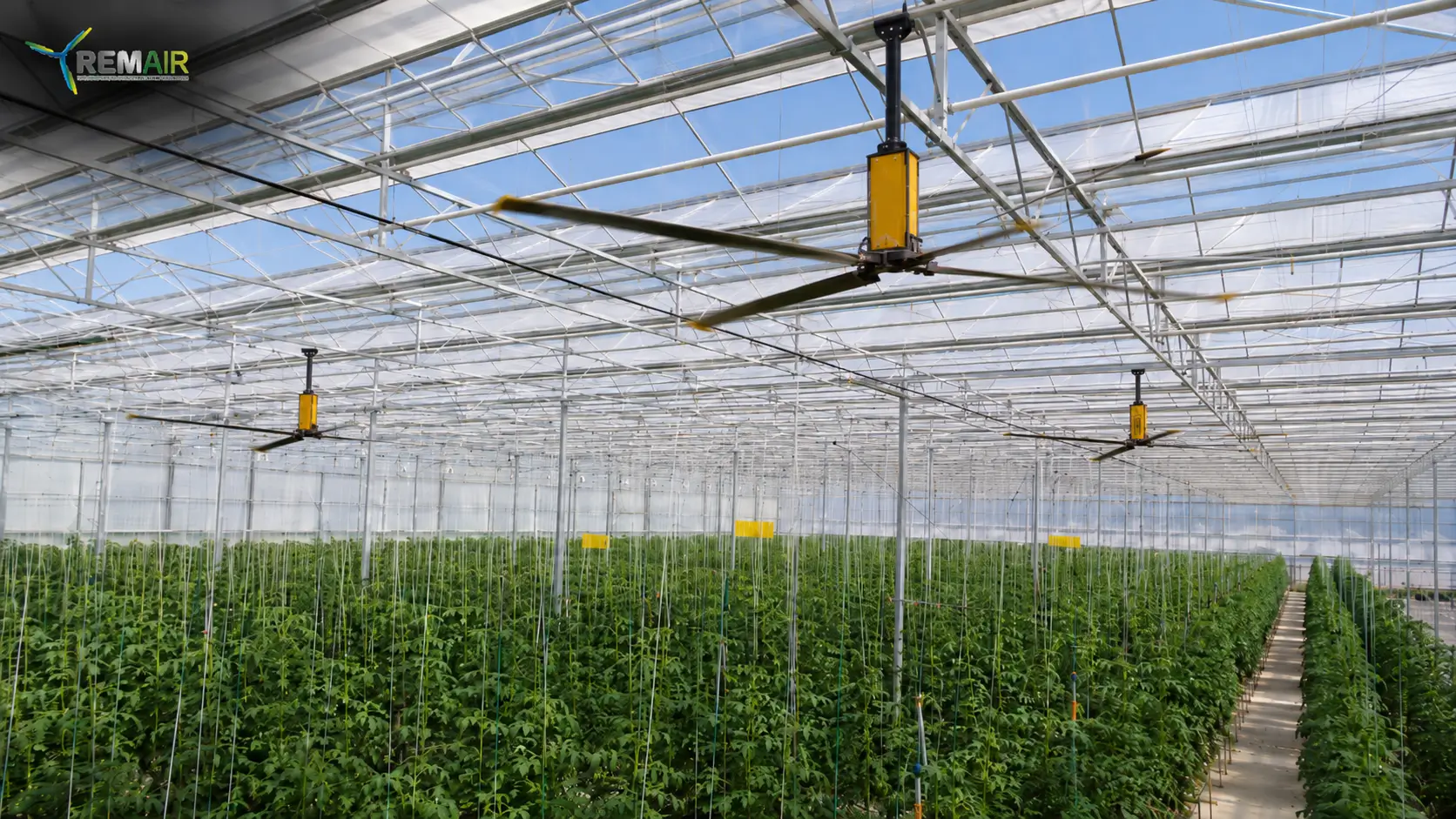
Helicopter fans are among the models with the strongest air extraction capacity in industrial ventilation systems. They are typically preferred in large-volume spaces and on warehouse and factory roofs. With their high-speed impellers, these fans exhaust large amounts of air in a short time. By reducing heat build-up, they refresh the indoor air and maintain humidity balance. They generate low noise levels and offer highly efficient energy consumption. In addition, their stainless construction ensures a long service life.
In industrial ventilation systems, the correct model should be selected according to the production conditions of the facility. In addition to helicopter fans, duct-type systems provide local ventilation, while central systems keep air quality at a uniform level throughout the entire area. Planning these types together both optimizes airflow and reduces the energy costs of the business. With the use of automatic control and filtration technologies in modern systems, employee health is protected and production areas are made safer.
Key Considerations for an Efficient Ventilation System
Installing an efficient ventilation system is not only about choosing the right equipment; it is also directly related to the design of the system and its regular maintenance. Balanced circulation of air affects both employee health and production efficiency. Therefore, during the planning stage, the size of the area, production intensity and required air-change rate should be analysed in detail.
The structural characteristics of the area where the ventilation system will be installed must be correctly evaluated, and elements that block airflow should be eliminated. Incorrect placement reduces system performance and causes energy loss. Especially in industrial environments, strategically positioning air inlet and outlet points ensures maximum efficiency.
Filter selection and cleaning are among the most important factors for efficient operation. Dirty or clogged filters restrict airflow, increase the system’s energy consumption and reduce indoor air quality. Regular filter checks extend the life of the system while keeping performance stable.
Choosing high-efficiency fans and motors provides advantages both environmentally and economically. These components consume less energy, operate more quietly and reduce operating costs in the long term. In addition, modern ventilation solutions equipped with automatic control systems adjust themselves according to ambient conditions, providing further savings.
Periodic maintenance and performance measurements guarantee the sustainability of the system. With professional inspections, potential malfunctions are detected early and the production process is not interrupted. Ventilation systems that receive regular maintenance both maintain energy balance and create a safe working environment.
Choosing the Right Ventilation System
Choosing the right ventilation system is a decisive factor in industrial facilities for both employee health and production quality. Since every business has different needs, system selection should not follow a standard method but be planned according to the characteristics of the area. Factors such as type of production, ambient temperature, air-change rate and the chemicals used must be taken into account when selecting the appropriate system. This approach both increases energy efficiency and reduces maintenance costs in the long term.
The capacity of the ventilation system must be compatible with the size of the space and the production intensity. A system that is too small cannot provide sufficient air circulation, while an oversized system leads to unnecessary energy consumption. Therefore, a professional on-site assessment should be carried out and the ventilation requirement accurately calculated. In addition, technical details such as air direction, outlet locations and air volume have a direct impact on system performance.
Systems built with quality materials and energy-saving technologies provide a long-lasting and sustainable solution. Automatic control mechanisms adjust the operating speed of the system according to air quality, providing additional savings. The right ventilation system not only refreshes the production area but also strengthens the company’s environmental responsibility. This informed choice lays the foundation for a working environment that is both safe and economical.

Leave a Comment