


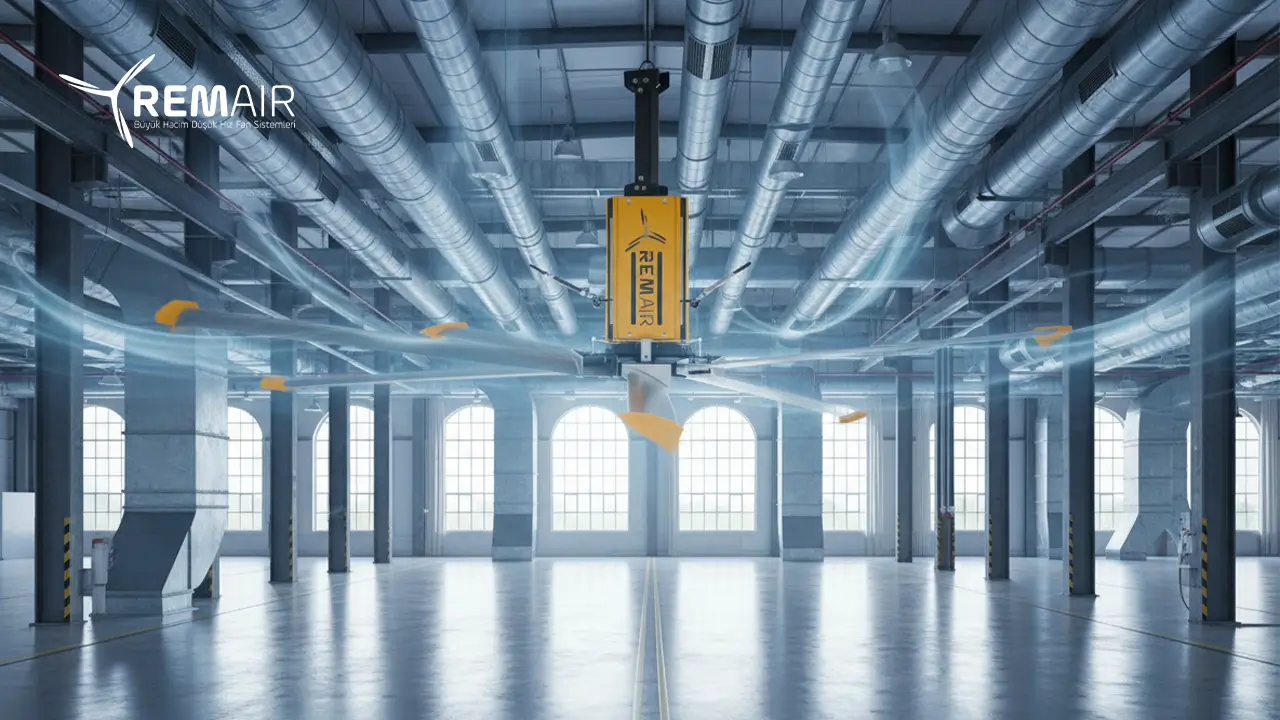
These systems, which ensure that the fumes generated during welding are kept under control, clean the air in the working area and directly protect the operator’s health. Thanks to their fan-assisted design, they quickly collect the fumes, direct them to the filters and prevent them from accumulating in the environment. In this way, both a safe and efficient production environment is created.
As welding operations increase in industrial plants, the risk of fumes spreading within enclosed spaces also rises. Since these systems operate with industrial fans that offer high extraction power, they provide effective air circulation even in large-scale areas. In environments where multiple welding points are active at the same time, they renew the air without any loss of performance.
For businesses that want to offer a working environment in line with current safety standards, these solutions are indispensable. After installation, the need for maintenance remains at a minimum level and they provide long-lasting use. In this way, both employee comfort increases and air quality throughout the facility is consistently maintained.
Why Is Welding Fume Dangerous?
The fumes generated during welding contain metal vapors and chemical particles, and when inhaled they tend to accumulate in the body. These substances can cause short-term effects such as headache, eye irritation and shortness of breath, and in the long term may lead to far more serious health risks. This environment, to which workers are constantly exposed, highlights the need for clean air, which is one of the fundamental elements of safety in production areas.
In enclosed spaces where fumes become dense, invisible particles remain suspended in the air for a long time and are inhaled without being noticed. This reduces lung capacity, strains the immune system and negatively affects employee performance. For this reason, every welding operation carried out without an effective ventilation infrastructure weakens both worker health and indoor air quality within the facility.
Considering the intensive welding activities carried out in industrial plants, the lack of control over fumes poses a serious risk for production continuity. Constant renewal of the ambient air allows employees to focus on their work efficiently and helps maintain safety standards. Therefore, capturing fumes at the source and removing them from the environment is one of the basic requirements of a sustainable working environment.
What Types of Fume Extraction Solutions Are Used in Industrial Areas?
In industrial production areas, powerful and targeted solutions are preferred to remove welding fumes quickly. Since each facility has a different workflow and volume, the systems used vary according to these needs. When the right equipment is selected, both air quality is protected and the workload of employees is reduced. Thus, the production line gains a more stable and safer structure.
The main fume extraction solutions used
- Fan-assisted local extraction arms
- Fixed fume collection panels
- Mobile fume extraction units
- High-capacity central ventilation systems
- Fume purification devices with filtration capability
- Ducted air exhaust lines
These solutions create controlled air flow in welding lines that generate dense fumes and keep the environment clean. Choosing a system appropriate to the scale of the operation increases efficiency and contributes to the sustainable maintenance of safety standards. For this reason, each facility should determine its ideal extraction infrastructure by taking into account its working intensity and space usage.
Advantages of Fan-Assisted Welding Fume Extraction Systems
Fan-assisted fume extraction systems immediately capture the dense air generated at the welding point and keep the environment clean. This rapid response capability significantly reduces workers’ exposure to harmful particles and offers a strong advantage in terms of occupational safety.
Thanks to their high vacuum power, they create a stable air flow even in large areas. Thus, even when different welding stations in large facilities are operating simultaneously, performance does not decrease. The production flow continues without interruption.
Another advantage of these systems is their high filtration efficiency. By effectively filtering particles and gases, they create a healthier working environment. This provides comfort in the short term and supports worker health in the long term.
The fan-assisted structure also offers advantages for businesses in terms of energy efficiency. With controlled air extraction, unnecessary power consumption is prevented and operating costs become more predictable. This provides significant savings, especially in large-scale facilities.
Ease of installation and use makes these systems a practical solution in industrial environments. The simplicity of routine maintenance steps offers long-term uninterrupted operation and raises the facility’s ventilation infrastructure to a more sustainable level.
How to Choose the Right System in Large-Scale Production Facilities?
In large production areas, determining the right ventilation infrastructure starts with analyzing the working intensity and distribution of welding points. Physical factors such as the volume of the space, ceiling height and direction of air flow are evaluated to clarify the required extraction power. This assessment ensures that the system operates efficiently while keeping energy consumption under control. As the size of the facility increases, central solutions, powerful fan configurations and wide duct networks become more critical.
The sustainability of the system is also an important part of the selection process. Filter capacity, ease of maintenance and long-term performance stability directly affect operating costs. Choosing the right technology not only improves fume extraction but also increases employee comfort and elevates safety standards. Therefore, every facility should opt for a professional solution that matches its own production pace and spatial layout.
Points to Consider in Site Analysis Before Installation
The site assessment carried out before installation directly affects the performance of the selected system. Many details that may seem simple at first glance are decisive in areas ranging from the direction of air flow to the placement of equipment. With proper analysis, both the internal workflow of the facility is preserved and the long-term efficiency of the ventilation infrastructure to be installed is secured.
Key steps to consider
- Accurately measuring the volume of the working area
- Determining the location and density of welding points
- Evaluating ceiling height and air circulation
- Checking the compatibility of the electrical infrastructure with the equipment
- Selecting the most suitable positions for air exhaust points
- Reviewing noise level expectations
- Analyzing environmental conditions that affect filter capacity
This preparation process ensures that the installed system operates stably without wasting energy. When employee movement areas, machine layout and daily operational flow are also taken into account, a much more sustainable ventilation structure is created. Thus, a safe and comfortable working environment is achieved for both the business and the users.
Frequently Asked Questions About Welding Fume Ventilation Systems
1. What exactly does a welding fume ventilation system do?
It instantly captures the harmful fumes generated during welding, filters them and removes them from the environment. In this way, it protects worker health and keeps the air quality of the working area in balance.
2. Can these systems be used with every welding method?
In general, they are effective for all types of welding. Regardless of whether it is MIG, TIG or arc welding, they provide strong performance in any process that generates fumes.
3. Are fan-assisted ventilation systems sufficient in large production areas?
Yes, they are sufficient, because models with high vacuum power provide stable air flow even in large-volume facilities. When the right capacity is selected, efficiency is easily maintained.
4. Is it necessary to make additional adjustments in the area during installation?
In most areas, installation is completed with minor adjustments. However, depending on the location of the welding points, duct routes or equipment placement may be optimized.
5. Do these systems operate noisily?
It depends on the model, but industrial fans are now designed to be much quieter. When the right product is selected, they operate at a noise level that is not disturbing.
6. How often do the filters need to be cleaned or replaced?
It depends on the intensity of use. Facilities with a high working tempo require more frequent maintenance. However, models with long filter life provide an advantage for the business.
7. Are mobile fume extraction units as effective as fixed systems?
They can be highly effective under the right conditions. They offer flexibility and good performance especially on production lines where working points change frequently.
8. Is energy consumption high?
Modern fan-assisted systems are designed with a focus on energy efficiency. When the right capacity is selected, unnecessary power consumption is prevented.
9. Do these systems really affect employees’ daily performance?
Yes, a clean air environment provides easier breathing, reduces feelings of fatigue and makes it easier for employees to concentrate on their work. This has a positive impact on production quality.
10. How can I determine the most suitable system for an industrial facility?
By carrying out a site analysis. The volume, density of welding points and air circulation are evaluated. When a fan configuration and filtration technology compatible with this data are selected, the ideal result is achieved.

Leave a Comment