
Ventilation in beef cattle barns is one of the key factors that directly determines animal health, feed conversion performance, and farm profitability. Animals housed densely in an enclosed area continuously release moisture, heat, ammonia, and carbon dioxide throughout the day. When these values are not kept under control, the barn’s indoor climate can quickly become difficult for animals to tolerate.
A properly designed ventilation system exhausts polluted and humid air from the barn while bringing in clean, balanced, and cool air. In this article, we examine one by one how ventilation in beef cattle barns should be arranged, which values should be monitored, and which systems deliver more efficient results.
Direct Effects of Ventilation in Beef Cattle Barns
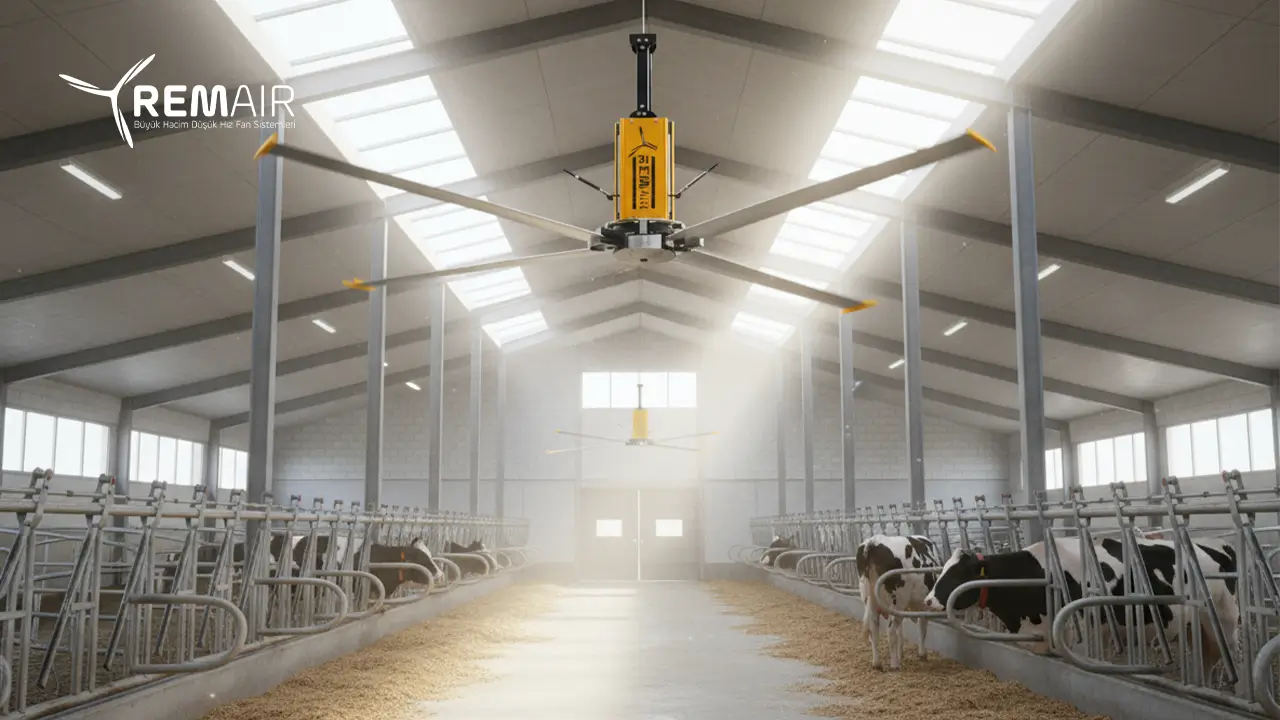
In a beef cattle operation, an animal’s weight gain does not depend on feed alone. The temperature and air quality of the environment determine how efficiently the animal can utilize the feed it consumes. In a hot and poorly ventilated barn, the animal becomes stressed, reduces feed intake, and reaches the target weight much later.
Ventilation disperses the heat load inside the barn and creates an environment in which the animal can regulate its body temperature more comfortably. Heat stress, especially in summer, is one of the most important factors causing serious reductions in milk and meat productivity. Keeping the air in constant motion relieves oppressive heat around the animal and makes breathing easier.
In addition, airflow helps the barn floor and bedding dry. A humid environment harms hoof health and also creates favorable conditions for harmful microorganisms to multiply. When regular air circulation is maintained, a large part of these risks can be prevented from the outset.
Problems Caused by Insufficient Ventilation in the Barn
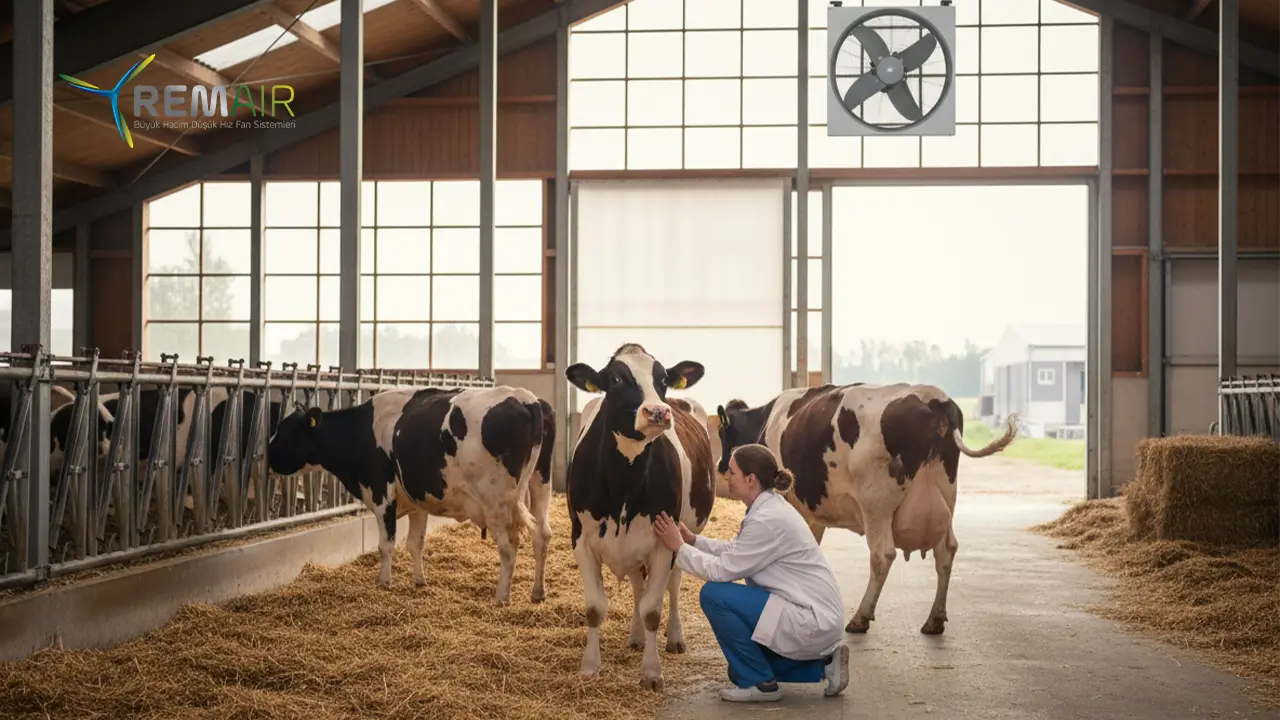
In a poorly ventilated barn, problems usually do not occur in isolation; they trigger one another. Moisture and gases that accumulate indoors gradually damage both the animals and the structure. The following points show the most common consequences of inadequate ventilation in an operation:
- Increase in respiratory diseases: Higher concentrations of ammonia and dust strain the animals’ lungs and increase the risk of infection.
- Reduced feed conversion: Animals under heat stress consume less feed, which slows daily live-weight gain.
- High humidity and wet floors: Bedding that does not dry encourages hoof diseases and unpleasant odors.
- Increased ammonia odor: This gas irritates the eyes and respiratory tract and also creates an uncomfortable environment for employees.
- Structural deterioration: Constant humidity causes rust and corrosion on the barn’s metal components and roof surfaces.
Almost all of these problems can be largely prevented when proper airflow is maintained in the environment. Ventilation should be viewed not as a cost item, but as an investment that reduces losses over the long term.
Target Values for an Ideal Barn Climate
When managing barn climate, targeting specific ranges is much healthier than leaving the process to guesswork. For beef cattle, temperatures between 5 and 20 degrees Celsius are generally considered a comfortable range. When temperatures exceed 25 degrees, signs of heat stress begin to appear, making air movement even more important.
Humidity is just as important as temperature. Keeping relative humidity inside the barn between 60% and 70% is considered ideal for both animal comfort and floor dryness. When humidity rises above these values, animals can feel much more uncomfortable even if the temperature is low.
Air speed is a balancing factor that becomes especially important during hot periods. A gentle and steady airflow passing over the animal noticeably reduces the perceived temperature. However, in cold months this airflow should not turn into a draft that chills the animal. A good system should be able to adjust this balance according to the season.
Difference Between Natural and Mechanical Ventilation
Natural ventilation is based on the principle of using wind and temperature differences to move air on its own. Through side openings and gaps at the roof ridge, warm air rises and exits while fresh outdoor air enters in its place. This method works in a properly positioned barn, but its complete dependence on weather conditions is its greatest weakness.
On hot, still summer days when the wind drops, natural ventilation is often insufficient. The air becomes stagnant precisely when animals need cooling the most. At this point, mechanical ventilation—fan-assisted systems—comes into play and makes airflow independent of outdoor conditions.
The greatest advantage of mechanical systems is that you can control air movement whenever needed and at the desired level. Modern applications generally favor a hybrid approach in which natural and mechanical ventilation are used together. This allows natural airflow to be used during suitable seasons while fans provide the necessary balance when needed.
Barn Ventilation with HVLS Fan Systems
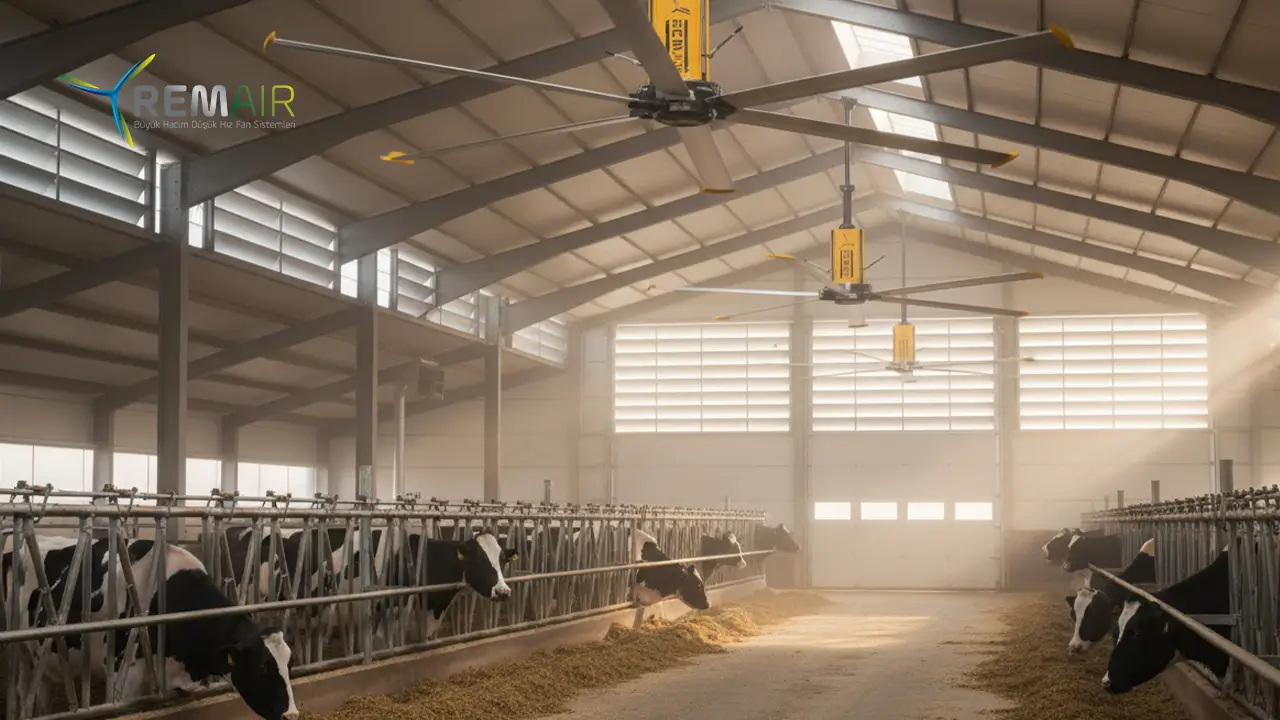
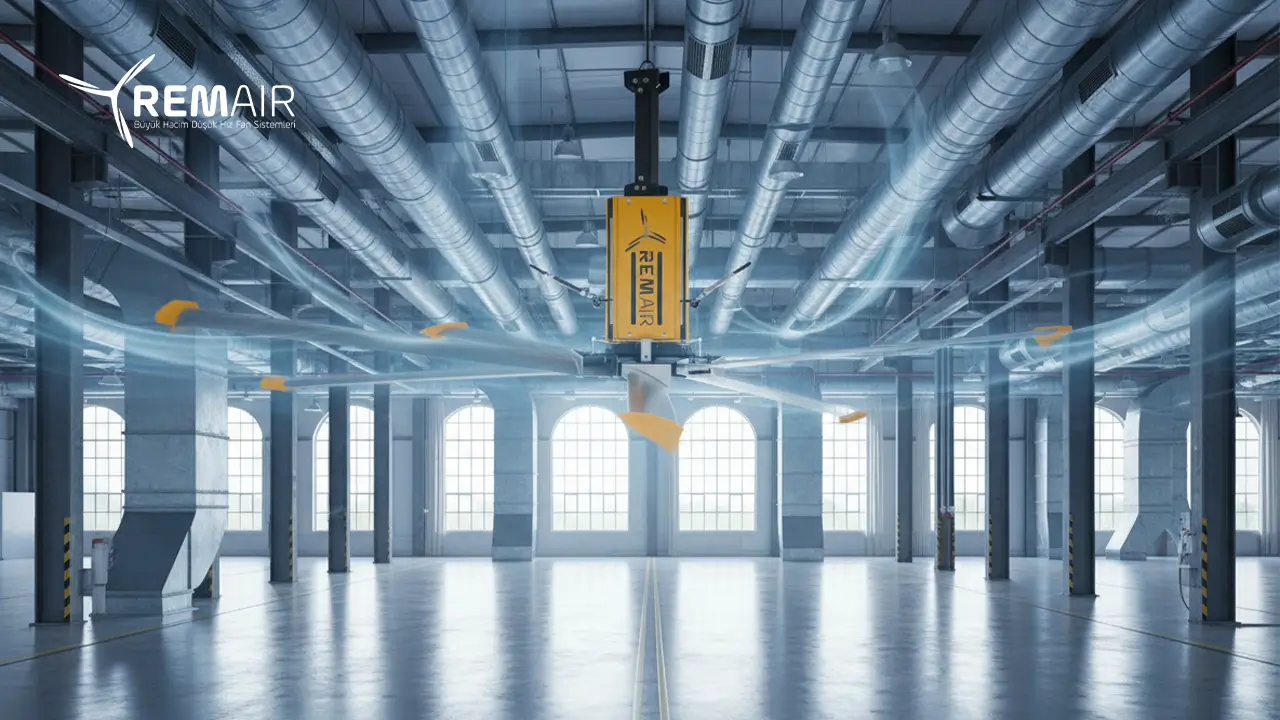
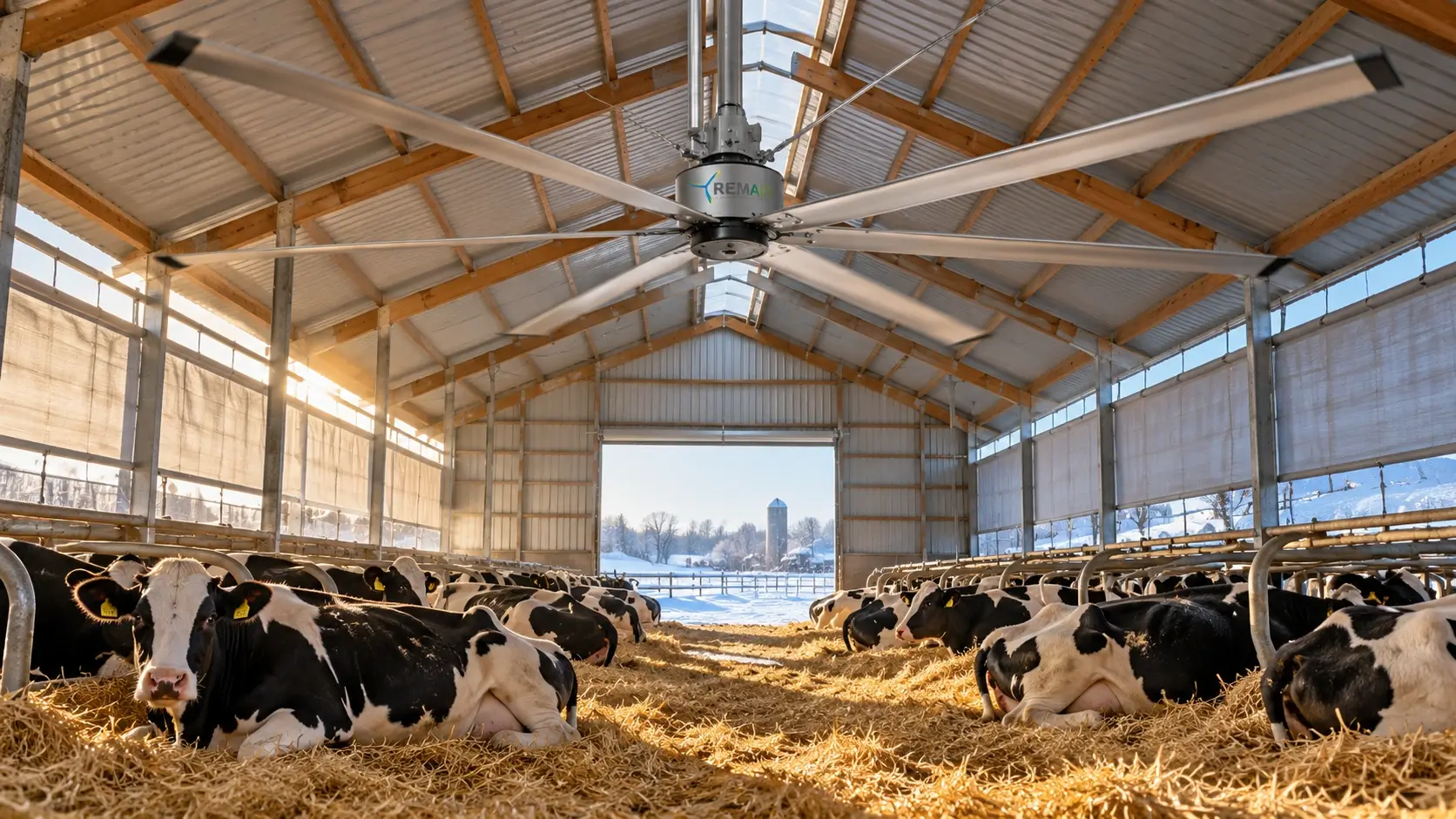
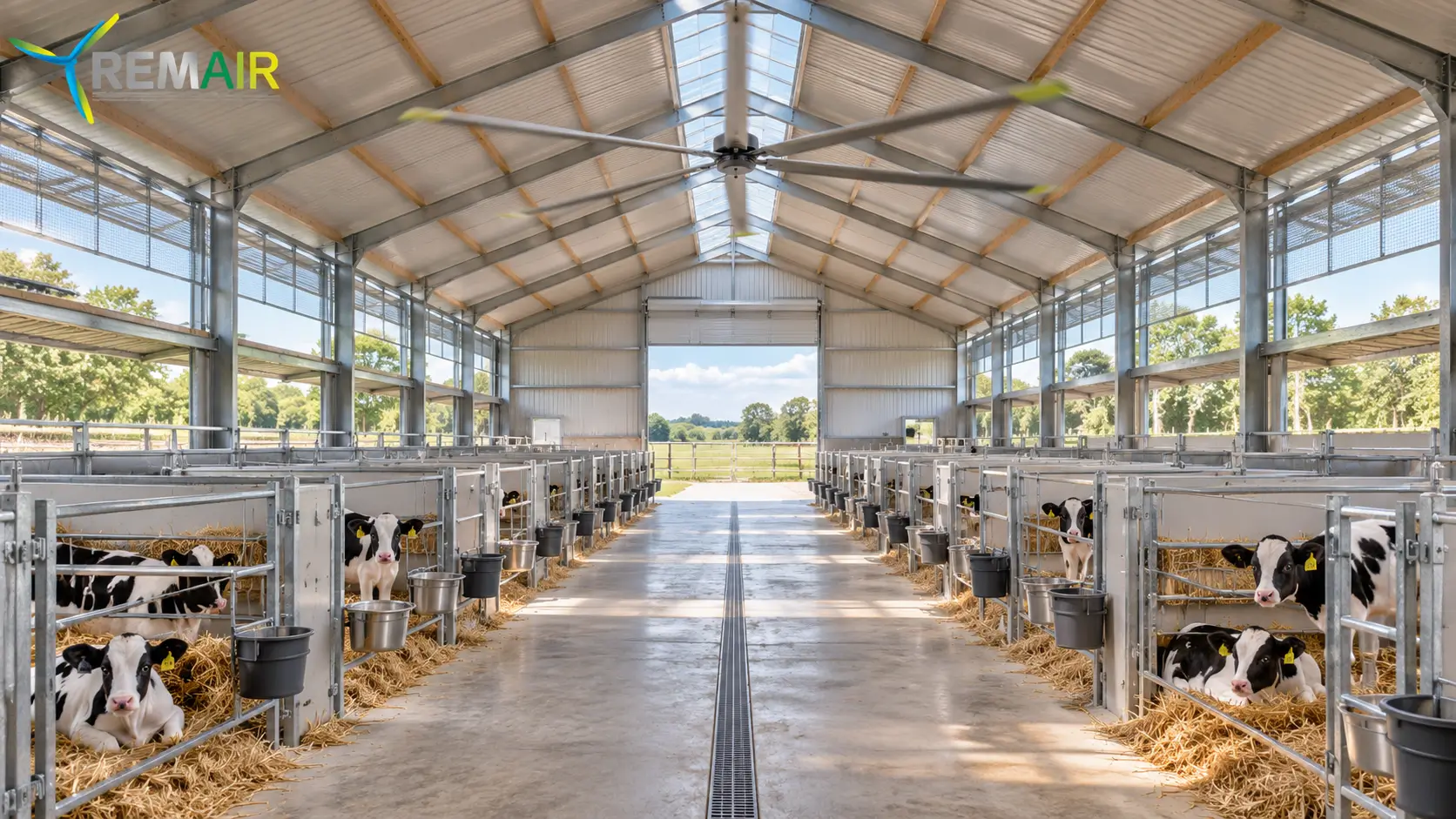
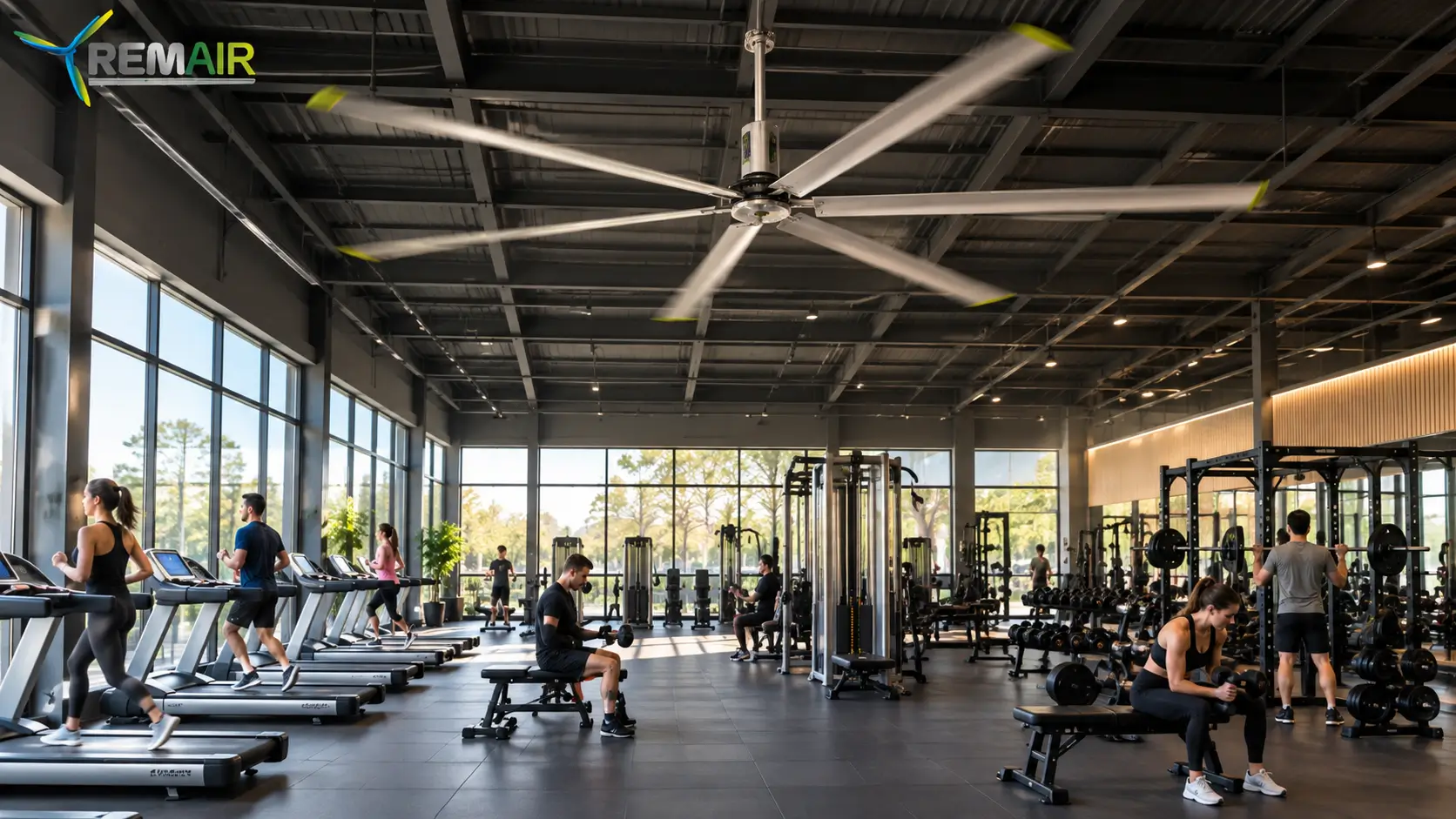
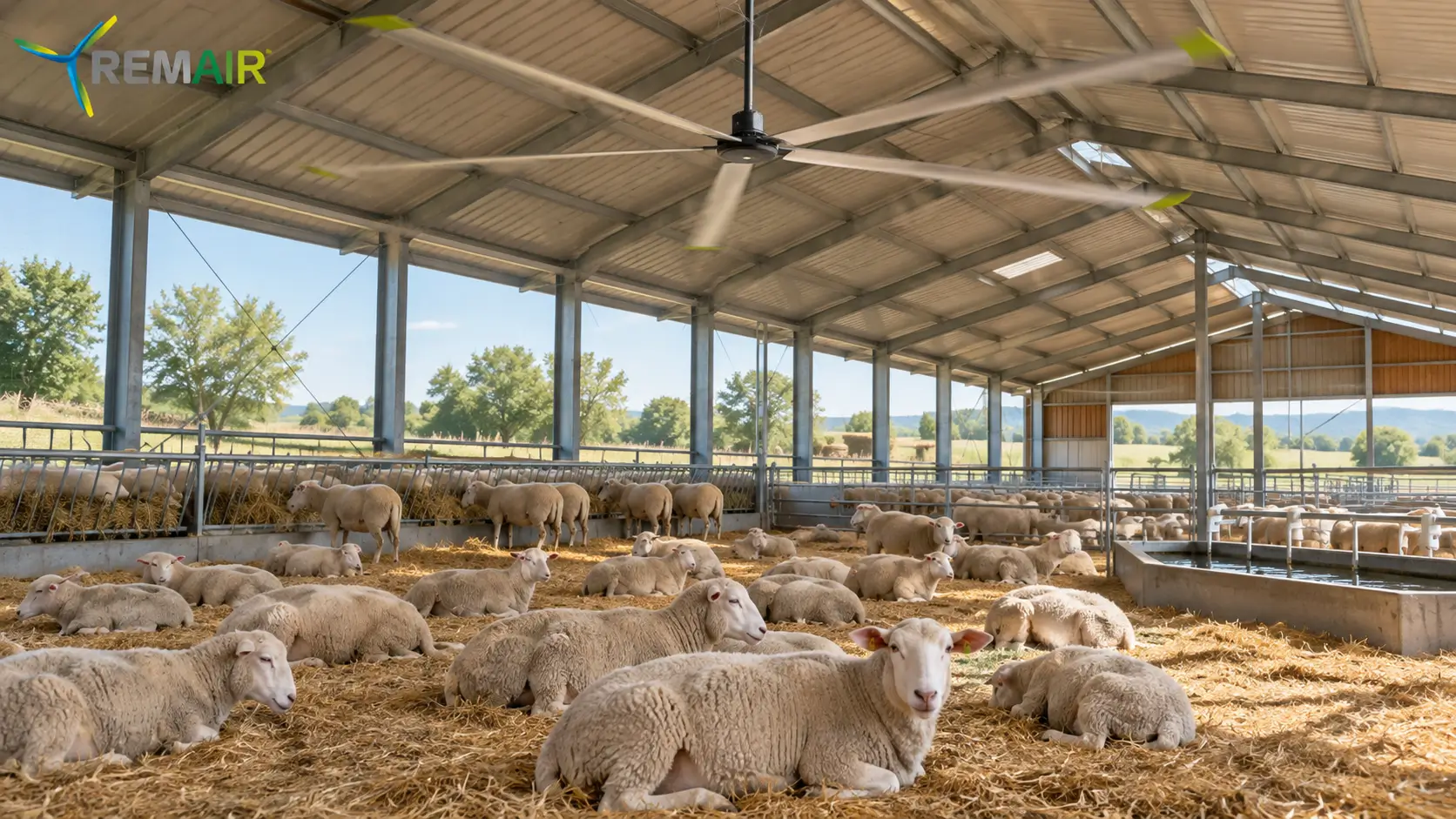
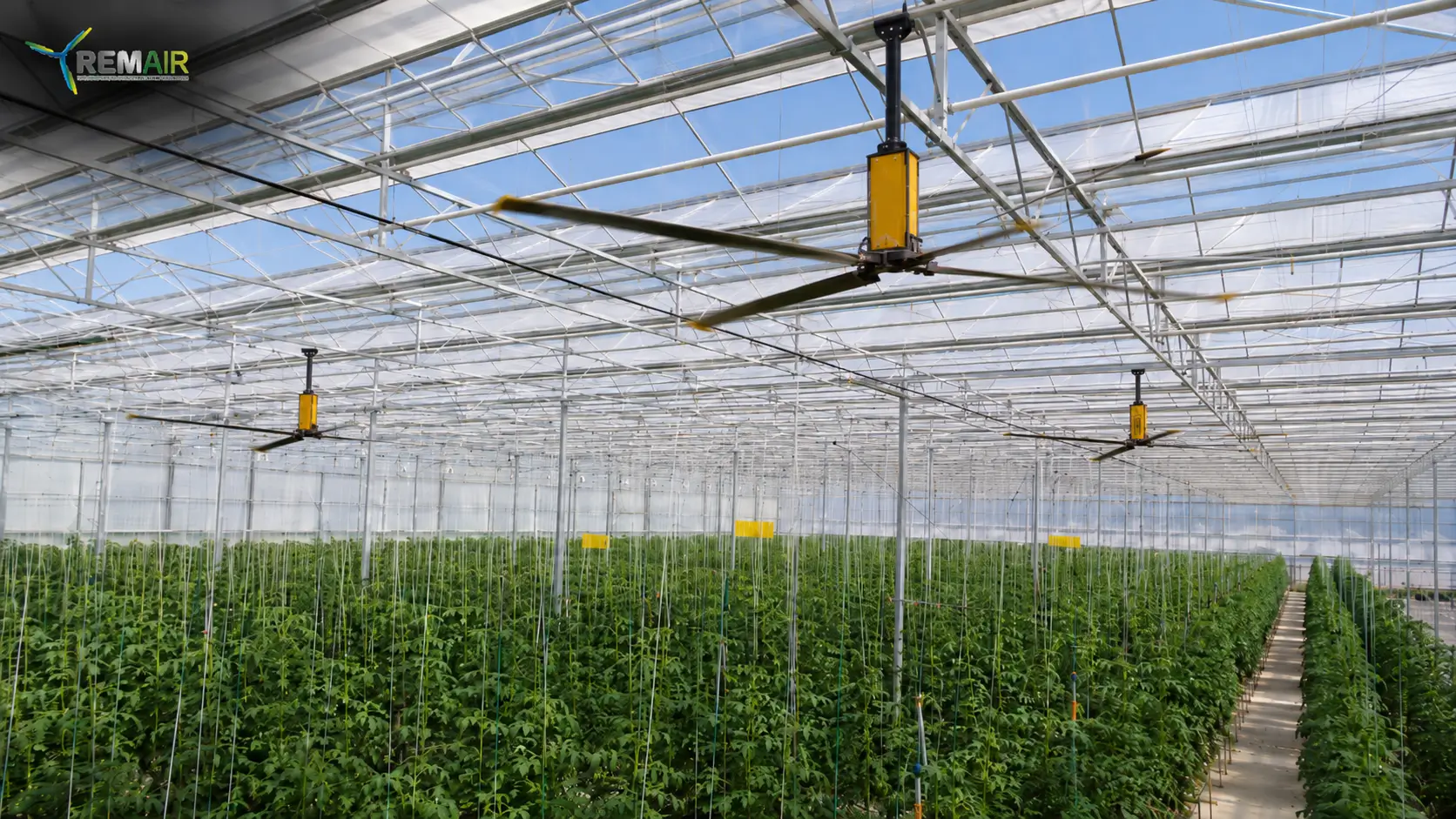
The most common problem in large-span beef cattle barns is air accumulating in certain areas and creating dead zones. Ventilating such a large space evenly with many small fans is both difficult and costly. Large-diameter HVLS fan systems have been developed precisely for this need. A single unit can distribute a soft and uniform airflow across hundreds of square meters.
These fans work by moving a high volume of air at low rotational speed. Instead of producing a harsh wind over the animals, they create a gentle and continuous breeze spread across a wide area. This breeze reduces heat stress and helps moisture on the floor dry faster. The balanced airflow reaching every corner of the barn also significantly reduces odor and gas accumulation.
Options for blade count and diameter suitable for different barn dimensions make it possible to configure the system for each operation. For example, in wide barns with high ceilings, solutions such as the Remair 6-Blade 6-Meter HVLS Fan System stand out because of their large diameter. Those who want more information about the materials used and the engineering approach can visit the technology (https://www.remairfan.com/teknoloji) page, while those who want to see other sectors where similar installations are used can review the applications page.
Key Points When Choosing a Barn Ventilation System
A ventilation investment is a decision that will be used for years once made. Therefore, when choosing a system, it is necessary to consider not only the initial cost but also long-term performance and suitability for your operation. It is useful to consider the following points during the decision process:
- Barn dimensions: Ceiling height, floor area, and animal density determine the diameter and capacity of the fan to be selected.
- Airflow rate and coverage area: Make sure the system can ventilate the entire barn without leaving dead zones.
- Energy consumption: Systems that provide high airflow at low speed offer significant energy savings over the long term.
- Quiet operation: Excessively noisy fans can become an additional source of stress for animals, so quieter models should be preferred.
- Ease of maintenance and durability: Material quality capable of withstanding the humid and dusty barn environment is important for long service life.
When you evaluate these criteria together with the conditions of your own operation, reaching the correctly sized system becomes much easier. If you are uncertain, you can share your site dimensions through the contact channel and determine the most suitable solution for your needs together with us.
Seasonal Ventilation Management and Operational Efficiency
Ventilation needs are not constant throughout the year; they change with the seasons. In summer, the priority is to reduce heat stress and move air quickly. During this period, operating fans at higher capacity helps animals stay cool and maintain feed intake. In winter, the objective is different: moisture and harmful gases inside must be exhausted in a balanced way without overcooling the barn.
Well-managed ventilation should be able to transition easily between these two extreme needs. Variable-speed systems can run at low speed in winter, refreshing the environment while minimizing heat loss. This flexibility keeps both animal comfort and energy costs balanced throughout the year.
In summary, proper ventilation in beef cattle barns is an investment that affects every stage, from animal health and feed efficiency to the operation’s energy costs and profit per animal. When you install a wide-coverage, energy-efficient system suited to your barn dimensions and animal density, the investment quickly shows its value in both animal performance and day-to-day operational comfort.
Frequently Asked Questions About Ventilation in Beef Cattle Barns
What should the ideal temperature and humidity be in a beef cattle barn?
The most comfortable temperature range for beef cattle is between 5°C and 20°C. Heat stress begins above 25°C. Keeping relative humidity between 60% and 70% is considered ideal for both floor dryness and comfortable breathing for the animals.
Is the ammonia smell in the barn caused by insufficient ventilation?
Yes. The main reason for an intense ammonia smell is inadequate air circulation. When stagnant air is exhausted with properly positioned fans, gas accumulation is prevented and the sharp ammonia odor is largely eliminated.
Do animals get cold when a beef cattle barn is ventilated in winter?
With a properly designed system, the animals do not get cold. The aim in winter is not cooling, but removing accumulated moisture and harmful gases. Fans are operated at very low speed so that the air is refreshed without creating a harsh wind or draft.
Is natural ventilation (window/chimney) sufficient for small barns?
Natural openings can provide some benefit in cool and windy weather. However, on hot and windless summer days, natural ventilation can stop completely. Therefore, even in small barns, airflow should be ensured with mechanical fan-assisted systems.

Leave a Comment