
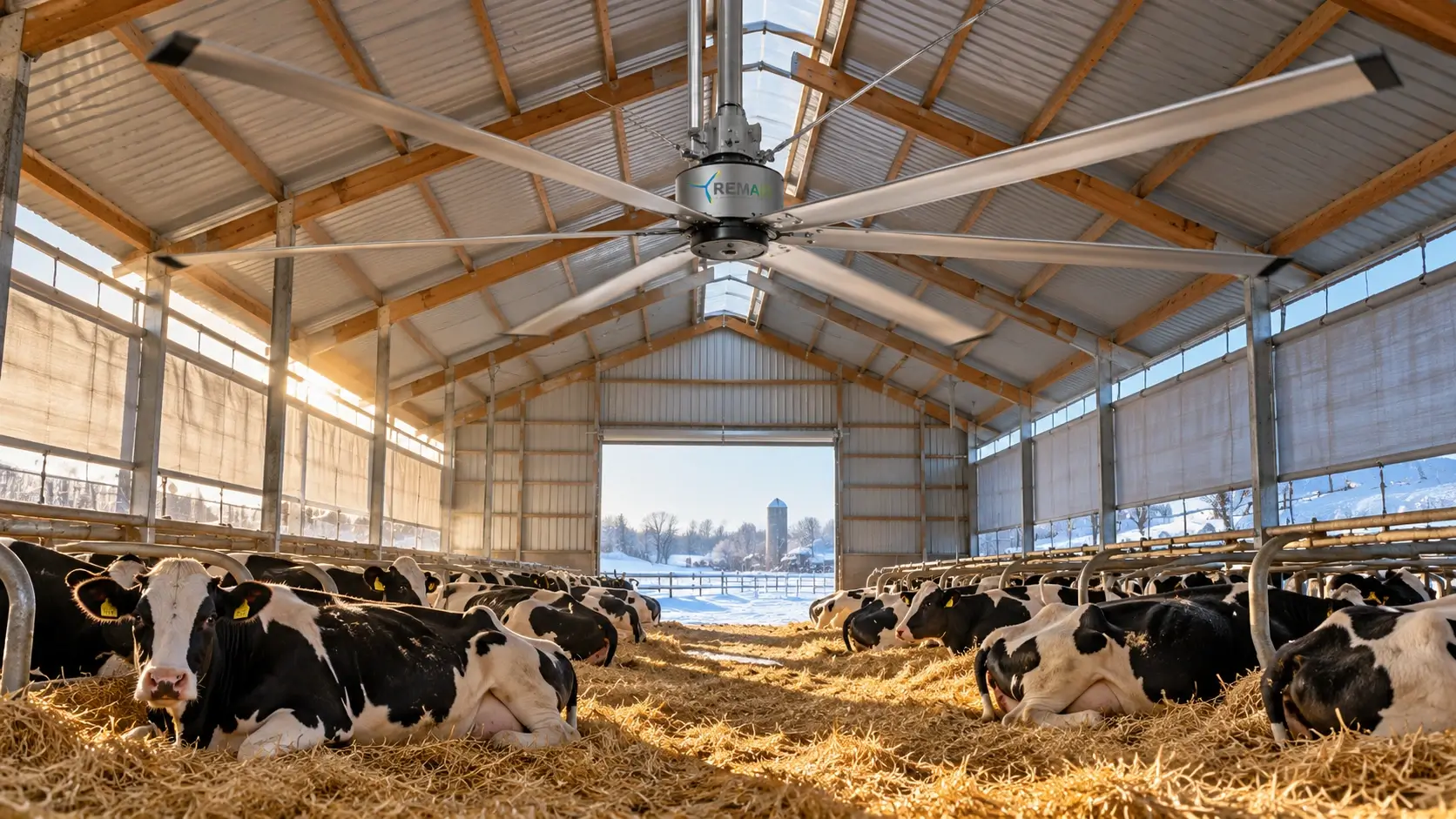

The purpose of barn ventilation in winter is not to keep the barn warm, but to remove moisture, ammonia, and microorganisms without making the animals cold. Adult cattle are much more resistant to cold than commonly believed; the main factor causing illness in winter is the humid and polluted air that accumulates inside a closed barn. For this reason, the air in the barn should be renewed at least 4 times per hour, the ridge opening at the roof peak should remain open throughout the winter, a continuous air inlet should be left at the top of the sidewall curtains, and HVLS fans should operate at low speed to mix the air without creating drafts on the animals.
Below, we first explain at what temperature the animal actually begins to feel cold, followed by the target values, curtain and ridge settings, how to use an HVLS fan in winter, and the most common mistakes.
The Main Problem in the Barn in Winter Is Not Cold, but Moisture
A dairy cow or beef cattle produces heat and moisture throughout the day. Water vapor continuously enters the air through breathing, urine, and manure. When the barn is tightly closed, this vapor cannot escape. When warm and humid air touches cold roof sheets, beams, and walls, it condenses. This is why dripping from the ceiling, fog inside the barn, wet bedding, and strong ammonia odors increase during winter. Bacteria and viruses survive longer in humid air; pneumonia and other respiratory diseases become more common, especially among calves during this period.
The temperature at which adult cattle experience cold stress is lower than most farmers assume. The determining factor is whether the animal's coat is dry.
| Animal and coat condition | Approximate temperature at which cold stress begins |
|---|---|
| Adult cattle, dry and thick winter coat | -8 °C |
| Adult cattle, dry winter coat | 0 °C |
| Adult cattle, wet or manure-contaminated coat | 15 °C |
| Calf, younger than 3 weeks | 10–15 °C |
| Calf, older than 3 weeks | 5–10 °C |
The values are based on data from the Ontario Ministry of Agriculture (Canada) and the UK agricultural and horticultural development organization AHDB, and apply to windless conditions. Cold air blowing directly onto the animal further reduces the perceived temperature.
The table clearly shows two things. First, below-zero temperatures alone are not a problem for an adult animal with a dry coat. Second, a wet coat loses much of its insulating ability. When moisture in the barn wets the animal's coat and bedding, even adult cattle can begin to feel cold at temperatures above zero. In other words, a closed and humid barn increases both disease risk and cold stress. We also discussed how different cattle groups respond to cold in our article on the cold tolerance of cattle.
Target Values for Winter Ventilation
| Criterion | Target | How to recognize it in the barn |
|---|---|---|
| Air changes | At least 4 times per hour, approximately once every 15 minutes | No dripping or fog at the ceiling, bedding remains dry |
| Relative humidity | Below 75% | Measured with a thermometer-hygrometer |
| Ammonia | As low as possible; levels above 25 ppm irritate the respiratory tract | If manure odor overpowers the smell of feed, the level is high |
| Air speed at animal level | Low enough not to create a draft; approximately 0.2 m/s for young calves | Cold airflow should not be felt over resting animals |
The difference between winter and summer is best illustrated by the number of air changes. According to the Ontario Ministry of Agriculture's guide to dairy housing ventilation, 40–60 air changes per hour are required for summer cooling, while in winter it is sufficient to keep the rate from falling below 4. We explained with an example how this value is calculated according to barn volume in our article on calculating air changes (ACH) in barns and factories.
Curtain and Ridge Settings in Naturally Ventilated Barns
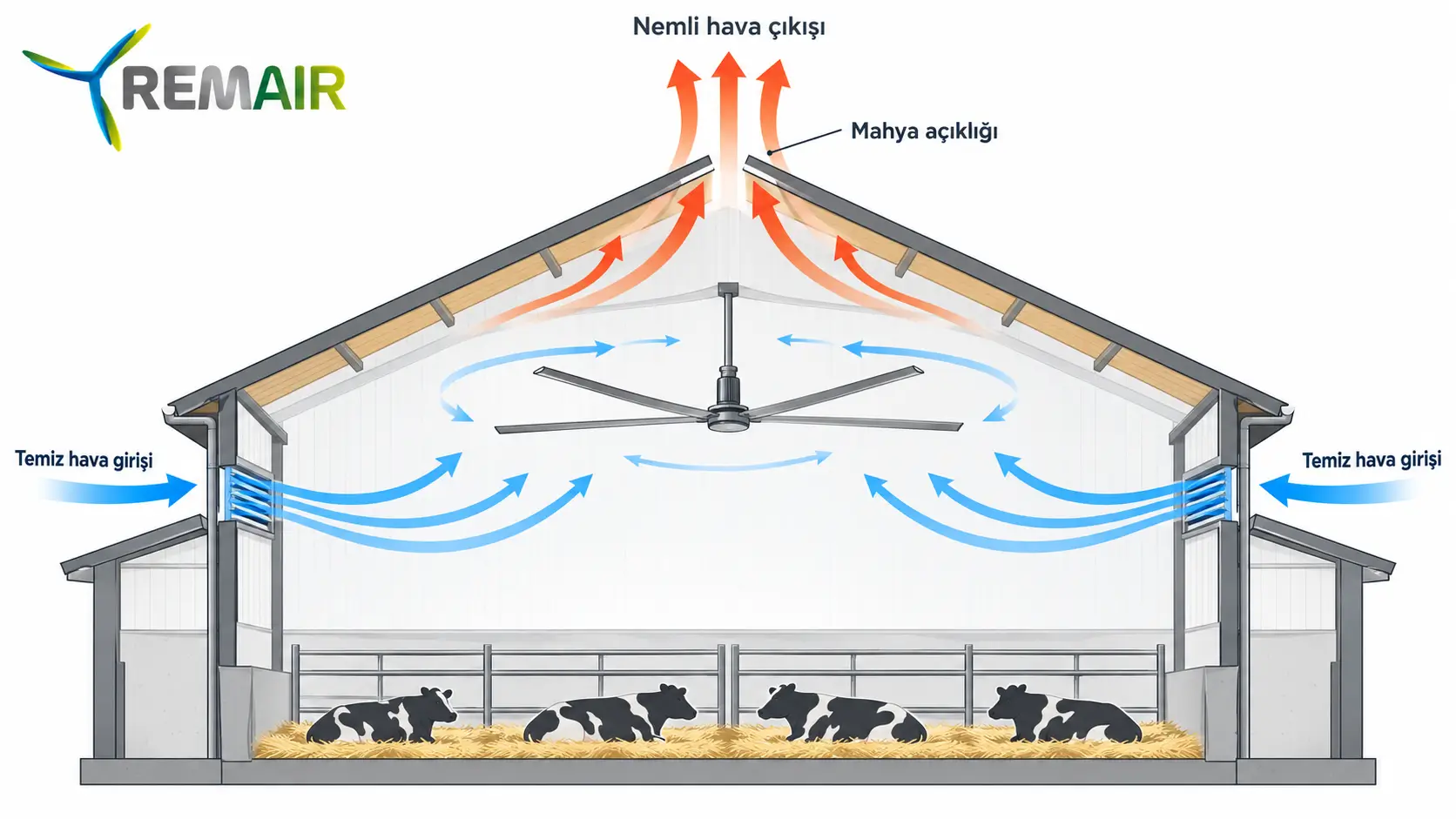
A significant proportion of barns in Turkey are naturally ventilated buildings with curtains or windows on the sidewalls and an air outlet on the roof. In these barns, air warmed by the animals' body heat rises and exits through the ridge, while fresh air enters from the upper section of the sidewalls. For this cycle to continue during winter, both the inlet and outlet must remain open. If you are interested in the difference between natural and mechanical systems, you can read our article on types of barn ventilation.
The ridge opening should remain open in winter
The most common mistake in winter is closing the opening at the roof ridge. The ridge acts as the chimney of the barn; when it is closed, warm and humid air becomes trapped near the ceiling, condenses, and drips back down. According to Penn State University's recommendation, approximately 5 cm of ridge opening should be provided for every 3 meters of barn width. For example, in a 20-meter-wide barn, the ridge opening should be approximately 33 cm. If you are concerned about rain and snow entering, instead of closing the opening you can install a ridge cap above it at a height that does not obstruct airflow.
Do not completely close the sidewall curtains
On cold and windy days, the curtains can be lowered, but a continuous air inlet should remain at the top of both sidewalls. It is recommended that this opening on each side be approximately half the size of the ridge opening. In the example of a 20-meter-wide barn, this means approximately 17 cm on each wall. Air enters at this height above the animals, mixes with the warm air inside the barn, warms up, and does not reach the animals as a draft. Opening the curtain from the bottom, however, directs cold air directly onto resting animals.
Adjustment according to time of day and weather conditions
Winter ventilation is not a one-time adjustment. On sunny and mild afternoons, widening the curtain opening is the least expensive way to remove moisture accumulated overnight. At night, during snowstorms, or on very windy days, the opening is narrowed; on the windward side, the curtain can be closed slightly more. However, the minimum opening at the top should never be completely closed. It is normal for a naturally ventilated barn to be only a few degrees warmer than the outdoor temperature in winter. If the inside is noticeably warmer than the outside, ventilation is often insufficient.
Winter settings in enclosed barns with exhaust fans
The principle is the same in mechanically ventilated barns. Fan controls should not be set to stop all fans when the weather becomes cold. The fan stage that provides at least 4 air changes per hour should operate continuously throughout the winter, and air inlets should direct cold air toward the ceiling rather than onto the animals.
How Should an HVLS Fan Be Used in Winter?
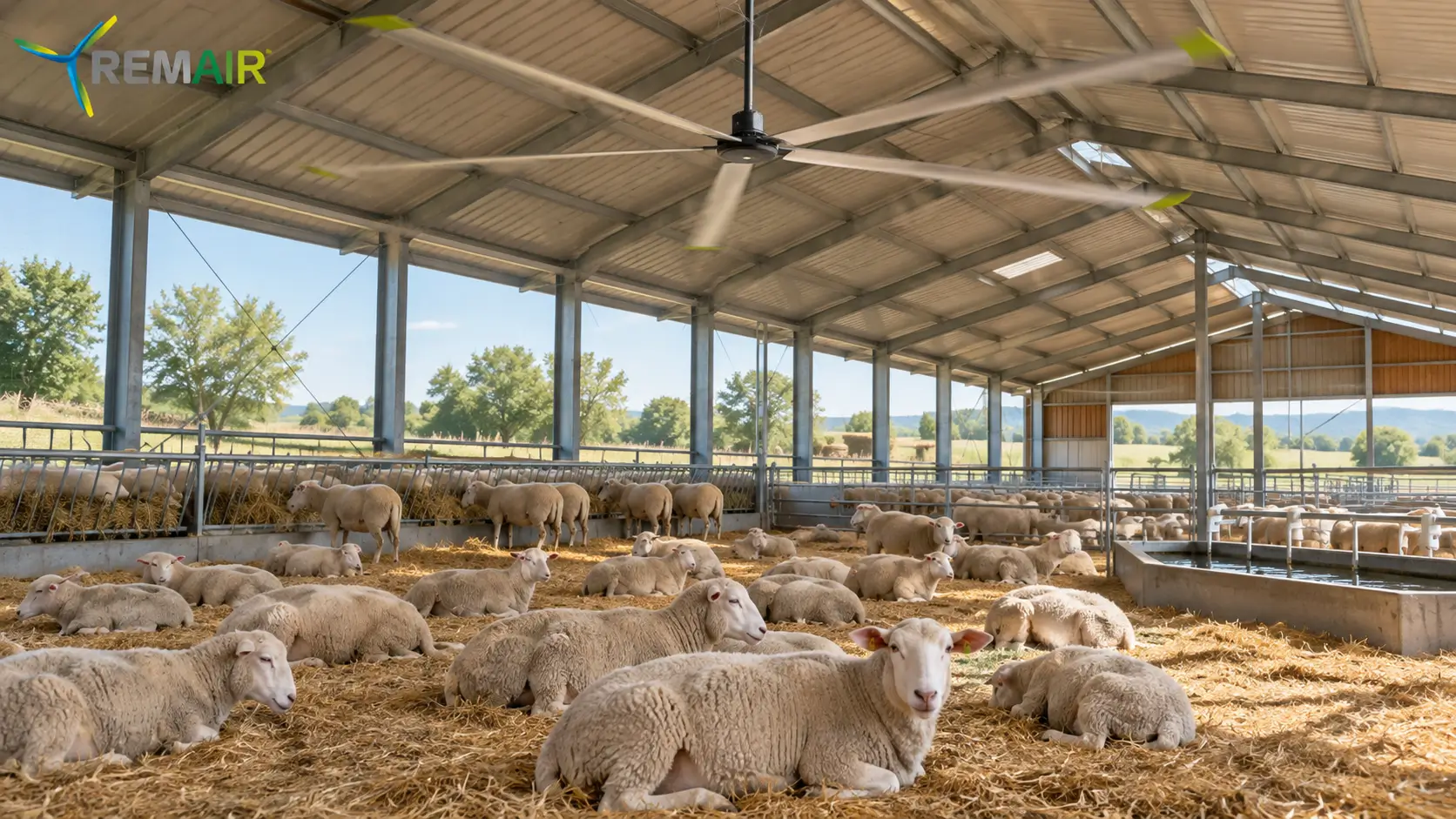
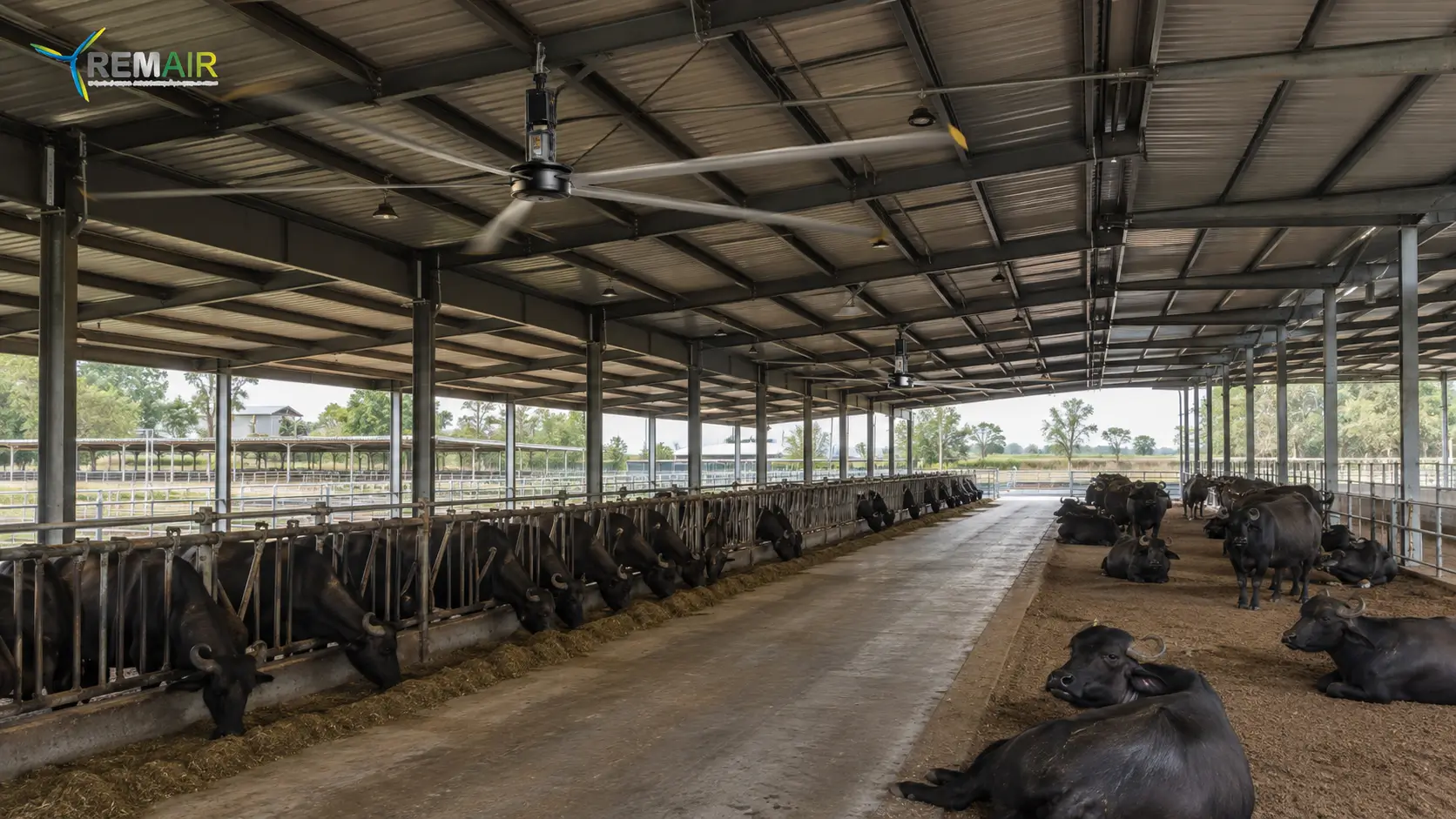
First, one distinction should be made clear: an HVLS fan moves and mixes the air inside the barn; it does not bring fresh air in from outside. In winter, air exchange is provided by curtain and ridge openings or exhaust fans. The HVLS fan does not replace this system; it supports it. When used correctly, it performs three functions during winter.
- Distributing warm and humid air accumulated near the ceiling: Warm air rises and forms a layer beneath the roof. The fan gently mixes this air, reducing condensation and dripping on cold roof surfaces and balancing temperature differences within the barn.
- Drying bedding and floors: Light but continuous air movement helps moisture evaporate from bedding and floor surfaces. Dry bedding is one of the basic conditions for protecting hoof and udder health during winter.
- Eliminating stagnant air pockets: Ammonia-rich air accumulating in corners and between columns is carried toward openings by the mixing action of the fan.
In winter, the fan should not operate at the same speed used during summer. The strong airflow required for summer cooling can make wet-coated or resting animals cold in winter. The fan should run at a low speed that does not create noticeable drafts at animal level; airflow above resting areas and calf pens should be checked in particular. Some farms run the fan at low speed in reverse during winter, directing the air toward the ceiling first and then down along the walls. If you want to use this method, ask the manufacturer whether your fan is suitable for reverse operation.
Remair HVLS fans operate with variable-speed inverter control, allowing the speed to be reduced according to the season. This makes it possible to use the same fan for cooling in summer and low-speed air mixing in winter. For other livestock applications, see our agriculture and livestock applications.
Winter Ventilation in Calf Pens
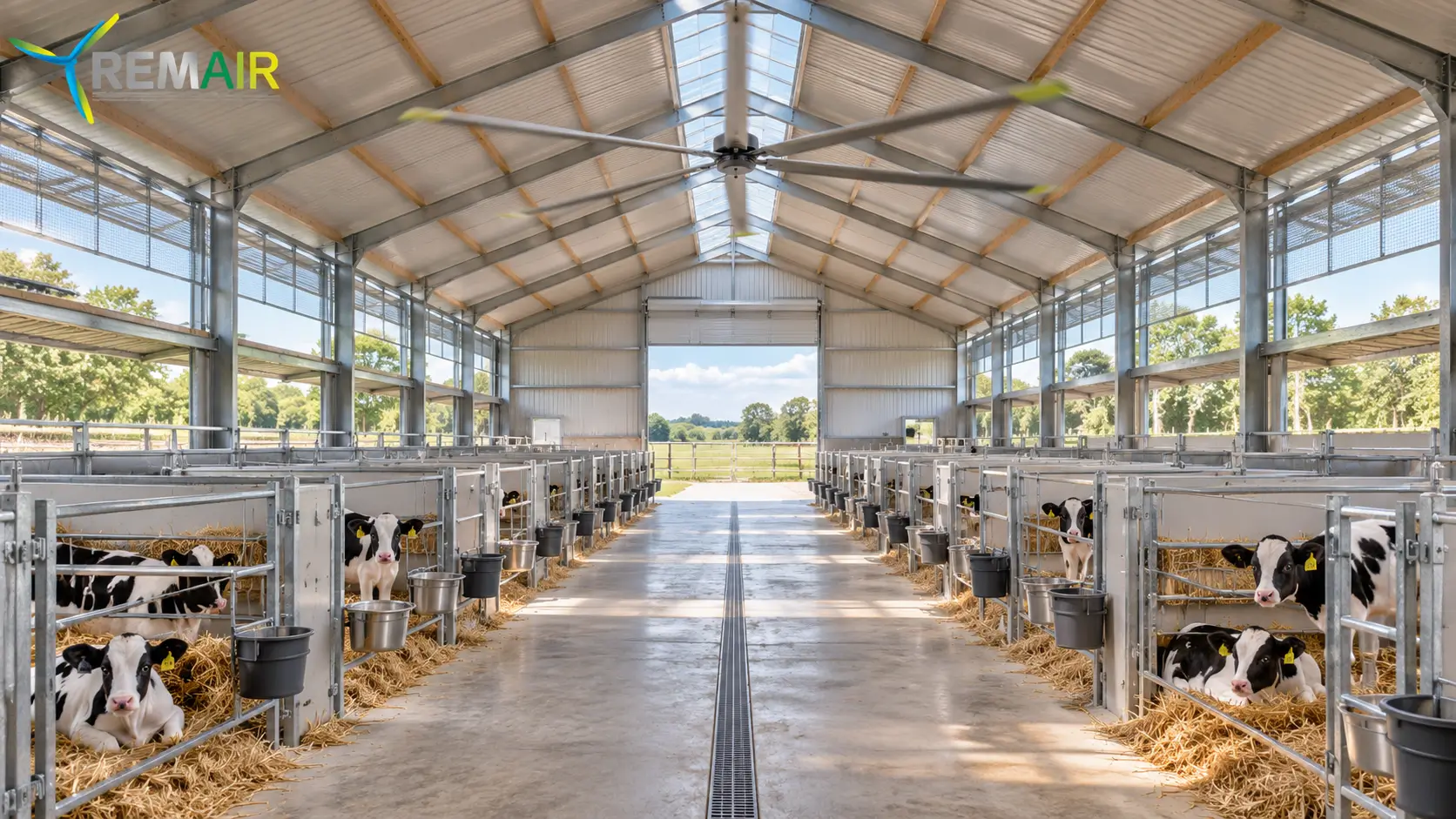
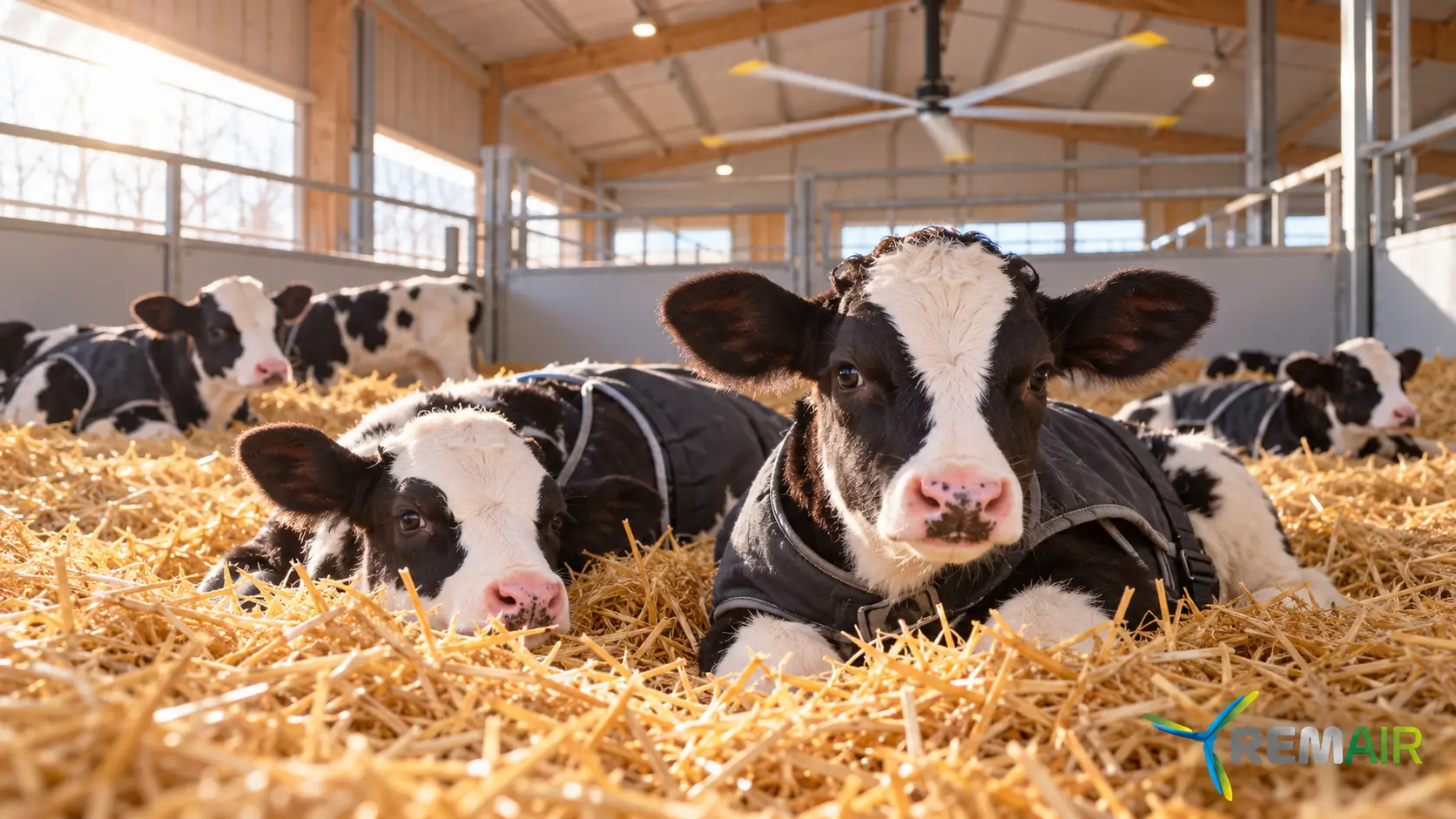
Calves younger than three weeks begin to use additional energy to maintain body temperature below 10–15 °C. For this reason, both sealing the calf area and leaving it without ventilation and exposing calves directly to cold airflow are risky. The correct approach is to eliminate drafts at animal level, for example by keeping the lower section of pen walls closed, while maintaining air exchange in the upper section of the barn. Thick, dry straw bedding in which the calf can nest, calf jackets when necessary, and increased milk or milk replacer during cold days are ways to keep the calf warm without reducing ventilation. For more details, see our article on ventilation in calf pens.
Structural Measures Against Roof Condensation
If dripping continues beneath the roof despite properly adjusted ventilation, the problem may be structural. Thin, uninsulated roof sheet metal cools almost to outdoor temperature in winter, and humid indoor air condenses immediately when it touches this surface. Insulating the underside of the roof, insulating the inner surface of the ridge cap, and keeping deep purlin spaces that trap humid air open to airflow can significantly reduce dripping. We discussed the causes of condensation in our article on how to prevent condensation in barns and general humidity management in how to remove humidity from a barn.
Common Mistakes in Winter Ventilation
- Completely closing the barn: Closing doors, curtains, and the ridge does not warm the barn; it traps moisture and ammonia inside.
- Adjusting ventilation only according to the thermometer: The main value that should be monitored in winter is humidity. Humidity should also be monitored with a thermometer-hygrometer.
- Allowing cold air to enter at animal level: Curtains opened from the bottom or low windows create direct drafts over resting animals.
- Leaving the fan at its summer setting: A fan operating at high speed can chill animals with wet coats and calves in particular.
- Replacing wet bedding too late: Wet bedding adds moisture to the barn and wets the animal's coat, reducing its protection against cold.
- Overcrowding the barn: As the number of animals increases, the amount of moisture and gases produced also increases. Using the same ventilation openings quickly makes the air heavy and polluted.
You can contact us to determine the appropriate fan diameter and number for both summer and winter use according to the dimensions of your barn.
Frequently Asked Questions
Is it necessary to install a stove or heater in the barn during winter?
It is generally unnecessary in barns housing adult cattle. Cattle with a dry coat can tolerate temperatures below freezing. Using a heater and closing the barn, however, increases humidity. Combustion heaters such as stoves also pose a carbon monoxide risk. If heat support is required, it is more appropriate to provide animal-level solutions for newborn calves, such as a dedicated heat lamp or calf jacket.
What should be done if snow and rain enter through the ridge?
Instead of closing the ridge, a cap can be installed above it while leaving sufficient space underneath for air to escape. If mesh or netting is installed over the ridge, it is recommended to increase the opening by approximately 20% because the material reduces airflow. A small amount of snow entering is often less problematic than a ceiling that continuously condenses and drips.
How can I tell whether the barn is ventilated sufficiently?
The most practical method is to enter the barn early in the morning, when it has remained closed for the longest period. If your eyes sting, you notice a strong ammonia smell, there are water droplets on the ceiling, or there is a light fog inside, ventilation is insufficient. For more precise results, humidity can be measured with a thermometer-hygrometer and ammonia with a portable gas meter at different times over several days.
How much electricity does an HVLS fan consume in winter?
Because the fan operates at low speed during winter, electricity consumption decreases significantly compared with summer. Actual consumption depends on motor power, operating speed, and daily operating time. For example, the motor power of the Remair 5-blade 5-meter model is 1.1 kW; the power drawn at low speed remains below this value. You can find the calculation method in our article on how much electricity a ventilation fan consumes.
Do the same rules apply to sheep and goat barns?
The basic principle is the same: instead of sealing the shelter and trapping moisture inside, continuous air inlet and outlet should be provided at the top while drafts at animal level are prevented. Sheep and goats are quite resistant to cold as long as their wool remains dry; wet wool and humid conditions increase respiratory disease risk. Lambs and kids, like calves, are more sensitive. For more details, see our article on ventilation and cooling in sheep barns.

Leave a Comment