
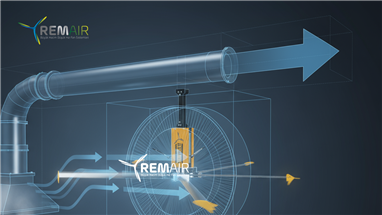
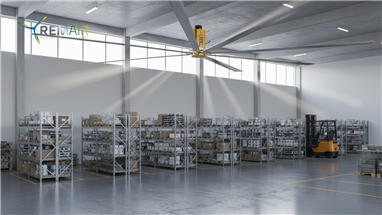
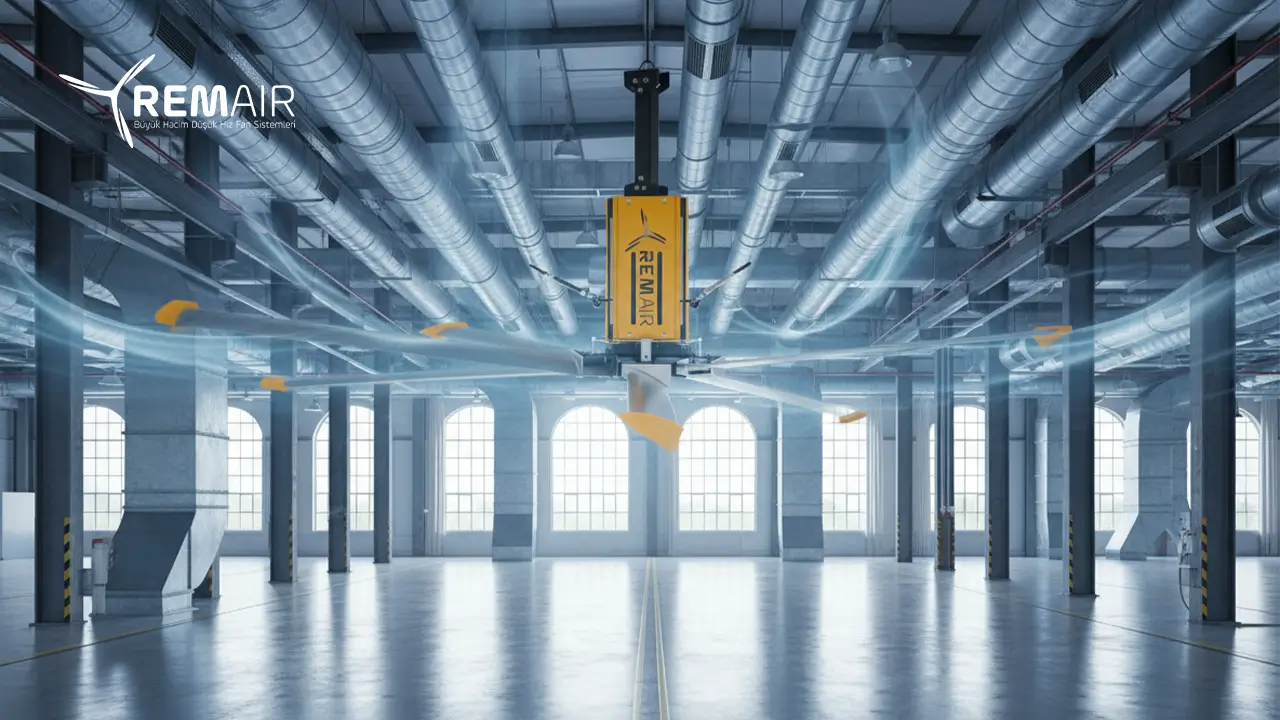
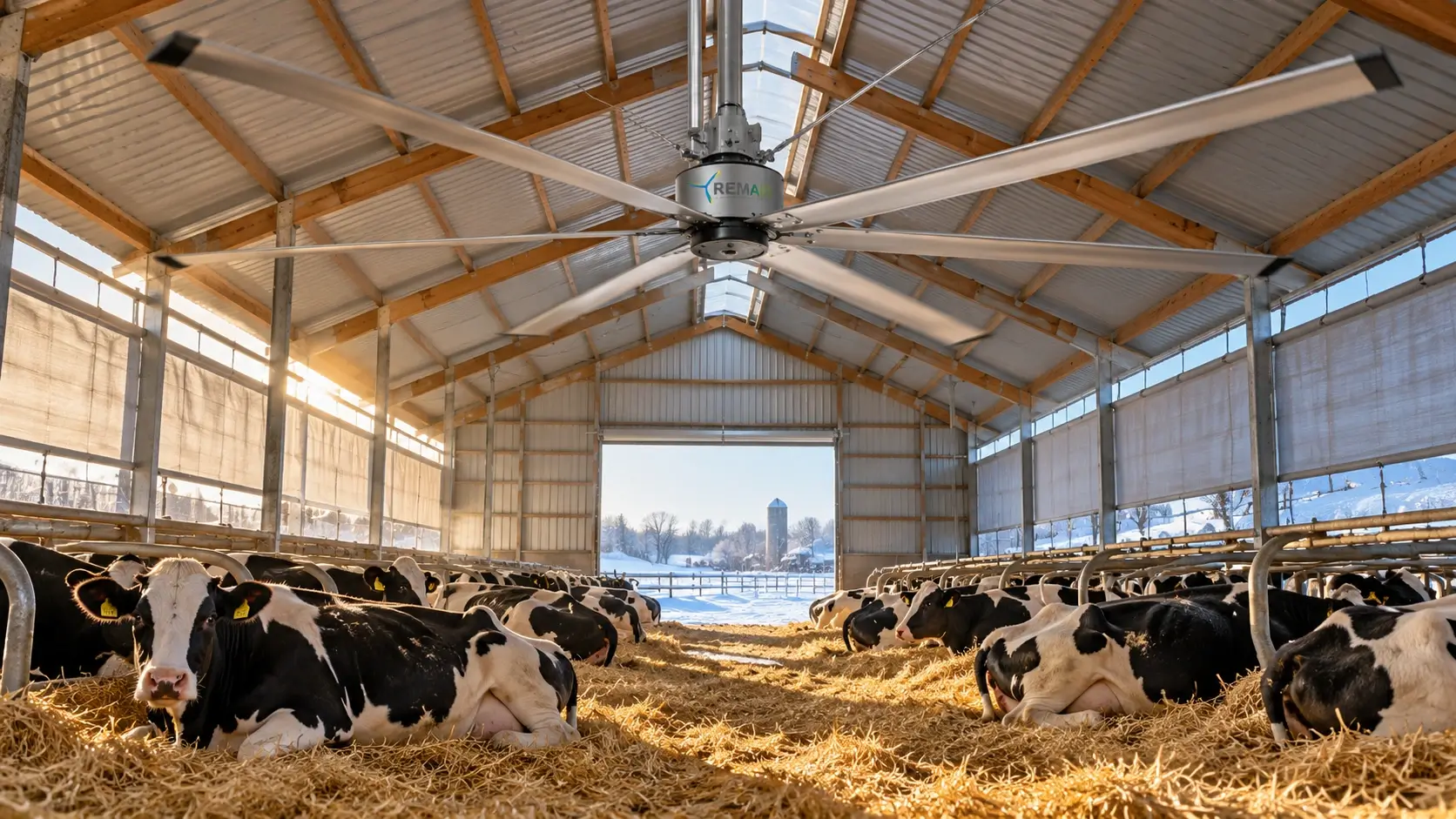
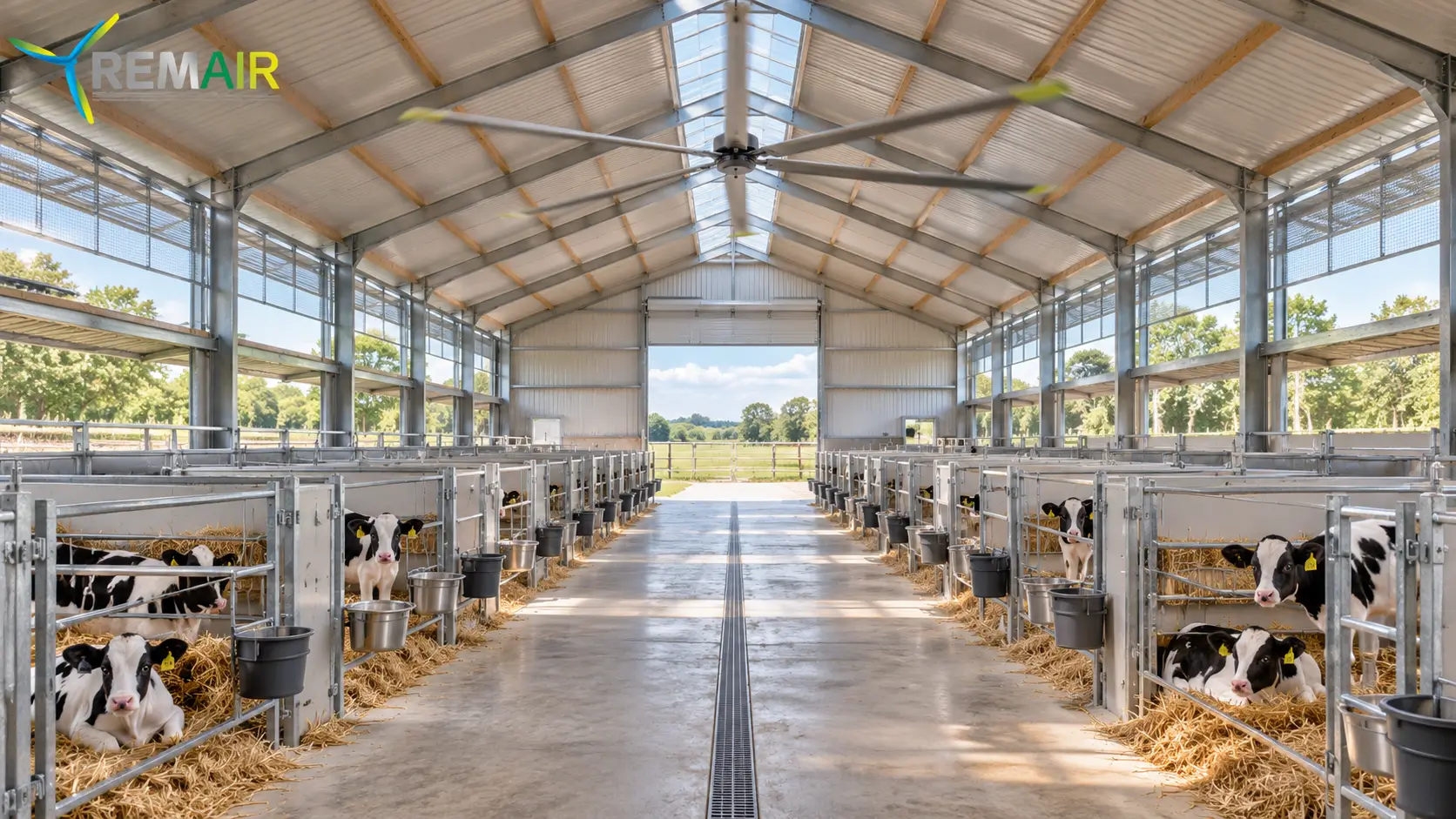
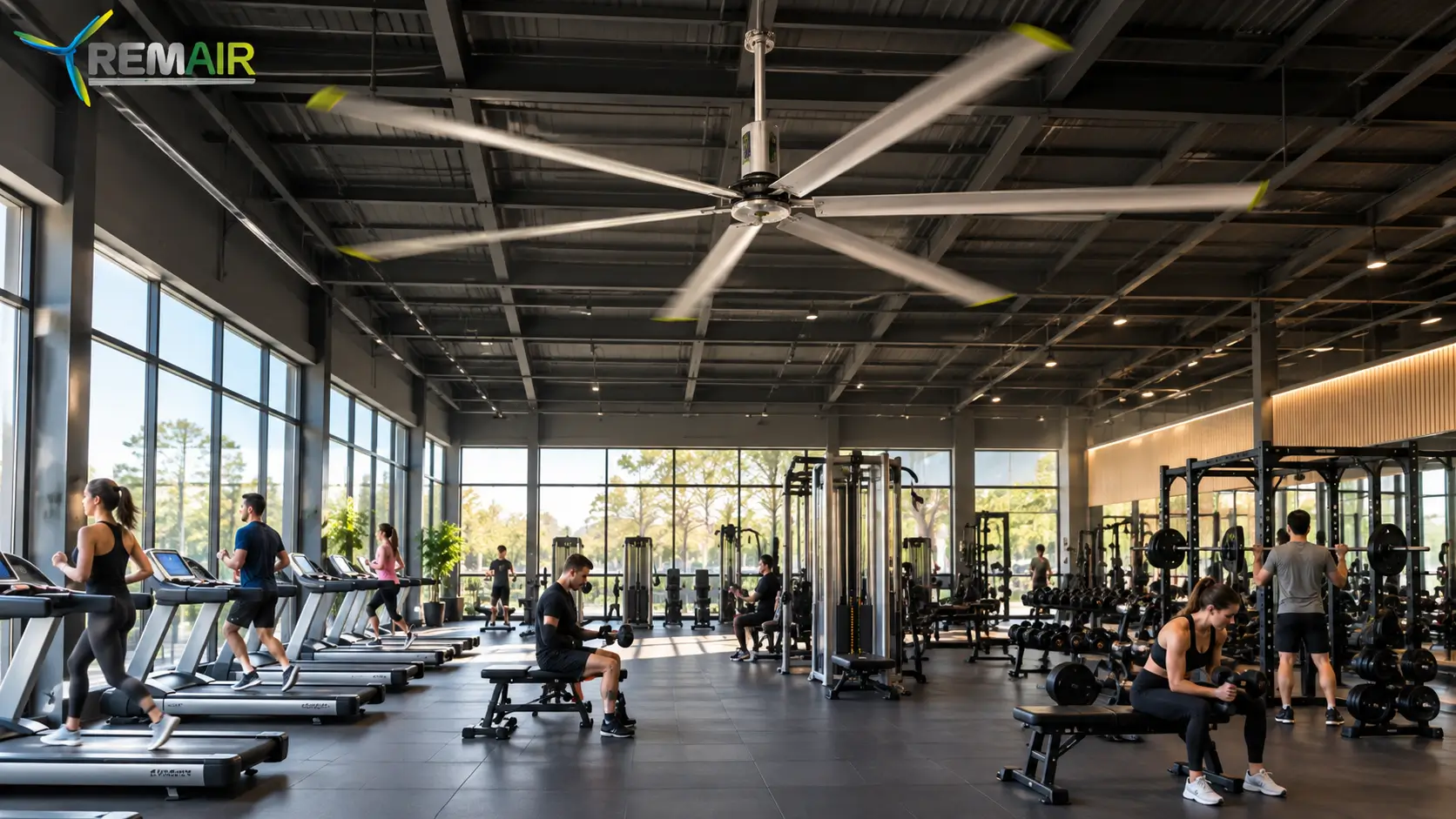
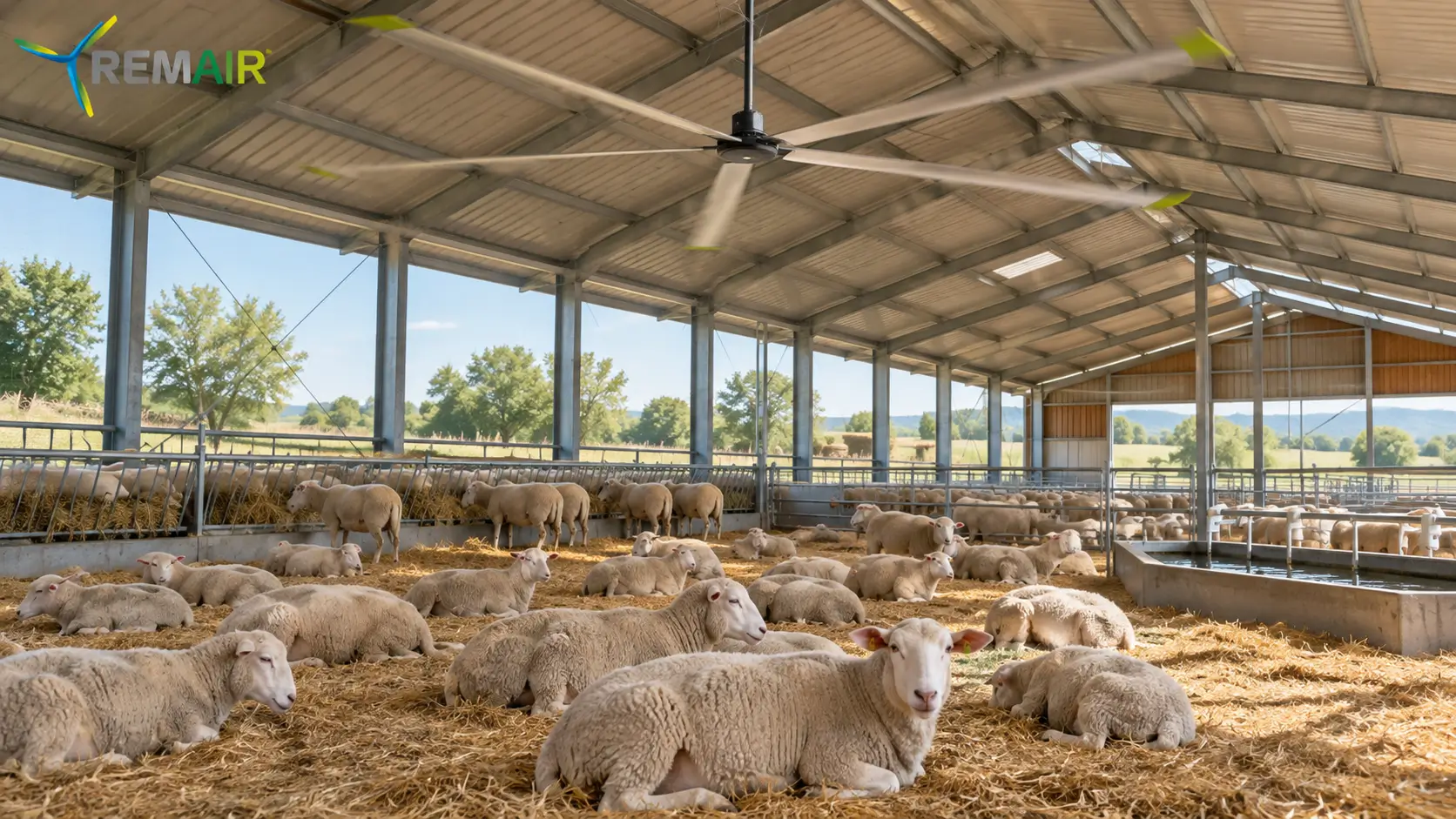
In a heated factory in winter, warm air rises and collects beneath the ceiling. The floor level where employees work stays cold. The thermostat detects the cold, so the heaters run longer. An HVLS ceiling fan running at low speed in winter gently brings the warm air back down and evens out temperatures across the hall. This provides the same comfort with less heating and lowers fuel or electricity bills.
An HVLS ceiling fan serves a purpose in both seasons. It runs at high speed for cooling in summer and at low speed to recover heat in winter. Below we explain how this works, which buildings benefit most and how to measure the savings at your facility.
Why Does Warm Air Collect at the Factory Ceiling?
Heated air becomes less dense and rises. In high-ceilinged buildings, this creates layers of progressively warmer air from floor to ceiling. This is called thermal stratification. Field measurements and simulations in large warehouses show that this is common in winter and that warm air rising to the ceiling increases heat loss through the roof (Energy and Buildings, 2017).
Thermal stratification has three consequences for a facility:
- Heat goes to the ceiling instead of reaching employees. The warm air you pay for stays up where nobody works.
- Roof heat loss increases. The warmer the air beneath the roof, the greater its temperature difference from the outdoors and the more heat escapes through the roof.
- The thermostat gives a misleading reading. The sensor near the floor keeps the heater running as long as it detects cold conditions.
The higher the ceiling, the greater the temperature difference between floor and ceiling. This is especially relevant in high-ceilinged factories, warehouses, logistics centres and hangars.
How Does an HVLS Ceiling Fan Work in Winter?

In summer, the fan runs at high speed to create a noticeable breeze. The airflow helps sweat evaporate and makes people feel cooler. In winter, the aim is to avoid any noticeable draught.
In winter, the fan therefore runs at low speed. Its large blades turn slowly and push warm air down from the ceiling. At floor level, the air spreads sideways and mixes with the cooler air. A hangar study published in ASHRAE Journal found that HVLS fans running slowly in downward mode in winter mixed warm air from the ceiling down to the floor without creating an unwanted cold draught (ASHRAE Journal).
On Remair HVLS fans, speed can be set via the gearbox. Models with a variable-frequency drive offer stepless speed control and can be connected to an automation system. For details, see our technology page. A model with a variable-frequency drive is more practical if you plan to adjust the speed frequently between seasons.
| Feature | Summer | Winter |
|---|---|---|
| Purpose | Cool people and circulate air | Bring warm air from the ceiling down to floor level |
| Fan speed | High | Low |
| Perceived airflow | Noticeable and cooling | Minimal, ideally imperceptible |
| When does it run? | During hot hours | While the heating system is running |
Benefits of Using an HVLS Fan in Winter
Lower heating costs
When warm air from the ceiling reaches floor level, the work area reaches the desired temperature faster and the heater switches on less often. Savings depend on building height, insulation, the heating system and operating hours. A single percentage would therefore be misleading. Below we explain how to measure savings at your facility.
More consistent temperatures throughout the hall
In large halls, areas near heaters often stay warm while distant corners stay cold. The fan constantly mixes the air, reducing these differences so that employees work at similar temperatures wherever they are in the hall.
Reduced risk of roof condensation
Warm, humid air beneath the roof condenses when it touches the cold roof surface. This can cause dripping, corrosion and wet goods below. Constant air mixing helps reduce the risk by preventing warm, humid air from collecting under the roof. We explain the causes in How Can You Prevent Condensation in Barns?. The same principle applies to warehouse and factory roofs.
The investment pays off year-round
If a fan runs only in summer, the return on investment depends on a few months of benefits. Winter operation makes the same investment useful throughout the year. See how to calculate the payback period in Guide to Calculating Ventilation System ROI.
Which Heating Systems Can It Work With?
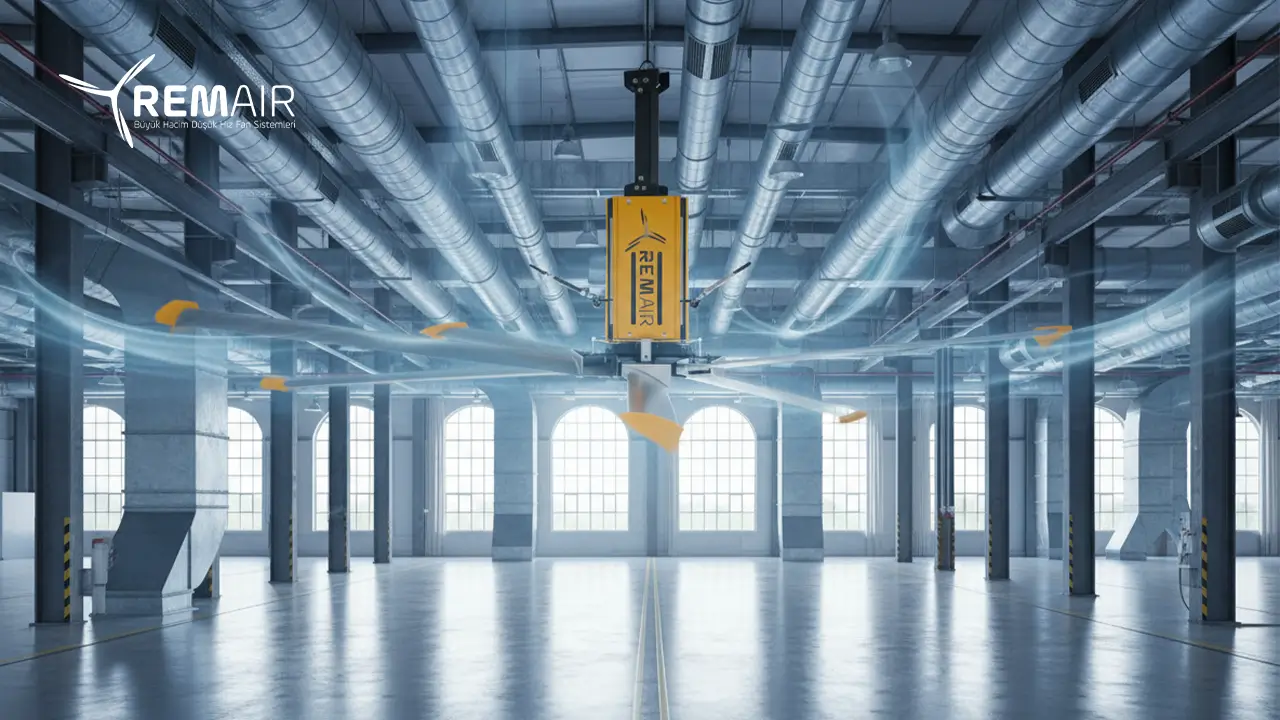
An HVLS fan distributes heat from your existing heating system more efficiently. It does not generate heat itself. The benefit depends on the type of heating you use.
| Heating system | What the fan adds |
|---|---|
| Warm-air blowers and industrial heaters | They heat the air directly, so warm air rises quickly to the ceiling. This is where the fan makes the biggest difference. |
| Radiators and unit heaters | These also heat the air. The fan helps spread heat more evenly at floor level. |
| Radiant heaters | These primarily heat people and surfaces, so stratification is generally weaker. The fan may have a more limited effect with these systems. |
You can send us your heating system details and ceiling height via our contact page.
How Can You Measure Heating Savings at Your Facility?
The most reliable way to see the difference is to compare conditions in your building before and after running the fan:
- With the heating on and the fan off, measure temperatures at two points, approximately 1.5 metres above the floor and near the ceiling. A simple digital thermometer or temperature logger is sufficient.
- Record daily heater runtime and natural gas or electricity consumption from the meter or bill.
- Leave the thermostat at the same setting, run the fan at low speed and repeat the measurements under similar weather conditions.
- Continue comparing for at least a few weeks. Assess days with substantially different outdoor temperatures separately.
If the floor-to-ceiling temperature difference drops and the heater runs for less time, the fan is doing its job. Include the fan’s own electricity use in the calculation. For example, our five-blade, five-metre model has a 1.1 kW motor. Since it runs at low speed in winter, the actual power draw stays below that rating. We discuss fan electricity use in How Much Electricity Does a Ventilation Fan Use? for more detail.
Settings to Check for Winter Operation
- Keep the speed low. If employees can feel a draught, the speed is too high. The best setting depends on mounting height and hall size, so adjust it on site.
- Run the fan with the heating system. Winter operation is intended to bring heat back down to floor level. This is why the fan should run while the heating is on.
- Check the thermostat location. A sensor directly in front of the heater or mounted too high gives a misleading reading. Place it at the height where employees work for more representative results.
- Use automation. Models with a variable-frequency drive can be connected to automation so they start alongside the heating system.
Which Buildings Benefit Most?
Winter operation has the greatest effect in large, open buildings with high ceilings. It also makes a noticeable difference where heating systems warm the air directly. Common examples include:
- Factories, production areas and workshops
- Warehouses and logistics centres (The Importance of Air Circulation in Warehouses and Logistics Centres)
- Gyms and hangars
Barns are different. In winter, removing moisture and harmful gases takes priority over conserving heat. We cover this in How Should Barns Be Ventilated in Winter? in more detail.
See examples from factories and industrial facilities on our Factory / Industrial page and browse all models under Our Products.
Frequently Asked Questions
Will an HVLS fan make employees feel cold in winter?
At a correctly set low speed, it will not. In winter, the fan should gently bring warm air down from the ceiling without creating a draught. If you can feel the airflow, reduce the speed.
Can the fan replace the heater?
No. An HVLS fan generates no heat. It returns heat produced by the existing heating system from the ceiling to the work area, helping the heater run less often.
Should the fan run all day in winter?
Running it with the heating system is sufficient. When the heating is off, there is usually no buildup of warm air at the ceiling to recover, so running the fan is often unnecessary.
Can I use my summer fan in winter too?
Yes. The same fan works in both seasons. Only the speed changes, high in summer and low in winter. A model with a variable-frequency drive makes speed changes easier.
How many fans does my facility need?
The number depends on floor area, ceiling height and layout. For a general sizing method, see How Many HVLS Fans Do You Need for 1,000 m²? for details.

Leave a Comment