


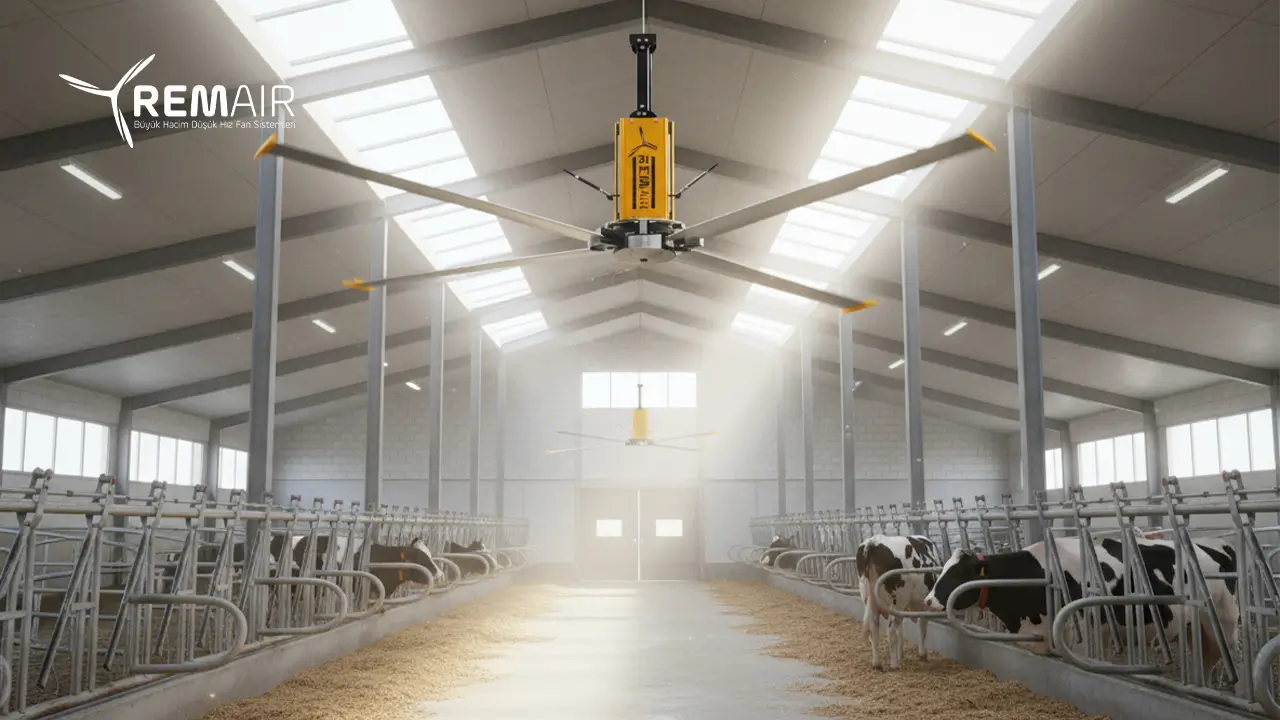
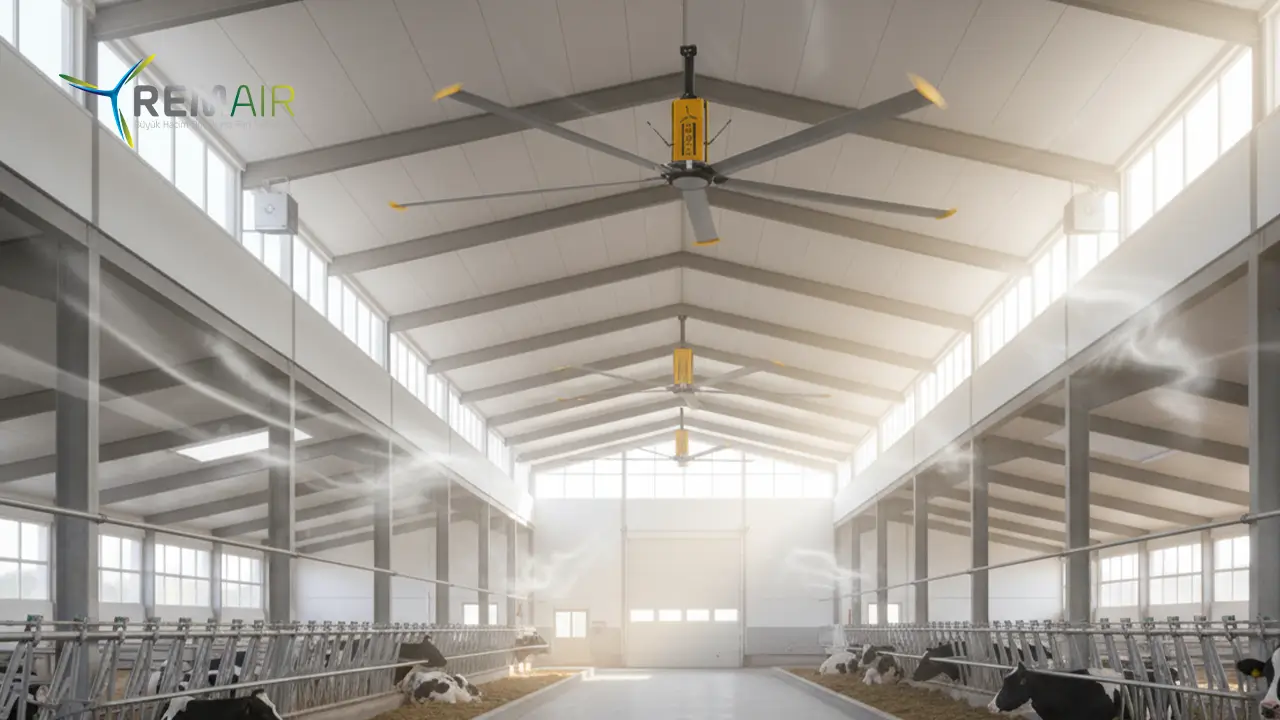

The purpose of ventilation in calf pens is to continuously renew the air in the environment without creating a noticeable air current at animal level. Unlike adult cattle, calves are extremely sensitive to drafts; in winter, air speed at animal level should not exceed 0.2 m/s, while moisture, ammonia and microbial loads must not be allowed to accumulate in the pen. These two requirements may appear contradictory, and this is precisely what makes calf ventilation challenging.
The most common mistake in the field is to let this balance shift too far to one side. When the pen is completely closed to keep the calf from getting cold, moisture and ammonia accumulate and respiratory infections begin; when the calf is exposed to direct airflow in an attempt to ventilate, it spends energy keeping warm, its immunity weakens and it becomes ill again. Below, we explain why calves require a different approach, how to balance drafts with fresh air, and which solutions should be applied according to pen type.
Why Is a Calf’s Ventilation Requirement Different from That of an Adult Animal?
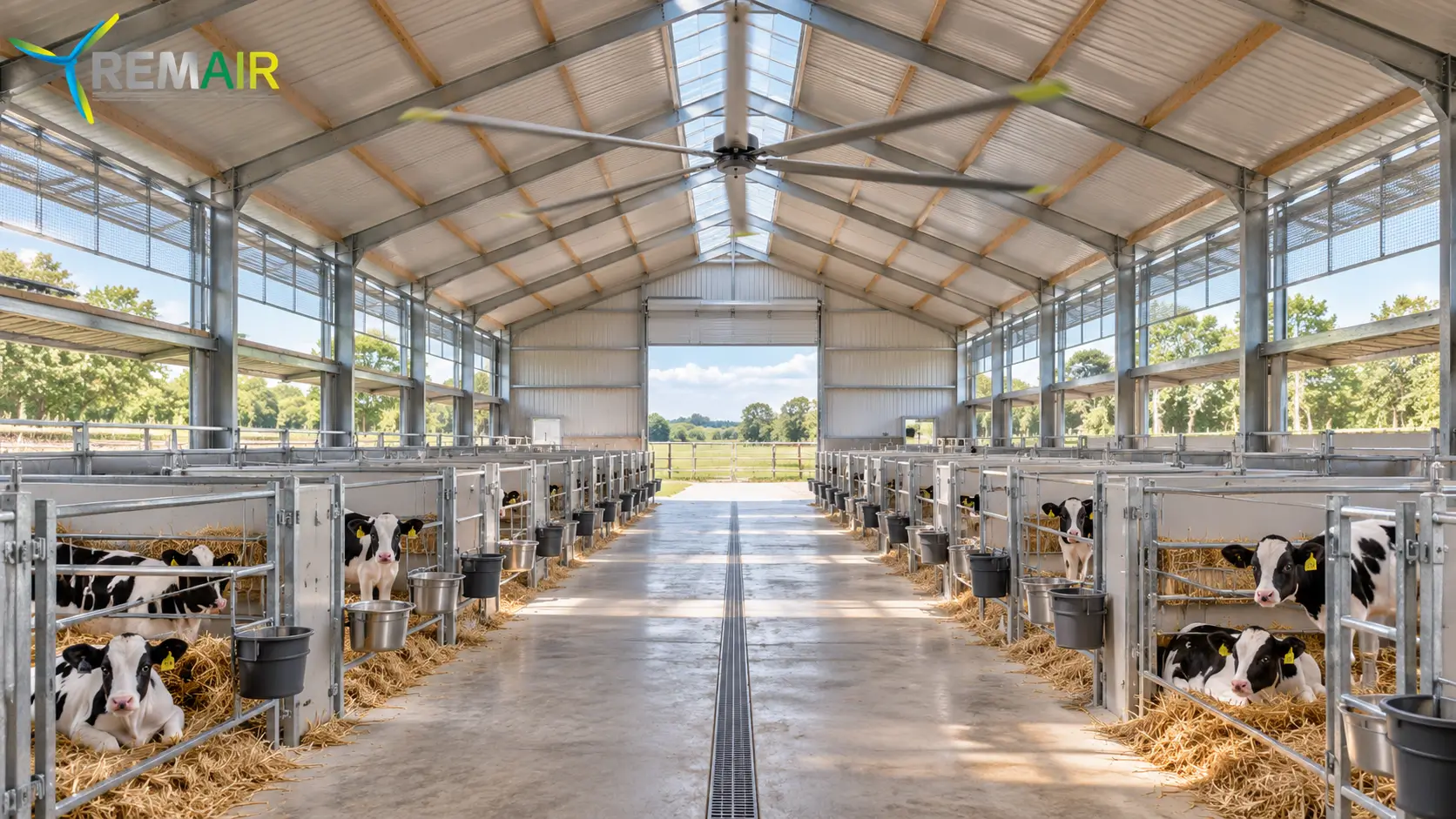
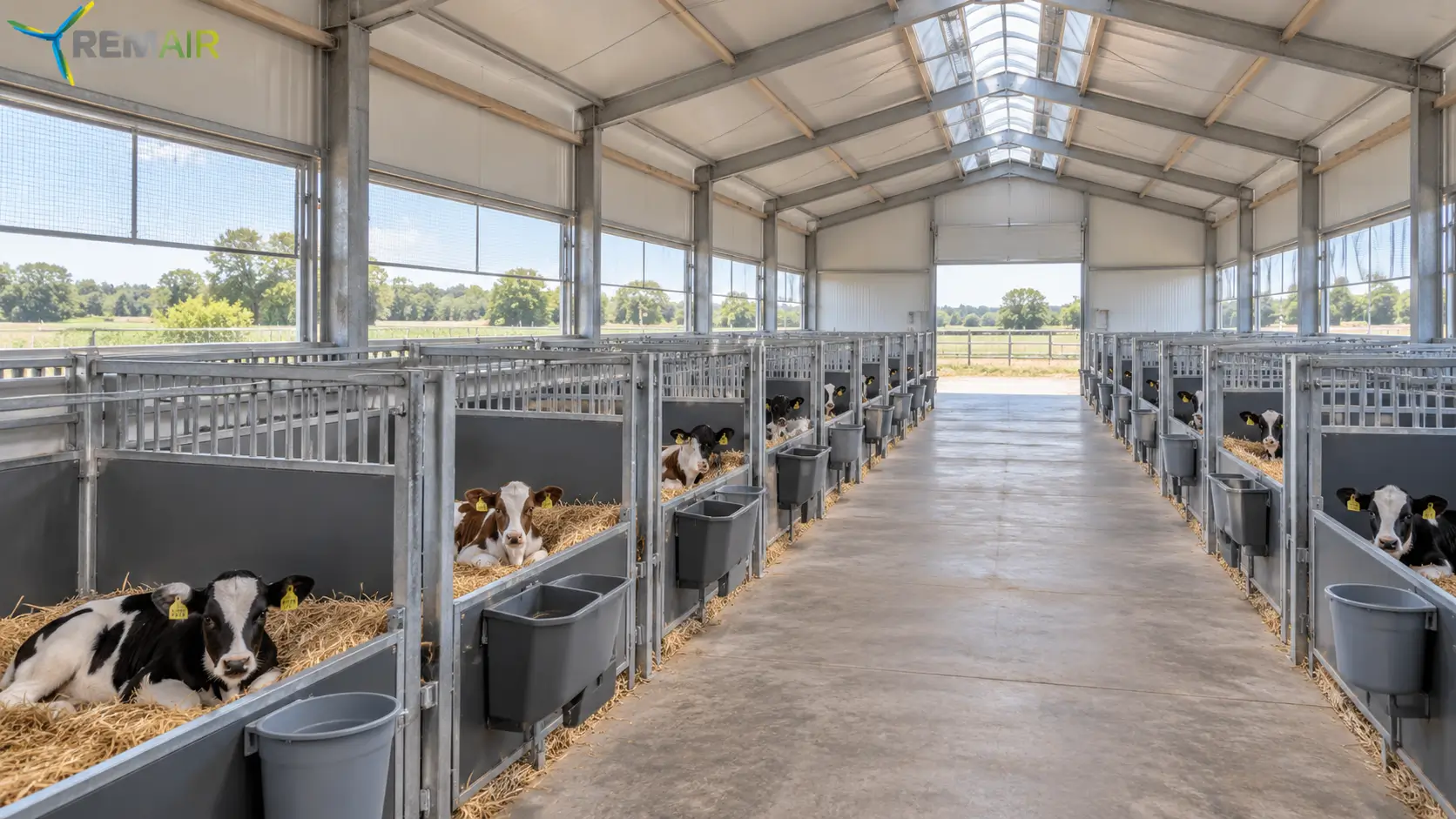
A newborn calf lives in a completely different microenvironment even when housed in the same barn as adult cattle. There are three reasons for this.
Its ability to retain body heat is limited. A calf has a large surface area relative to its body mass and limited fat reserves. Heat loss therefore occurs quickly. An airflow that feels cooling to an adult cow can mean cold stress for a calf.
Its immune system is in a transitional phase. Passive immunity obtained through colostrum declines over time, while the calf’s own immune system is not yet fully developed. During this vulnerable period in the first weeks of life, environmental conditions directly determine disease risk.
Its respiratory system is small and close to the floor. Calves spend much of the day lying down. Because ammonia and moisture concentrate near floor level, the animal breathes exactly this air. Measurements should therefore be taken not at human height, but at the nose level of a lying calf.
Poor Air Quality and the Risk of Pneumonia
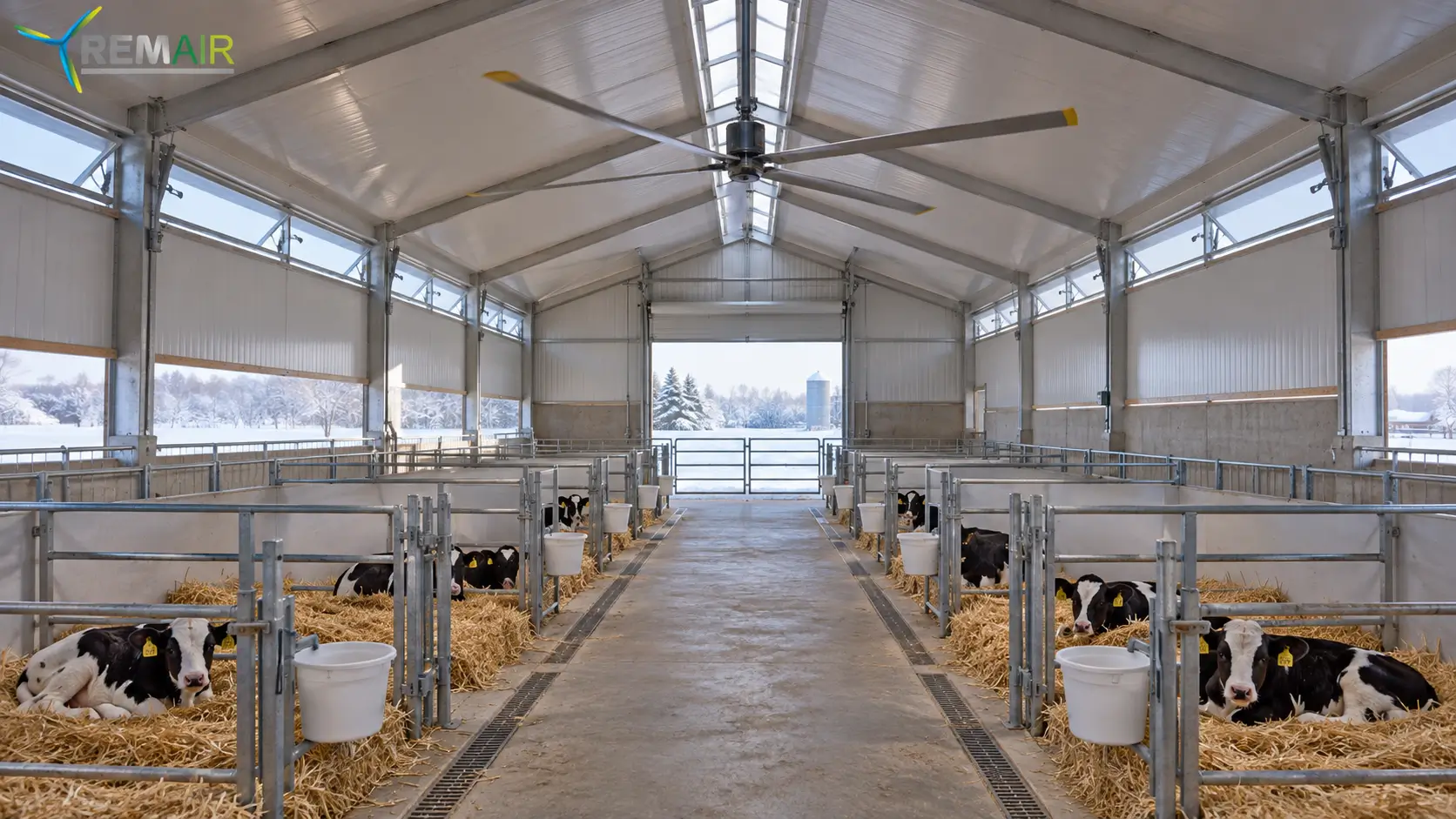
Respiratory disease accounts for a major share of calf mortality and growth retardation. Pneumonia is not caused by a single factor; environmental conditions create the groundwork, and the pathogen follows.
The chain caused by poor ventilation works like this: air exchange becomes inadequate, relative humidity rises, bedding becomes wet, and ammonia is released from the wet bedding. Ammonia weakens the respiratory tract’s defense mechanisms. At the same time, the concentration of airborne bacteria and viruses also increases. As a result, the animal becomes ill from a pathogen it could normally resist.
The critical point is this: disease in calf pens is usually caused not by cold, but by confinement. A calf in dry, clean air can tolerate low temperatures; a calf in humid, ammonia-laden air can become ill even when the temperature is ideal. For the clinical side of the issue and early intervention, see our article on newborn calf diseases .
Balancing Drafts and Fresh Air
This is the most critical section of this article because two concepts are often confused. Air exchange and air speed are not the same thing.
Air exchange refers to how many times the air in the pen is renewed per hour and should continue throughout the year. Air speed is the airflow felt at animal level and must be limited according to the season. In a well-designed calf pen, the air is continuously renewed without the calf feeling it as a draft.
| Period | Air speed at calf level | Priority |
|---|---|---|
| Winter | Below 0.2 m/s | Remove moisture and ammonia; keep airflow above animal level |
| Transition seasons | 0.2–0.5 m/s | Adjust openings according to daily temperature fluctuations |
| Summer | Up to 1 m/s (for calves older than one month) | Reduce heat stress; protect newborns from direct airflow |
The practical rule is simple: in winter, air movement should remain above the calf’s back level; in summer, it should be brought down to animal level in a controlled manner. This is achieved by positioning air inlets high and preventing the airflow from falling directly onto the bedding area.
Ventilation According to Pen and Hutch Type
| Housing type | Main problem | Recommended solution |
|---|---|---|
| Individual outdoor hutch | Air quality is good, but the hutch overheats in summer and remains exposed to prevailing winds in winter | Adjustable ventilation opening at the rear of the hutch; shading for summer and wind protection/orientation for winter |
| Individual pen inside the barn | Solid pen walls block airflow, creating a pocket of stagnant air inside the pen | Use perforated or open upper sections of pen walls; ensure continuous renewal of ambient air |
| Group pen | As animal density increases, moisture, heat and ammonia loads multiply and disease transmission accelerates | Keep stocking density low; increase air exchange according to group size |
| Enclosed calf unit | Air exchange stops when the unit is completely closed in winter | High-level adjustable inlet, ridge outlet and mechanical assistance when necessary |
Moisture and Ammonia Control
The most practical indicator of air quality in a calf pen is the bedding. Dry, dust-free bedding that the calf can nest into provides insulation and reduces the moisture load. Wet bedding, on the other hand, loses its insulating ability and becomes a source of ammonia.
Three checks are sufficient in practice:
- Knee test. Kneel on the bedding; if your trousers get wet, the bedding is also too damp for the calf.
- Odor test. If you notice a sharp ammonia smell or your eyes sting when you bend down into the pen, the level is already too high for the animal.
- Condensation check. If water droplets appear on wall and ceiling surfaces, air exchange is inadequate.
The target is to keep relative humidity in the 50–70% range. For methods to reduce moisture, see our article on how to reduce barn humidity, and for bedding and floor management, see how a barn floor should be designed .
Cooling in Summer, Protection in Winter
A calf’s comfort temperature changes with age. During the first three weeks, the lower limit is noticeably higher; temperatures below 15°C can cause cold stress in calves during this period. As calves grow, their tolerance to cold increases, but the opposite applies on the warm side: above 25°C, calves can also experience heat stress. For target barn temperatures, see our article on what the barn temperature should be .
In summer, the priority is shade and air movement. Hutches should be placed in a shaded area rather than on a surface exposed to direct sunlight; hutches placed on asphalt or concrete can also heat up from below. In winter, protection consists of three elements: thick, dry bedding, positioning away from direct wind, and the use of calf jackets when necessary.
Using Fans for Ambient Ventilation
There is one calf-specific rule for fan use, and it is non-negotiable: the fan must not blow directly on the calf. For newborn calves and calves in their first weeks of life, direct airflow can cause cold stress and respiratory irritation rather than simply cooling them.
The correct approach is to use the fan not as a “blower,” but as an element that moves the ambient air. The goal is to prevent stagnant air throughout the barn housing the pens, mix the warm and humid air that accumulates near the ceiling, and eliminate dead-air pockets.
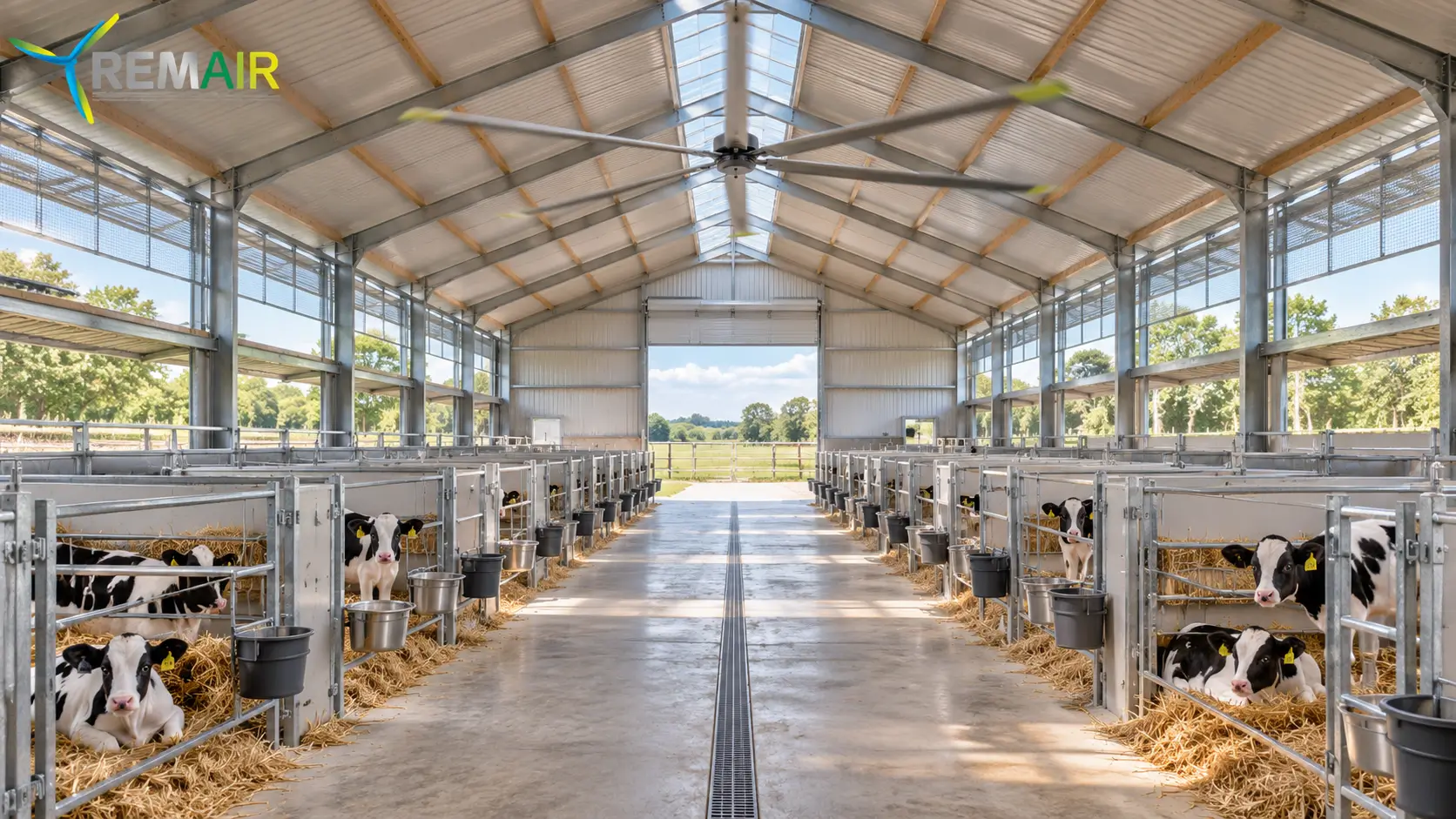
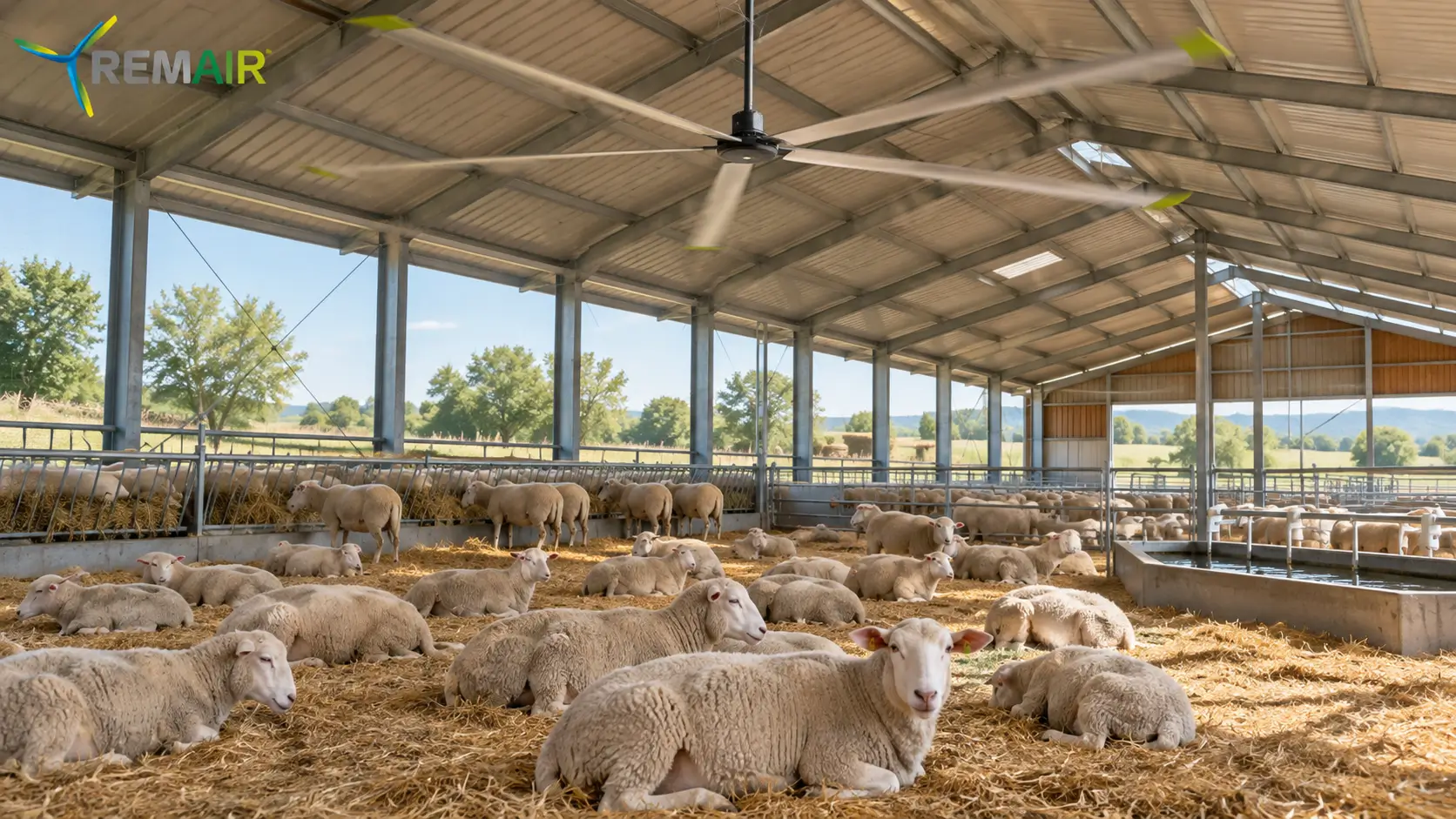
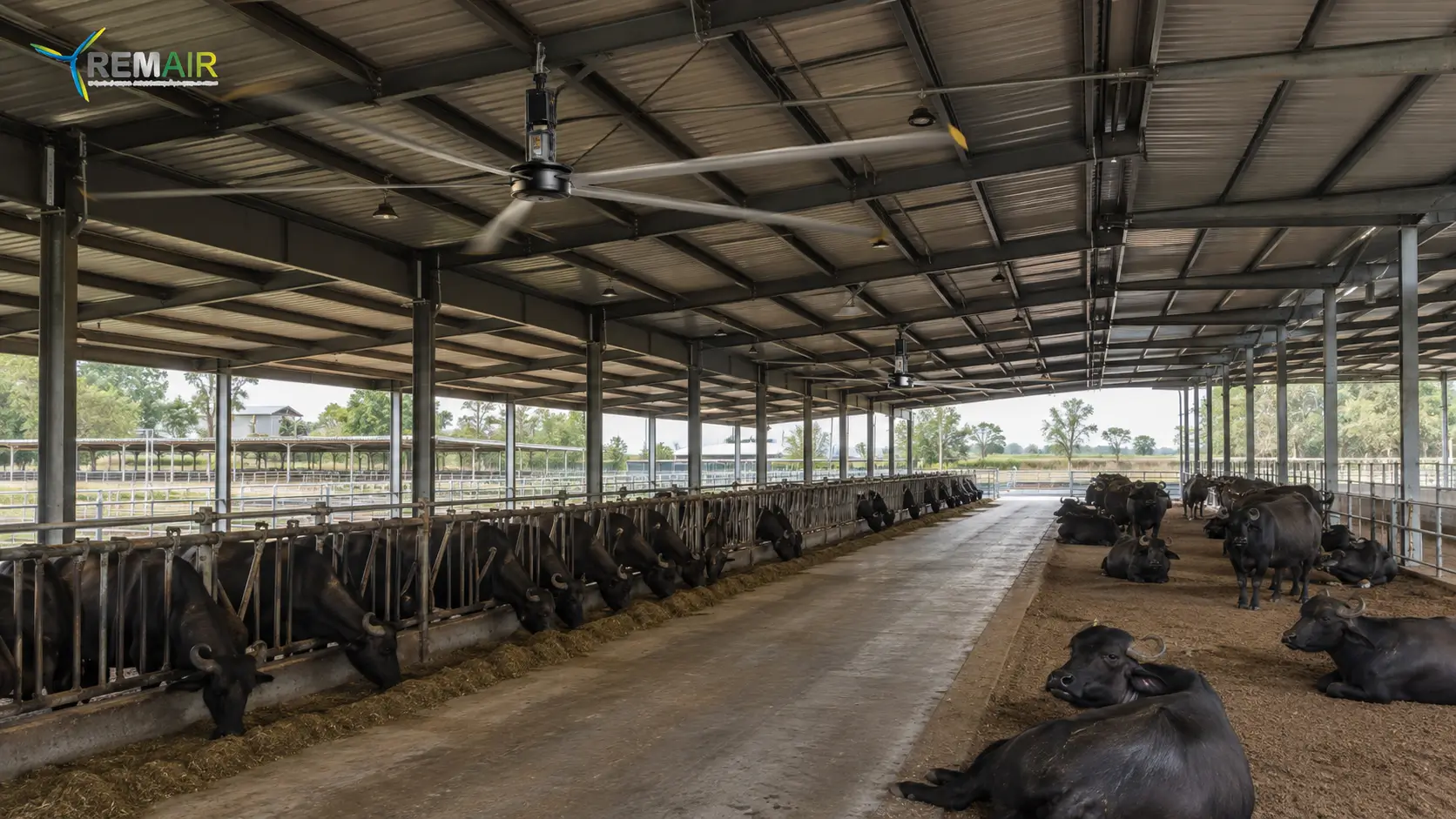
At this point, fan type becomes decisive. Small-diameter, high-speed fans produce a narrow, harsh air jet; when this jet falls on a pen, it becomes a direct source of draft for the calves there. Large-diameter, low-speed HVLS ceiling fans move a broad column of air slowly, providing circulation throughout the barn volume without creating a harsh airflow at animal level. When operated at low speed in winter, they mix the warm air accumulated at the ceiling downward, reducing condensation without creating a draft at calf level.
The placement rule is clear: the fan axis should align with corridors and service areas, not directly above calf pens. For the barn’s overall ventilation design, see how barn ventilation should be designed and for calculating air-exchange requirements, see air changes per hour (ACH) calculation .
Let’s Plan the Right Solution for Your Calf Unit
Ventilation in calf pens is solved not with a single product but with the right system design: the location of openings, pen layout, bedding management and air circulation must work together. A poorly positioned fan can be more harmful than having no fan at all.
As Remair, manufacturing HVLS ceiling fans since 2019, we can determine the appropriate fan diameter, quantity and, most importantly, placement according to the dimensions and pen layout of your facility. Explore our HVLS fan models , review our agriculture and livestock applications , and contact us through our contact page to share your project.
Frequently Asked Questions About Calf Pen Ventilation
Which direction should calf hutches face?
The hutch opening should face away from the prevailing wind, preferably toward the south or southeast. This prevents wind from blowing directly inside in winter while allowing the morning sun to help dry the bedding. Enough space should be left between hutches to allow air circulation, and rows should not be packed so tightly that they completely block one another from the wind. In summer, the same layout must also be shaded, because the hutch itself can heat up like a greenhouse under direct sun.
Should pen walls be solid or perforated?
This requires balancing two needs. A solid pen wall prevents diseases transmitted through nose-to-nose contact and protects the young calf from side drafts; however, it also blocks airflow and creates a pocket of stagnant air inside the pen. The common solution is a mixed design: the lower section of the pen wall is solid, while the upper section is perforated or open. This prevents contact and drafts at calf level while allowing air exchange at a higher level.
How large should a calf pen be?
In individual pens, there must be enough space for the calf to lie comfortably, turn around and stretch its legs while lying down; in practice, approximately 1.5–2 m² is allowed. In group pens, more space is provided per animal and group size is limited. Space is directly related to ventilation: as the number of animals per unit area increases, the moisture, heat and ammonia load also rises, increasing the air-exchange requirement in the same building.
Should straw or wood shavings be preferred as calf bedding?
Long-stem straw is preferable in winter because the calf can nest into it and create an insulating air layer around its body. Wood shavings and similar fine materials have high moisture-absorption capacity, so they are preferred in milder periods when dryness is the priority; however, they provide less insulation and may create dust. Whatever material is used, freshness and depth are decisive; a thin layer of clean bedding does not perform better than a thick layer of damp bedding.
When should a calf jacket be used?
A jacket is useful when ambient temperature falls below the calf’s comfort range, especially during the first three weeks of life. Its purpose is to let the animal use its energy for growth rather than keeping warm. Two points are important: the jacket should only be put on a dry calf, because placing it over wet hair can create a cooling effect; it should also be checked regularly and replaced when dirty. A jacket does not replace thick, dry bedding; it complements it.
What is positive-pressure tube ventilation, and is it used in calf pens?
It is a method commonly used in enclosed calf units. Fresh outdoor air is distributed throughout the facility through a perforated duct suspended from the ceiling. The diameter and placement of the holes are calculated so that the air mixes with room air before reaching calf level, providing fresh air without creating drafts. This system directly solves fresh-air delivery. Circulating the entire building volume, dispersing dead-air pockets and breaking up heat stratification in winter are the role of circulation fans; the two systems are complementary, not alternatives.

Leave a Comment