

An industrial fan is a high-capacity fan designed to exhaust air, transport it through a duct, or circulate it within large or demanding environments such as factories, warehouses, farms, car parks, and workshops, and can operate continuously for long hours. According to their operating principle, they are divided into two main groups: axial fans that push air along the shaft axis and radial (centrifugal) fans that turn the air 90 degrees and discharge it under pressure. According to their method of use, they are classified as wall-mounted exhaust fans, roof fans, duct fans, jet fans, smoke extraction fans, exproof fans, portable industrial fans, and HVLS ceiling fans.
The quickest way to select the correct type is to clarify your requirement: Do you want to exhaust polluted or hot air, transport air through ducts and filters, or circulate air over a large area to provide cooling? Below, we explain what each fan type does, where it is used, and what you should consider when selecting one.
Features That Distinguish an Industrial Fan from a Domestic Fan
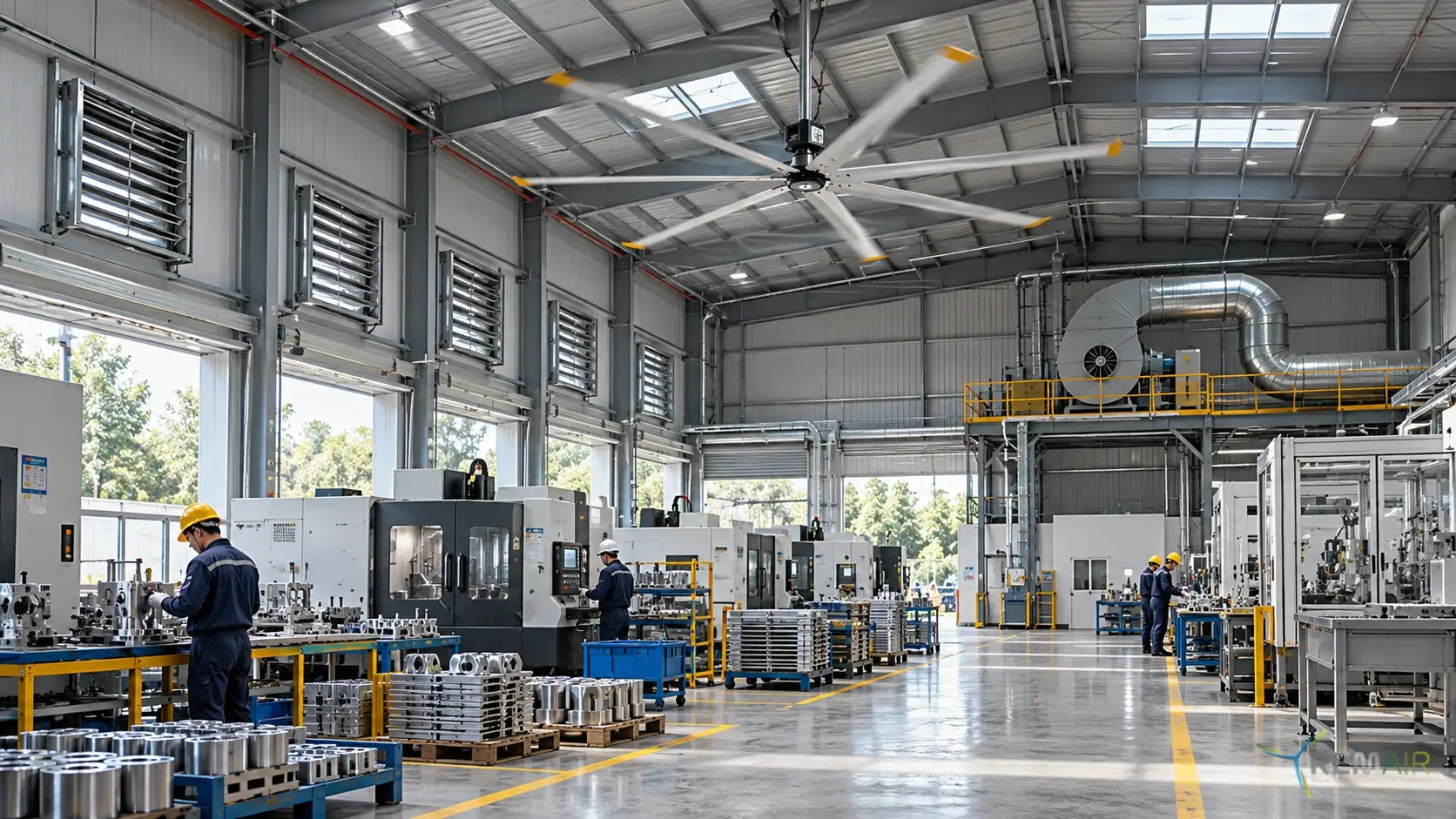
Industrial fans are not simply enlarged versions of domestic fans; their differences appear in four main areas. Their motors are designed for continuous operation and, at higher power levels, are generally supplied with three-phase electricity. Their housings and blades are made from materials resistant to dust, moisture, and corrosion, such as galvanized sheet metal, stainless steel, or aluminum. Their capacities are expressed in thousands of cubic meters per hour and, in larger models, much higher air volumes. Finally, depending on the environment in which they operate, they can be specially certified for conditions such as high temperatures, explosive atmospheres, or ammonia-rich air.
According to Operating Principle: Axial and Radial Fans
Axial fans
In an axial fan, air enters along the axis of the propeller shaft and exits in the same direction; its structure resembles an aircraft propeller. It moves a large volume of air using relatively little energy, but the pressure it generates is low. For this reason, it is widely used where there is little resistance in front of the airflow: wall-mounted exhaust fans that discharge directly outdoors, poultry houses, greenhouses, short-duct systems, and cooling applications are common examples. Axial fans are generally more compact, lighter, and more economical than radial fans.
Radial (centrifugal) fans
In a radial fan, air enters through the center of the impeller, is thrown outward by the rotating blades, and exits at a right angle to the inlet direction. The spiral housing surrounding the impeller converts air velocity into pressure; this shape is also why these fans are commonly known as "snail fans." They move less air than axial fans but generate much higher pressure. This characteristic makes them indispensable in systems where air must pass through long ducts, bends, and filters. Dust collection, welding fume extraction, paint booths, drying ovens, and air handling units are typical applications.
Radial fans are also classified according to blade design. Forward-curved blade fans operate quietly and are used in low- to medium-pressure HVAC applications. Backward-curved blade fans are more efficient and do not overload the motor when system pressure changes. Straight (radial) blade fans are resistant to carrying dusty, chip-laden, and abrasive air.
| Feature | Axial Fan | Radial (Centrifugal) Fan |
|---|---|---|
| Airflow direction | Parallel to the shaft axis, passes straight through | Exits at a right angle (90°) to the inlet |
| Air volume | High | Medium |
| Pressure | Low | High |
| Duct and filter compatibility | Ductless or short-duct applications | Long ducts, bends, and filtered systems |
| Typical use | Wall exhaust, poultry houses, greenhouses, general ventilation | Dust collection, fume extraction, air handling units, process air |
The pressure concept in the table is one of the most commonly overlooked points in fan selection. Technically known as static pressure, it is the total resistance encountered by air as it passes through ducts, bends, filters, and louvers. An axial fan whose catalogue states a high airflow rate may be unable to overcome this resistance when connected to a long, filtered duct and may move only a small fraction of the promised airflow. For this reason, a fan should be selected not only according to airflow rate but also according to the resistance of the system to which it will be connected.
Types of Industrial Fans According to Application
Wall-mounted exhaust fans
These are generally axial fans installed on a wall or in a window opening. They exhaust hot, humid, or polluted indoor air and allow fresh air to enter through openings. They are widely used on factory walls, in poultry houses, greenhouses, and tunnel-ventilated barns. Louvers that close when the fan stops prevent outdoor air and wind from flowing back inside.
Roof fans
These fans are installed on the roof and exhaust air directly upward. Since hot air naturally rises, they remove accumulated heat from high-ceiling production areas and warehouses by the shortest route. Another advantage is that they do not occupy indoor floor space.
Duct fans
These fans are installed inside ventilation ducts as part of the duct line. They are used to supply fresh air or extract polluted air in ducted systems such as offices, shops, shopping malls, and industrial kitchens. Depending on duct length and resistance, they may be axial or radial.
Jet fans
These are ductless fans used in enclosed car parks and tunnels. Suspended from the ceiling, they create a high-velocity air thrust that drives exhaust gases and smoke toward extraction points, accelerating their removal. They are generally designed to operate at low speed during normal operation according to carbon monoxide sensors and at high speed for smoke extraction during a fire.
Smoke extraction fans
These are high-temperature-resistant fans designed to remove hot smoke from escape routes during a fire. They are classified according to the European standard EN 12101-3. For example, F300 and F400 classes indicate that the fan can continue operating at 300 °C or 400 °C for a specified duration, generally 60 or 120 minutes. Selection and positioning of these fans depend on a project prepared in accordance with fire regulations.
Exproof (ATEX) fans
These fans are used in environments where explosive gases, vapors, or dust may be present, such as paint, chemical, fuel, flour, and feed facilities. They are manufactured using material combinations that reduce spark risk and explosion-protected motors. Equipment used in these environments must be certified according to Directive 2014/34/EU (ATEX); a standard fan must never be used in these areas.
Portable and pedestal industrial fans
These are powerful pedestal, wheeled, or wall-mounted fans commonly known as "industrial-type fans." They do not exhaust air outdoors; instead, they direct airflow toward a specific point to cool people or equipment in that area. They are a practical solution for workshops, construction sites, workstations, and small production areas. In large spaces, however, many units are required, increasing noise and total energy consumption.
HVLS (helicopter) ceiling fans
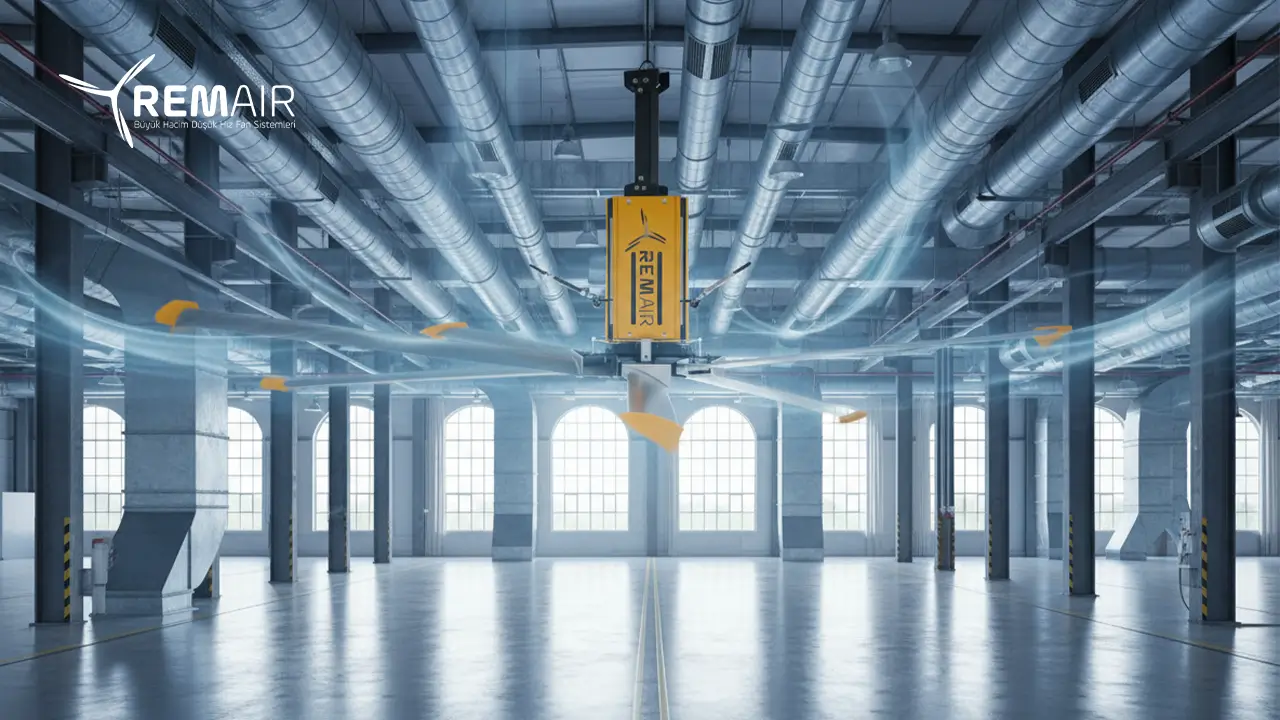
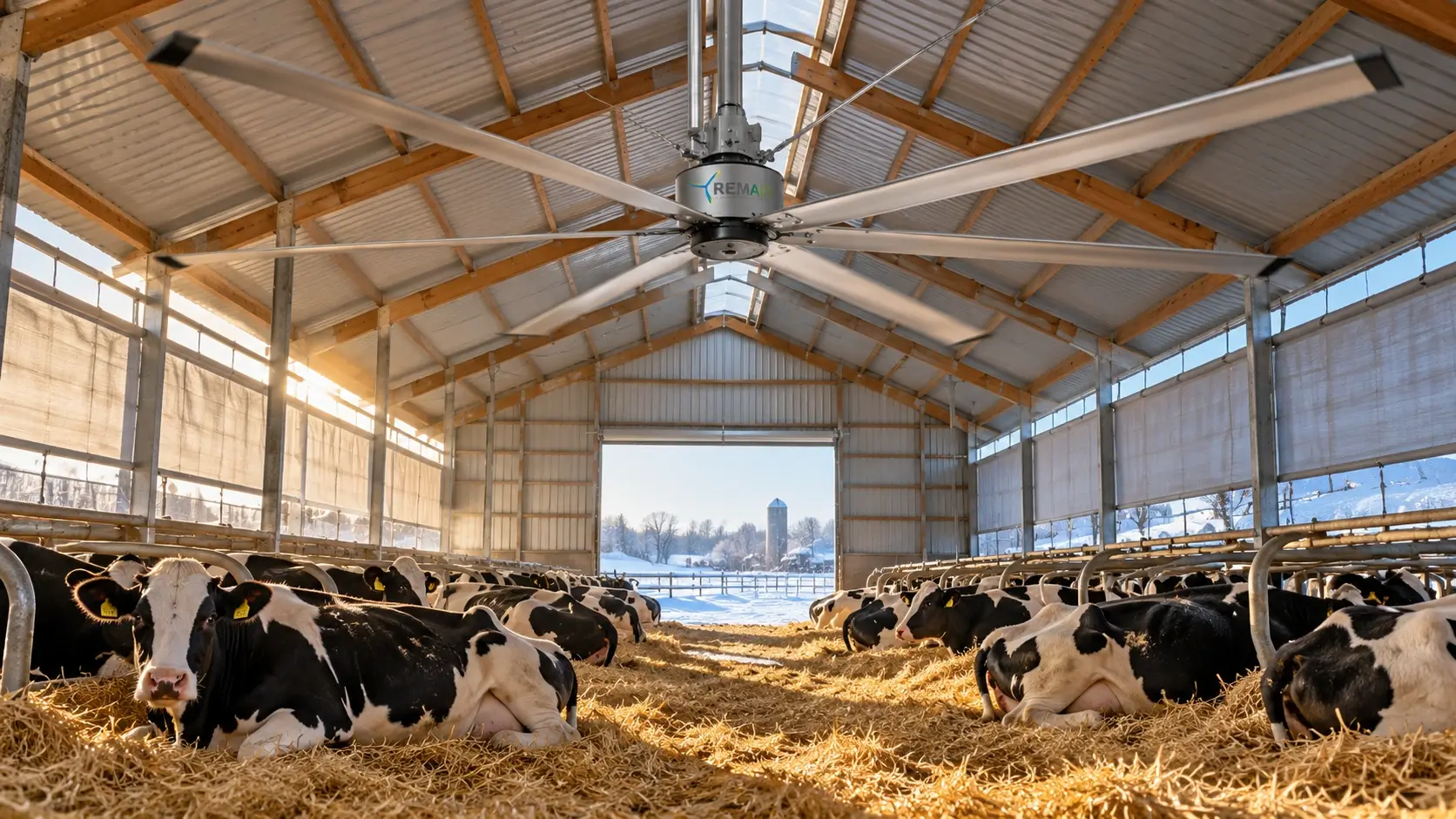
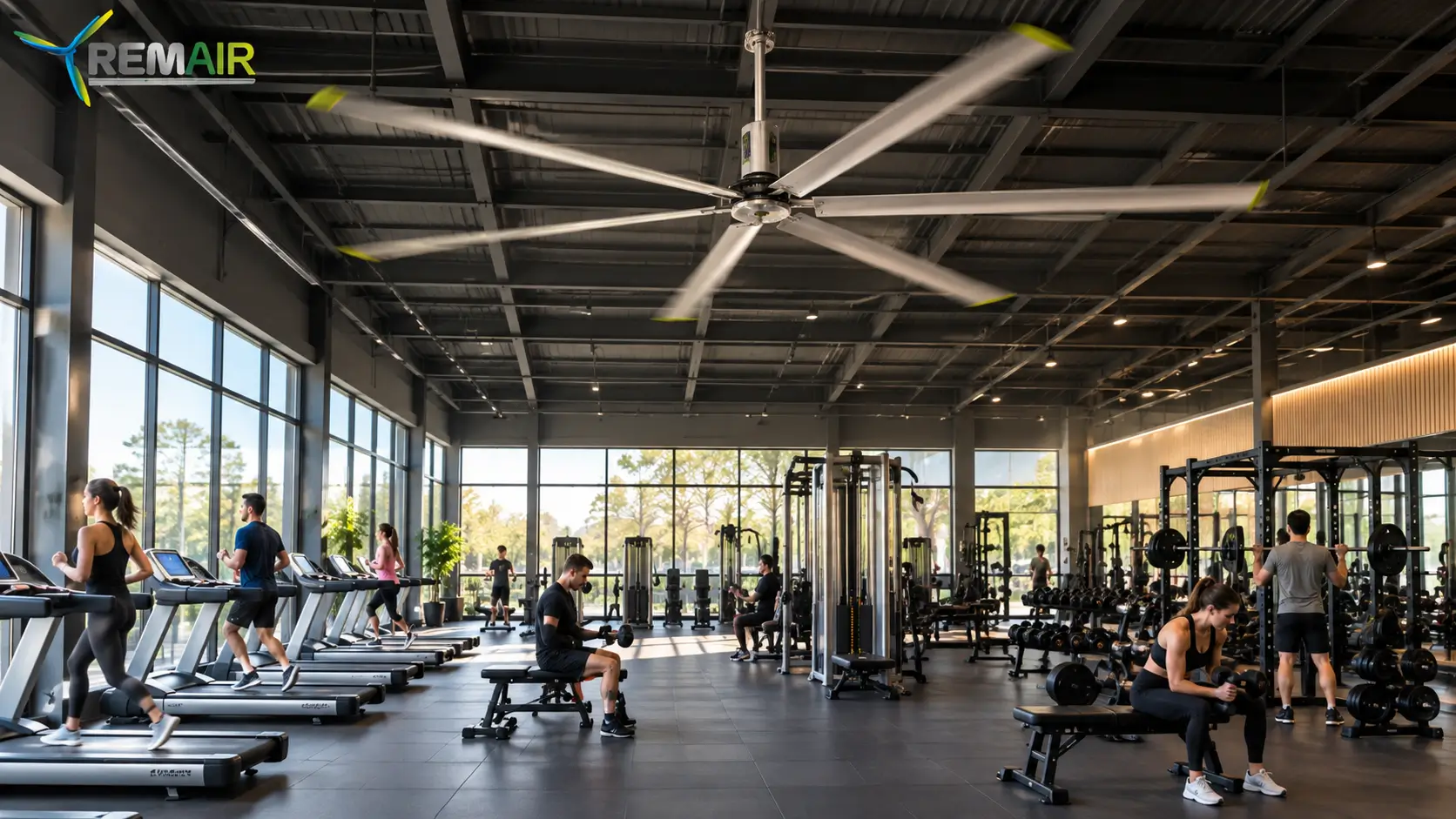
These are large ceiling fans measured in meters in diameter and operating at low rotational speed. Their name comes from the English abbreviation meaning "high volume, low speed." They slowly push a large column of air toward the floor; the air then spreads horizontally across the floor, creating balanced air movement over a wide area. In summer, they provide cooling by reducing perceived temperature, while in winter they improve heating efficiency by mixing warm air accumulated at the ceiling downward. HVLS fans do not exhaust air outdoors; they do not replace an exhaust system but operate together with it. For detailed information, see our article on what an HVLS helicopter fan is and where it is used.
Applications of Industrial Fans
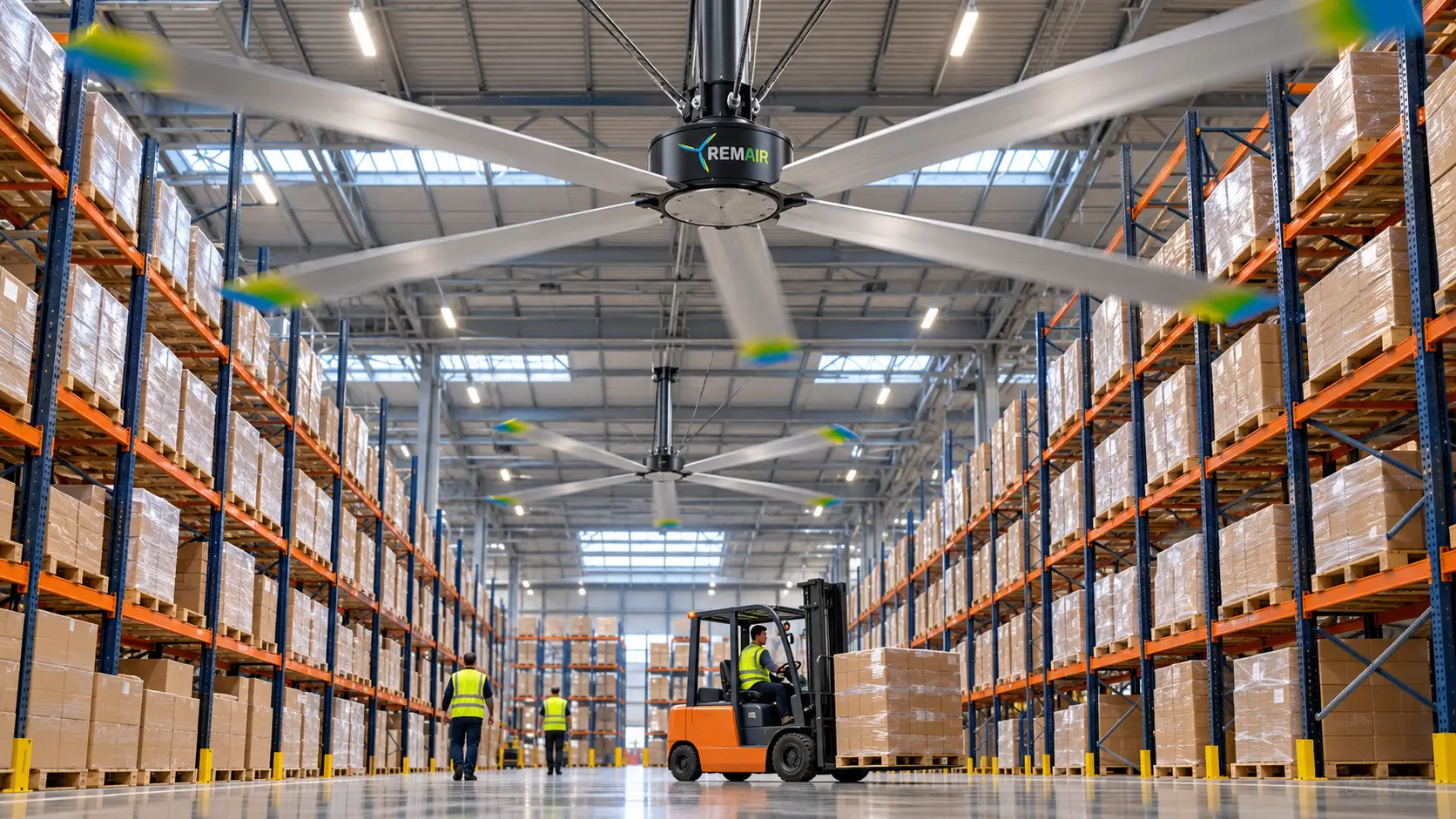
More than one type of fan can be used together in the same facility. For example, in a factory, welding fumes can be collected at the source using a radial-fan extraction system, general heat can be exhausted using roof fans, and air can be circulated at worker level using HVLS fans. The table below summarizes common application areas, their main requirements, and suitable fan types.
| Application Area | Main Requirement | Commonly Used Fan Types |
|---|---|---|
| Factories and production facilities | Heat, dust, and fume extraction; employee comfort | Radial extraction fans, wall and roof exhaust fans, HVLS fans |
| Warehouses and logistics centers | Air circulation under high ceilings, temperature and humidity balance | HVLS fans, roof fans |
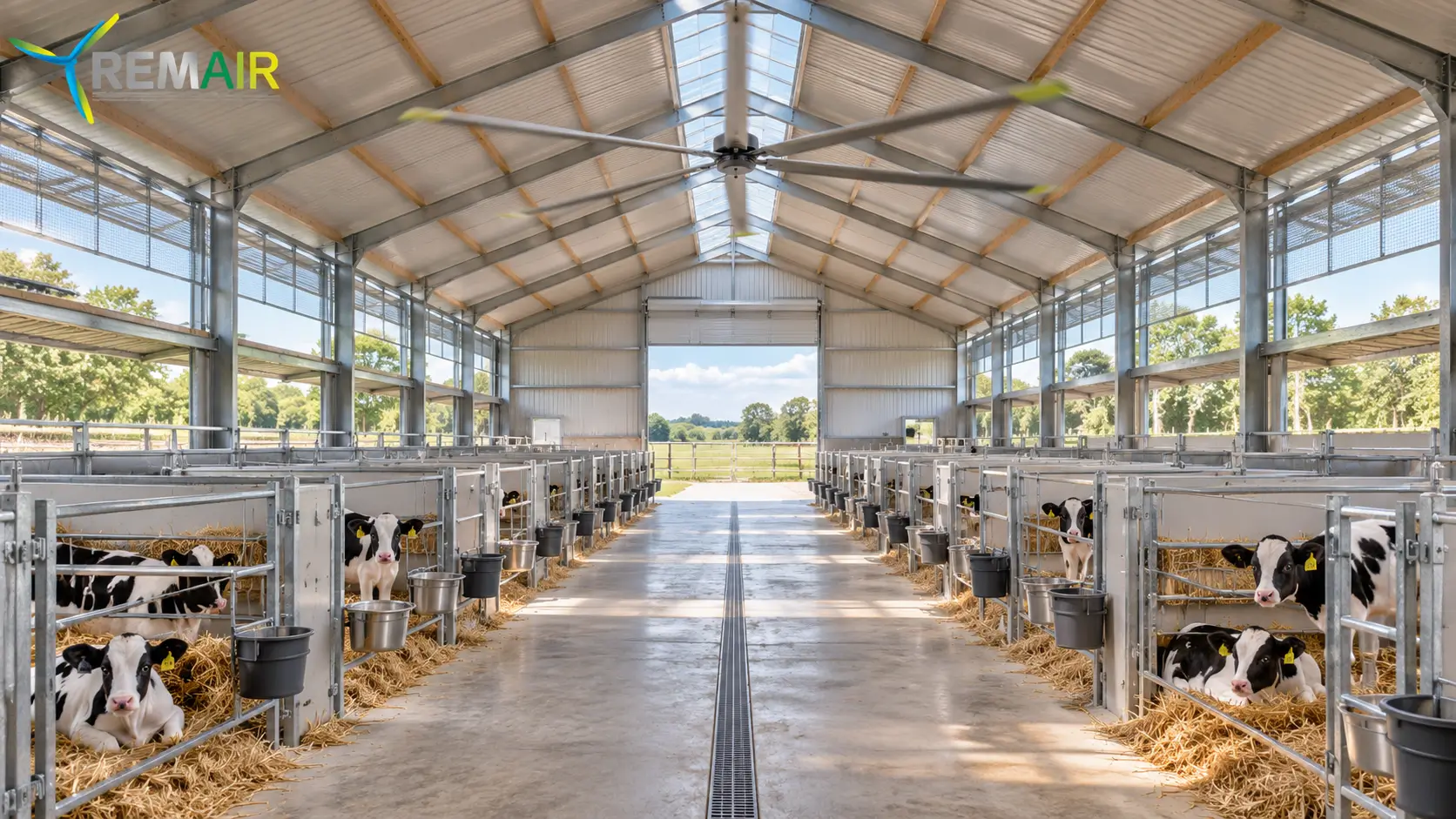
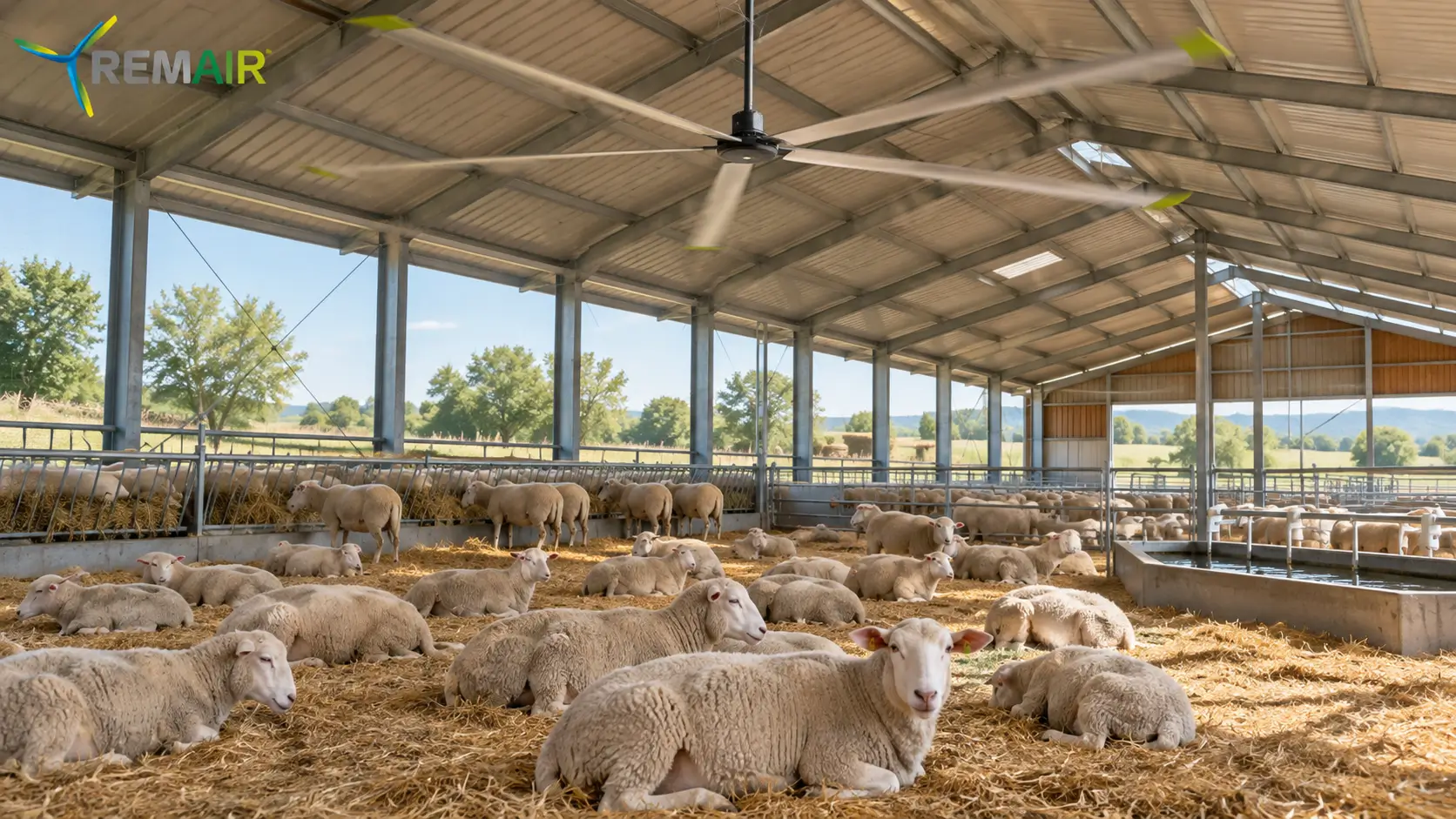
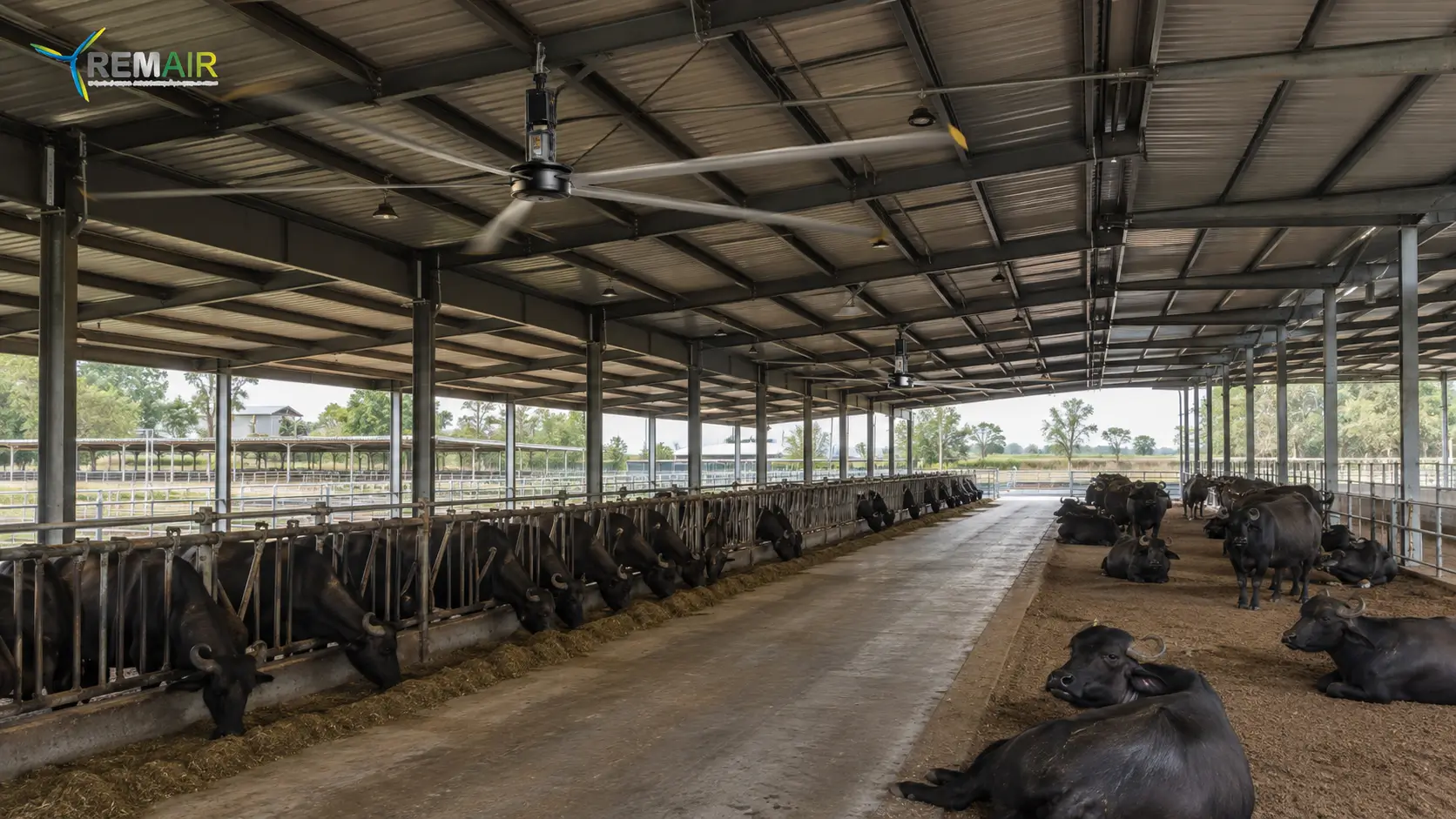
| Barns, poultry houses, and greenhouses | Heat stress, humidity, and ammonia control | Wall-mounted axial exhaust fans, HVLS fans, circulation fans |
| Enclosed car parks and tunnels | Exhaust gas and fire smoke extraction | Jet fans, smoke extraction fans |
| Chemical, paint, and fuel facilities | Safe removal of explosive vapor and dust | Exproof (ATEX) fans |
| Gyms, shopping malls, and commercial areas | Comfort, humidity control, support for air conditioning | HVLS fans, duct fans |
| Welding and metalworking workshops | Extraction of fumes and particles at the source | Local extraction systems with radial fans |
We have covered some of these applications in detail in separate articles. You can learn why air movement is important in high-ceiling warehouses in our article on air circulation in warehouses and logistics centers, and how fumes are collected at the source in our article on welding fume ventilation systems. For an integrated system approach in which fans form one component, see our article on industrial ventilation systems.
What Should You Consider When Selecting an Industrial Fan?
Selection begins by defining the requirement before choosing the fan type. The following criteria apply regardless of industry.
- Purpose: Exhausting air, transporting it through a duct, and circulating it within a space require different types of fans. The first step is to determine which function you need.
- Airflow: The required air volume is calculated according to the volume of the space and how many times the air must be renewed per hour. We explain the calculation method in our article on air change (ACH) calculation.
- Static pressure: As the number of ducts, filters, and bends increases, the resistance the fan must overcome also increases. Check the fan performance curve to determine how much air it can move under your system's resistance.
- Environmental conditions: High temperature, dust, humidity, ammonia, or an explosive atmosphere determine the housing material, motor protection class (IP), and, where necessary, ATEX certification.
- Energy consumption: Check the motor efficiency class (such as IE2 or IE3) and whether speed control is available. Power consumption in fans changes approximately with the cube of rotational speed; theoretically, reducing speed by half can reduce consumption to one-eighth. For consumption calculations, see our article on how much electricity a ventilation fan consumes.
- Noise level: In areas where people work for long periods, fan noise directly affects working comfort.
- Maintenance and service: Access to spare parts and technical service determines the total cost of the fan throughout its service life.
We also discuss factory-specific selection criteria in our article on the most suitable ventilation fan for a factory.
Remair manufactures HVLS helicopter fans with diameters of 4, 5, and 6 meters for air circulation and cooling in large spaces. You can share the dimensions of your facility through our contact page so that we can evaluate together whether an HVLS fan is suitable for your needs.
Frequently Asked Questions
Are an industrial fan and an industrial-type portable fan the same thing?
Not exactly. The term "industrial-type fan" is generally used for powerful pedestal, wheeled, or wall-mounted fans that cool a specific area. An industrial fan is a broader concept that also includes these products as well as exhaust, duct, jet, smoke extraction, and HVLS fans.
Can an axial fan be used in a ducted system?
It can be used in short ducts with low resistance; tube-type axial fans installed inside ducts are designed for this purpose. However, as the duct becomes longer and bends and filters are added, resistance increases and the airflow delivered by the axial fan decreases rapidly. In this situation, a radial fan should be preferred.
What voltage do industrial fans operate at?
High-power industrial fans generally operate on three-phase power (380–400 V), while lower-power models operate on single-phase power (220–230 V). A facility must have the appropriate electrical infrastructure for a fan requiring a three-phase connection. If a frequency inverter will be used for fan speed control, this should also be included in the project from the beginning.
How do you convert between CFM and m³/h?
CFM expresses the amount of air moved per minute in cubic feet and is particularly common in American catalogues. 1 CFM is approximately equal to 1.7 m³/h. For example, a fan with an airflow of 10,000 CFM moves approximately 17,000 m³ of air per hour. To convert m³/h to CFM, simply divide the value by 1.7.
How often should an industrial fan be maintained?
General practice is to inspect fans at least once a year; this interval should be shortened in dusty, oily, or humid environments. During inspection, dirt accumulation on the blades, bearing noise and temperature, belt tension in belt-driven models, connection bolts, and electrical connections should be checked. Since dirt accumulation on blades causes imbalance and vibration, this inspection should not be neglected. The manufacturer's instructions should be followed for the exact maintenance interval.
What determines industrial fan prices?
The main factors determining price are the fan type, diameter, and motor power. Housing and blade materials, special certifications such as ATEX or F400, speed control equipment, and installation conditions also directly affect the price. Therefore, two fans with the same airflow capacity can have significant price differences. When comparing products, considering not only the purchase price but also annual energy consumption and maintenance costs provides a more accurate result.

Leave a Comment