
Animal health and productivity in a barn depend largely on the quality of the air they breathe. In an enclosed barn, ammonia, humidity, dust and carbon dioxide accumulate quickly; during the summer, indoor temperatures can also rise to levels that stress the animals. Ventilation systems are installed precisely to solve this problem. They bring fresh air in, remove polluted and hot air, and balance indoor humidity. Barn ventilation types are generally divided into three main groups: natural, mechanical and hybrid systems that combine the two. Which one is right for your operation depends on the size of the barn, the number of animals and the climate conditions in your region. Below, we examine these systems one by one and explain which option stands out in which situation.
Why Is Barn Ventilation So Critical?
The air inside a barn can deteriorate quietly, without being noticeable from the outside. Animal respiration, manure and bedding continuously produce moisture and gases. When there is not enough air circulation, this buildup first reveals itself through odor and then through changes in animal behavior.
Respiratory diseases are much more common in poorly ventilated barns. Milk yield decreases in dairy cattle, feed efficiency declines in beef cattle, and mortality may increase in poultry. All of these outcomes directly affect the profitability of the operation.
Temperature balance is just as important as air quality. A cow under heat stress reduces feed intake, drinks more water and experiences a noticeable decline in milk yield. A properly designed ventilation system, significantly reduces this pressure on animals during summer heat. In short, ventilation is not a comfort detail; it is a direct determinant of animal health and operational efficiency.
Natural Ventilation Systems
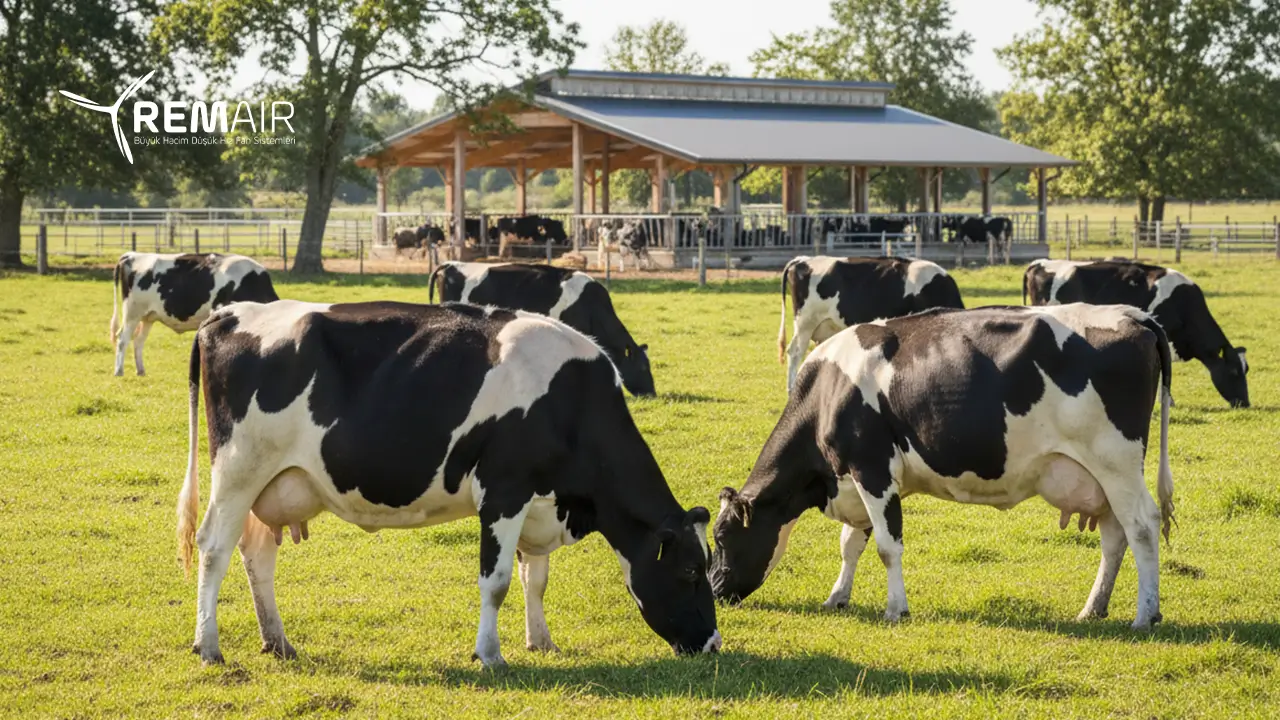
Natural ventilation, as the name suggests, operates without consuming energy. Wind pressure and the natural tendency of warm air to rise are used to create continuous airflow through the barn. Because it has no energy cost, it is especially preferred by small and medium-sized operations.
The success of this system depends largely on barn design. When sidewall openings, roof slope and ridge openings are planned correctly, air circulates naturally. A poorly positioned opening, on the other hand, creates dead zones and can make the ventilation ineffective.
The most commonly used building elements in natural ventilation are:
- Sidewall curtains: They open and close according to the season and weather conditions to regulate air intake.
- Ridge opening: Allows hot air to be exhausted from the top of the roof.
- Eave openings: Allow fresh air to enter from a lower level.
- Adjustable louvers: Direct airflow according to wind direction.
The biggest disadvantage of natural systems is their dependence on weather conditions. On windless, stagnant and humid days, the desired circulation cannot be achieved. For this reason, many operations use natural ventilation not on its own, but as part of a system supported by mechanical ventilation.
Mechanical (Forced) Ventilation Systems
Mechanical ventilation is used in high-capacity barns where natural methods are insufficient. In this system, airflow is not left to the wind; fans create controlled and continuous circulation. The operator determines when, how much and in which direction the air will move.
The greatest strength of mechanical systems is predictability. When supported by sensors, the fans start automatically once temperature or humidity exceeds a defined threshold. This keeps animals under consistent environmental conditions throughout the day and reduces the need for human intervention.
The most common fan types in these systems are exhaust fans and circulation fans. Exhaust fans remove polluted air, while circulation fans move the air inside the barn and create a gentle breeze over the animals. Combined with perspiration, this airflow is one of the most effective ways to reduce heat stress.
Mechanical systems naturally come with a cost. Electricity consumption and maintenance expenses must be considered. However, with energy-efficient models and correct sizing, this cost remains well below the productivity gains the system provides.
Tunnel Ventilation System
Tunnel ventilation is a specialized application of mechanical ventilation and delivers particularly successful results in long, narrow barns. The principle is simple: large fans pull air from one end of the barn while fresh air enters through openings at the other end. This creates a strong, one-directional airflow throughout the entire barn.
The most notable advantage of this system is that it lowers the perceived temperature during summer. Increased air speed creates a cooling effect on the animals. In humid climates, this effect becomes even stronger when combined with evaporative cooling pads.
For tunnel ventilation to work efficiently, the barn must have good airtightness. Uncontrolled openings disrupt airflow and reduce system performance. Therefore, the structure should be checked for air leakage before a tunnel system is installed. It is generally preferred in large dairy and beef cattle operations.
Ventilation with Helicopter Fans
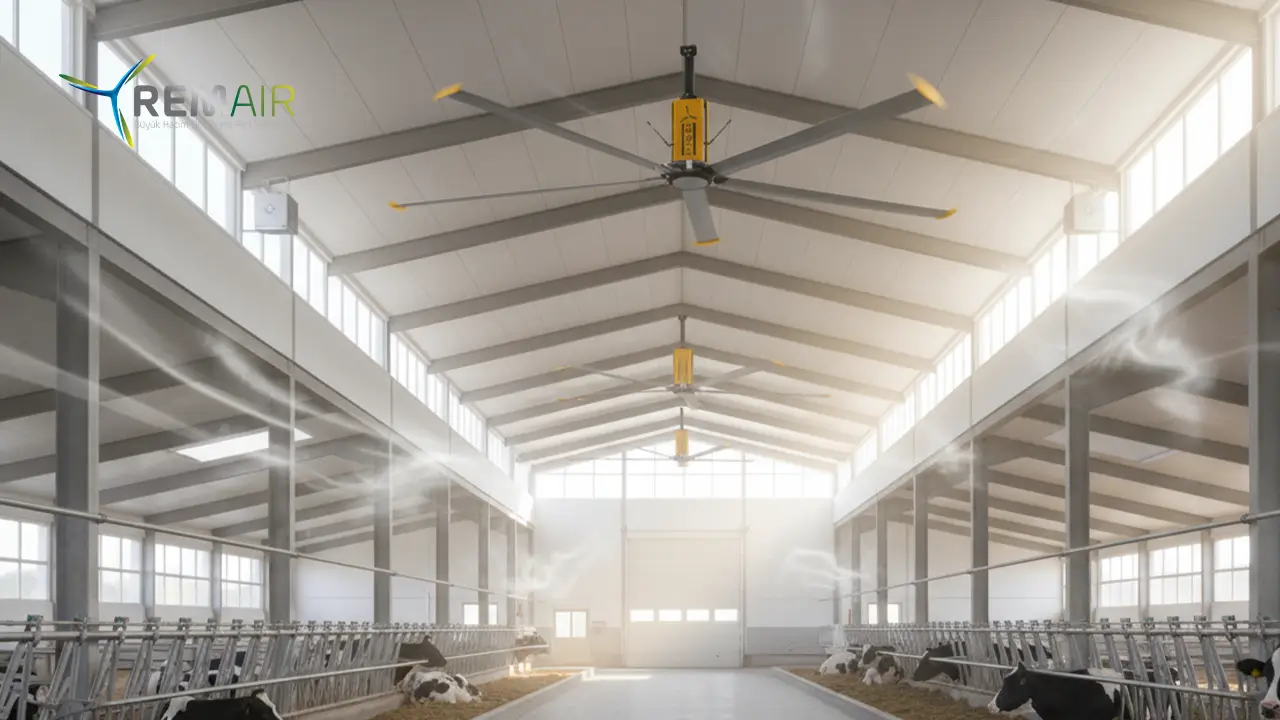
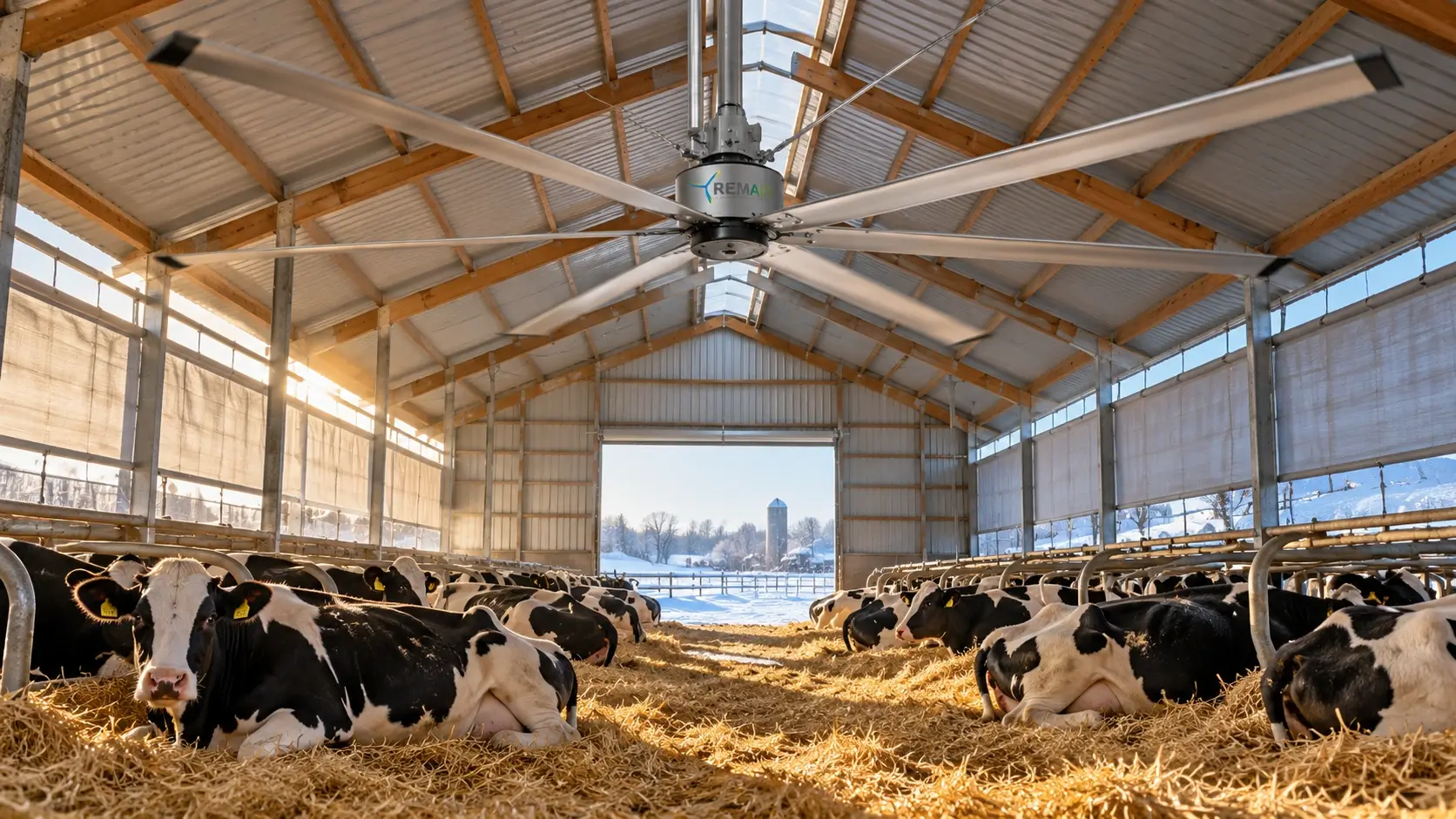
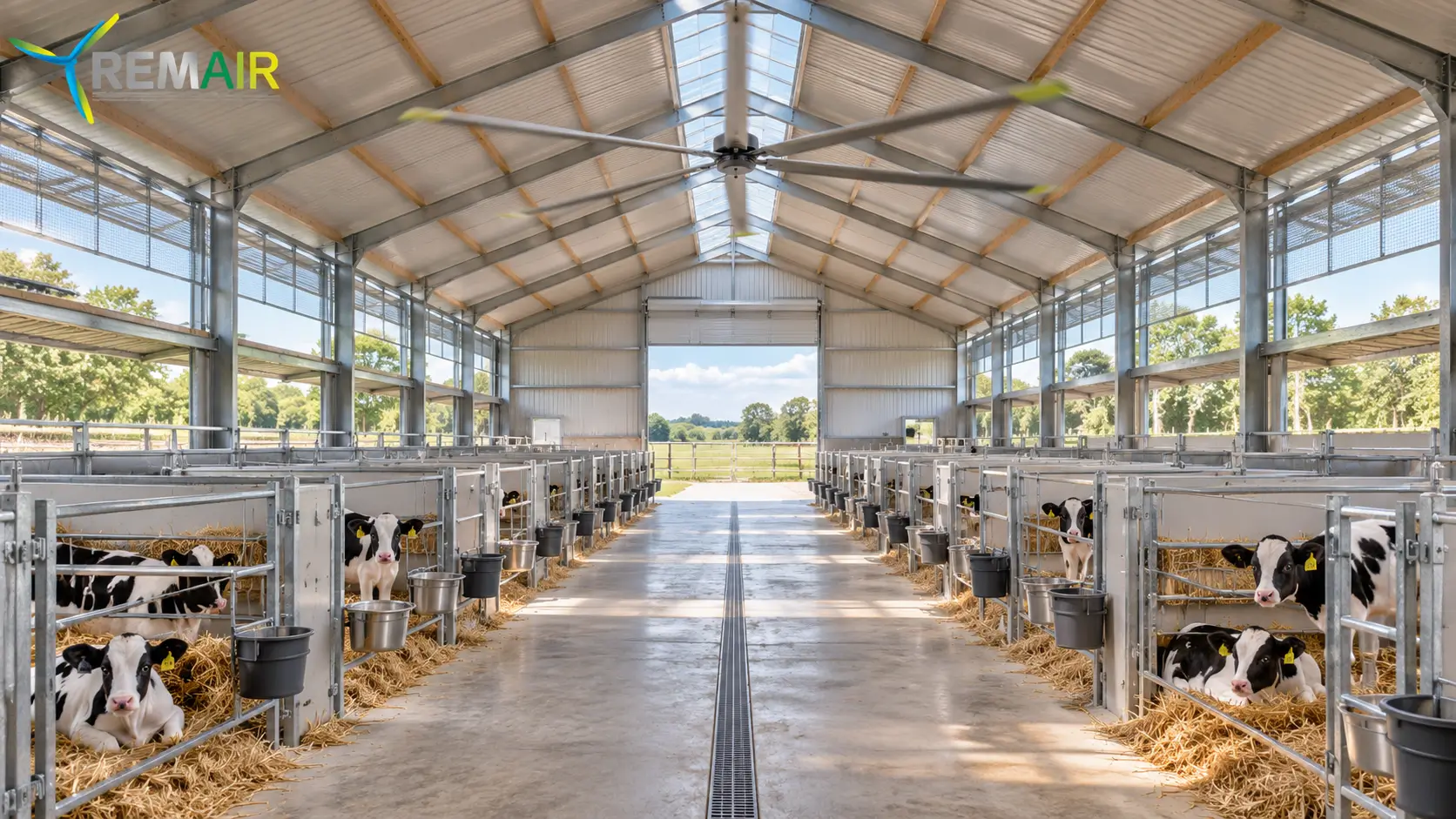
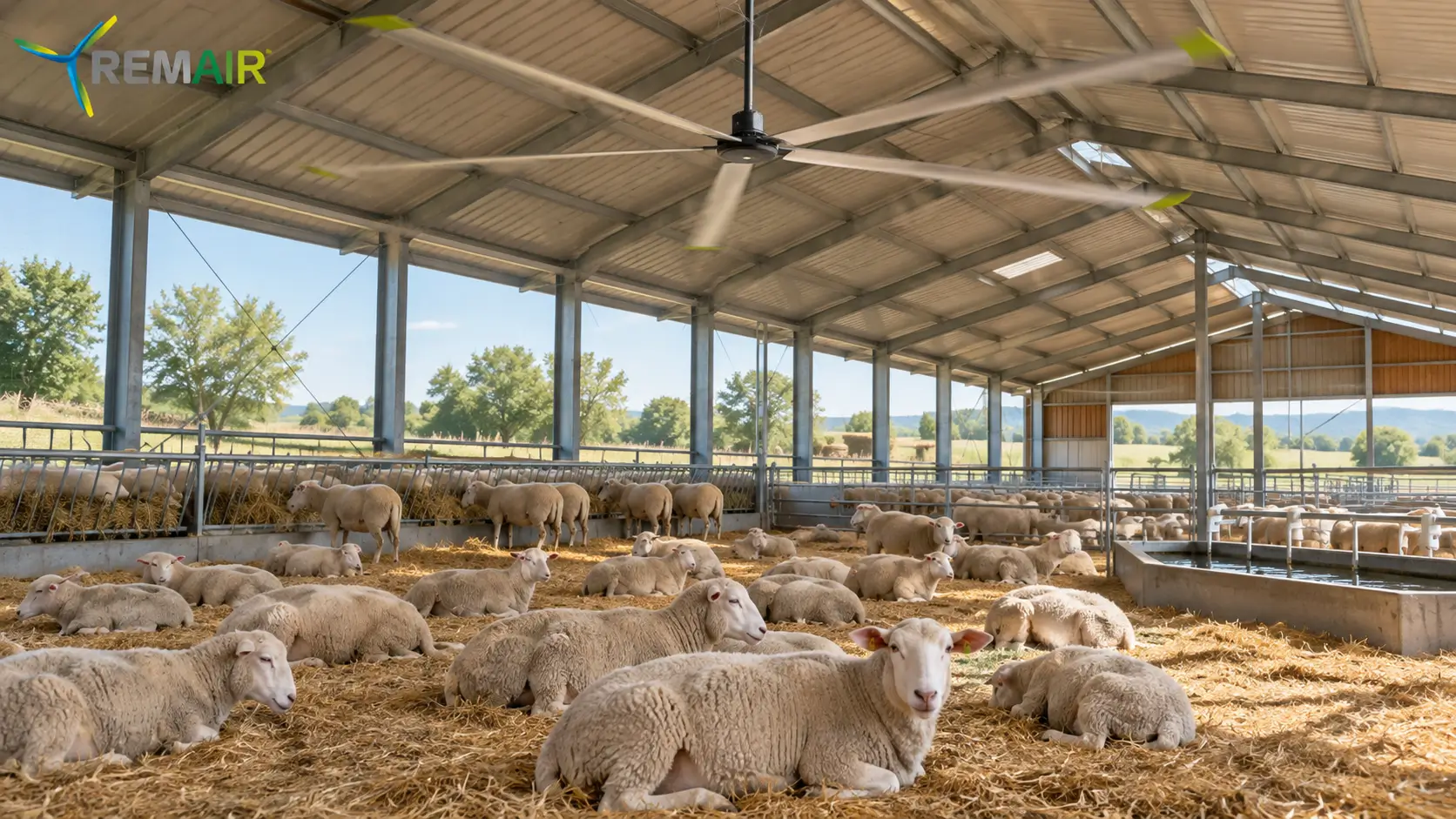
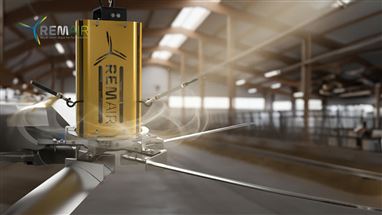
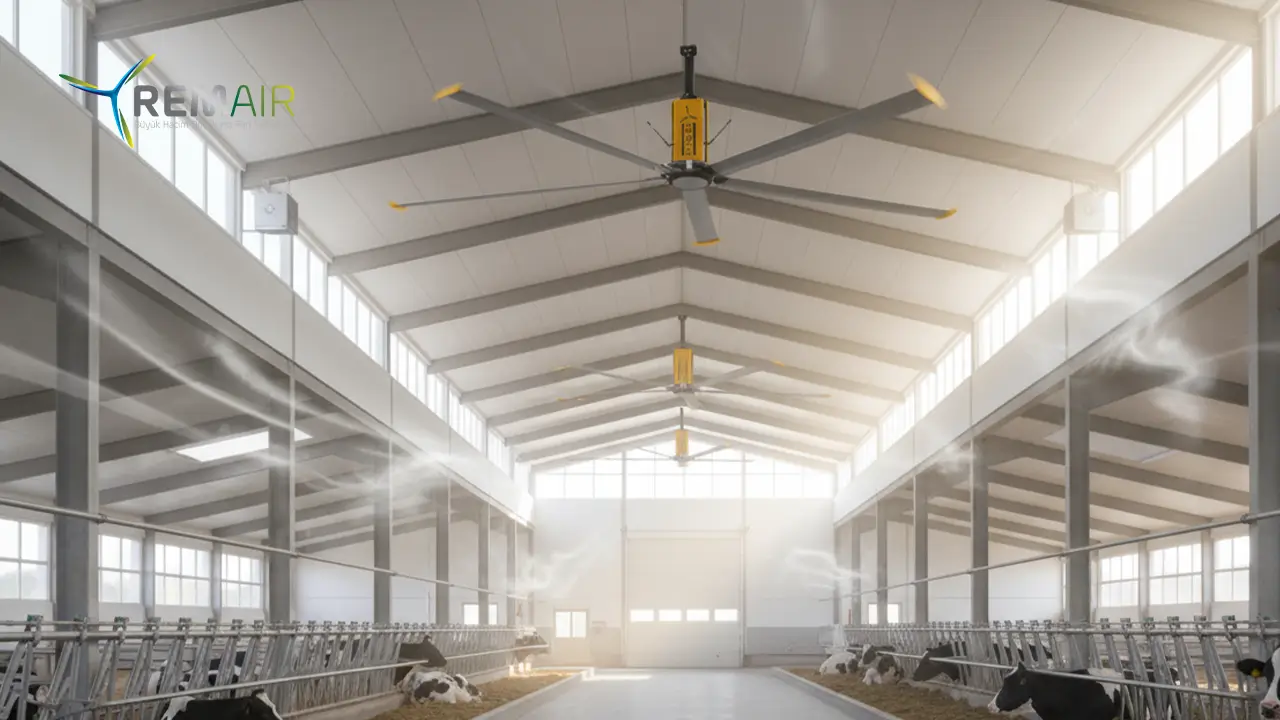
In recent years, one of the most notable solutions in barn ventilation has been large-diameter, low-speed helicopter fans. Unlike small, fast-spinning fans, these fans move a large mass of air slowly while spreading it over a wide area. The result is soft, balanced air circulation that reaches every corner of the barn.
The biggest advantage of helicopter fans is their ability to influence very large areas with low energy consumption. A single unit can cover the area served by dozens of smaller fans. This reduces electricity costs and eliminates equipment clutter. With different blade counts and diameter options, a configuration can be found for virtually every barn size. You can review different diameter and blade alternatives on the helicopter fans page and evaluate the model that best suits your operation.
During summer, the gentle breeze created over the animals helps protect milk and meat productivity by reducing heat stress. In winter, when operated in reverse at low speed, the fan pushes warm air accumulated near the ceiling down to animal level, reducing heat loss. This two-way use makes the system beneficial throughout the year.
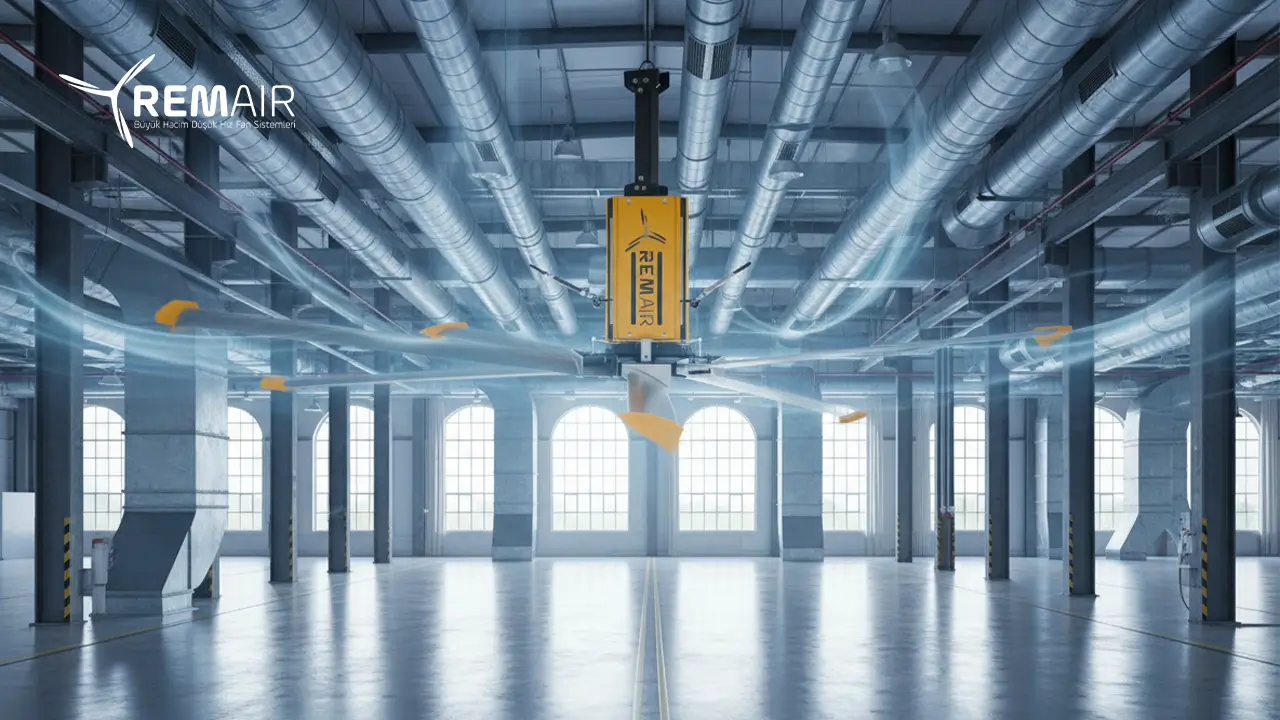
It is also worth noting that helicopter fans are not limited to barns. You can explore other sectors and areas where they are used on the application areas page, and learn more about how the system works on the technology page.
How to Choose the Right Ventilation System for Your Barn?
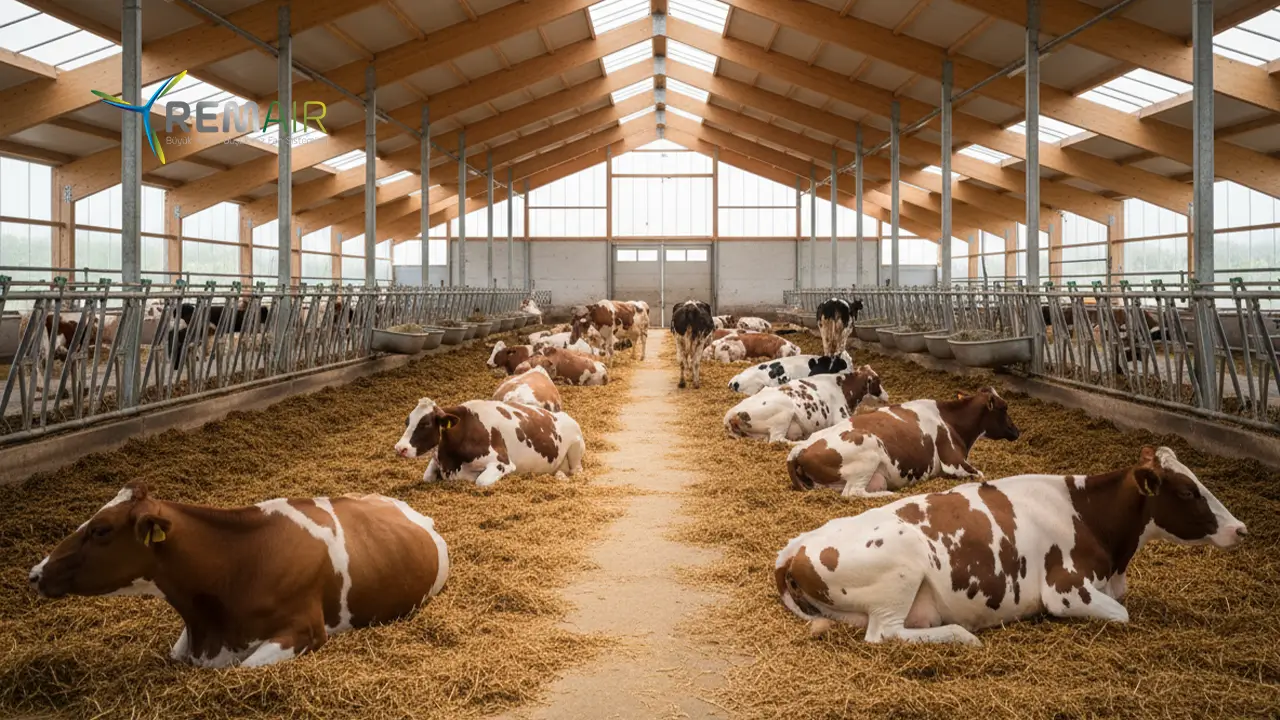
Choosing the right system starts with answering a few basic questions clearly. The dimensions of your barn, the number of animals you keep and the climate of your region are the three most important factors determining the choice. Once these are clear, all that remains is matching the right equipment to the need.
The criteria you should consider when making your selection include:
- Barn size and ceiling height: Large and high structures are generally ventilated more efficiently with large-diameter fans.
- Animal density: As the number of animals per square meter increases, stronger circulation is required.
- Regional climate: In hot and humid regions, the cooling effect becomes more important, while in cooler regions moisture and gas removal take priority.
- Energy cost: Low-consumption systems protect the budget over the long term.
- Ease of maintenance: Access to service and spare parts remains important throughout the system's service life.
After evaluating these criteria on paper, getting support from a specialist helps prevent installation mistakes. An incorrectly sized system leads to both wasted money and wasted time. To determine the most suitable solution for your needs, you can reach us through the contact page and request an assessment based on the conditions of your barn.
Common Mistakes in Ventilation Systems
Avoiding common mistakes is just as important as installing a good system. One of the most frequent errors is positioning fans incorrectly. A fan that is not placed at the right point may cool one part of the barn while leaving dead-air zones in another.
Another common mistake is selecting a system that is undersized for the need. When insufficient-capacity equipment is chosen initially to reduce costs, the system cannot meet expectations on hot days. Additional investment is then required, and the total cost may exceed what would have been spent if the correct choice had been made from the start.
Neglecting maintenance is another factor that gradually reduces performance. Dusty blades, loose connections and unchecked motors lower efficiency over time. Regular maintenance both extends the life of the system and keeps energy consumption balanced. This small but continuous attention brings substantial long-term value to the operation.
In summary, barn ventilation is only truly effective when the right system is selected, installed correctly and maintained regularly. By understanding the strengths of natural and mechanical methods and choosing a solution suited to your barn's conditions, you can protect animal health and keep operational efficiency high for many years.
Frequently Asked Questions About Barn Ventilation Types
Are natural ventilation systems sufficient for every barn?
No. Natural ventilation depends on weather conditions such as wind and temperature differences. Because circulation can stop on windless, hot summer days, most operations support natural systems with mechanical fans.
What types of barns use tunnel ventilation systems?
Tunnel ventilation is especially preferred in long, narrow barns. Fans pull air from one end while fresh air enters from the other, creating strong, one-directional and cooling circulation inside.
What are the advantages of helicopter fans in barn ventilation?
Helicopter fans can ventilate very large areas with low energy consumption. By rotating slowly, they create a soft and balanced breeze, reduce heat stress and, in winter, push warm air accumulated near the ceiling downward to prevent heat loss.
What problems can choosing the wrong barn fan cause?
Fans that are too small for the need or incorrectly positioned leave dead-air zones in the barn. This increases ammonia buildup, causes heat stress in animals and raises costs by requiring additional investment later.

Leave a Comment