
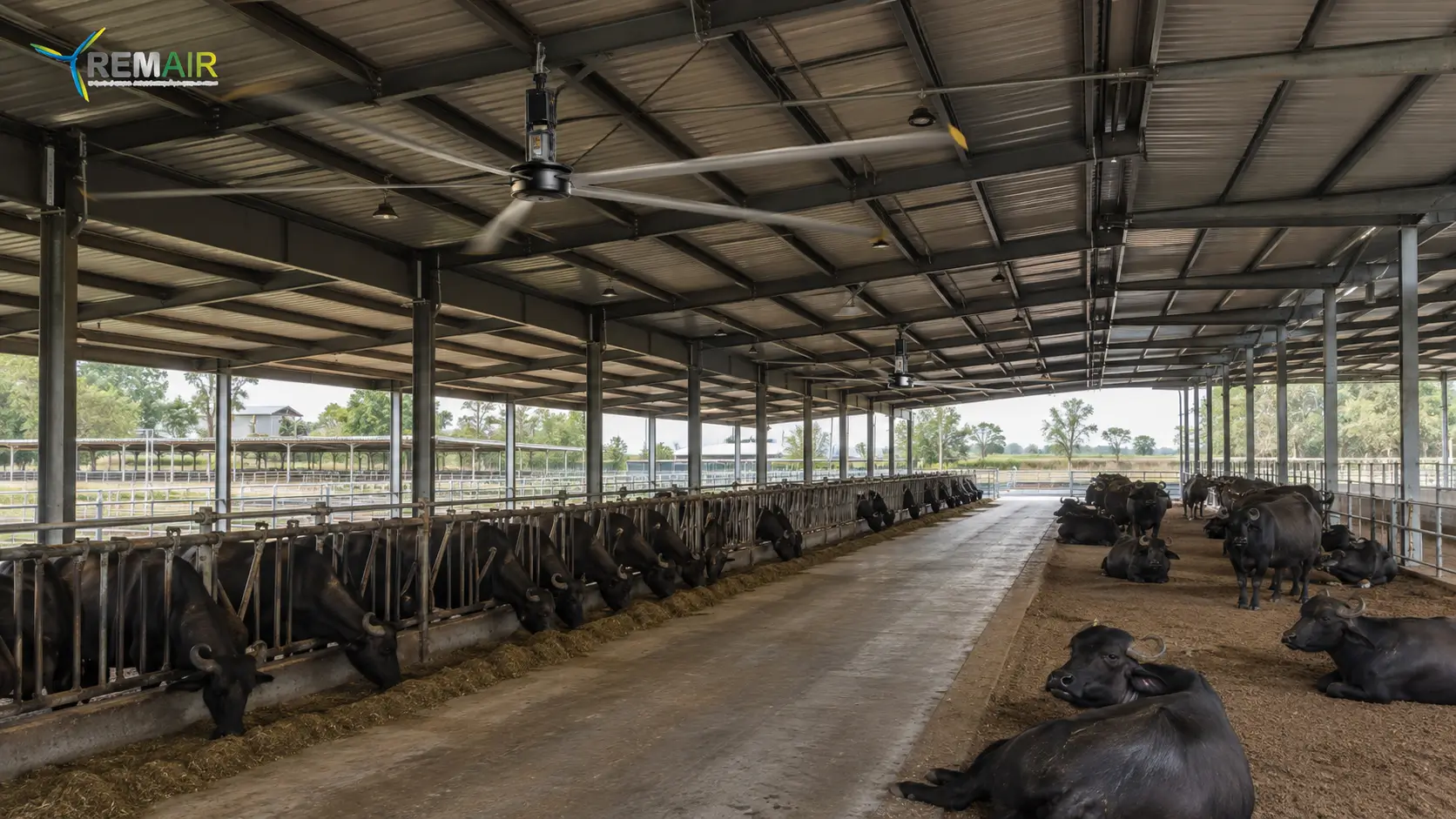



The primary purpose of ventilation in water buffalo barns is to help the animals dissipate body heat and remove moisture from inside the barn. Water buffalo have far fewer sweat glands than cattle, and their dark skin absorbs more solar radiation. When these two characteristics come together, buffalo have significantly more difficulty releasing body heat than cows. Therefore, ventilation in a buffalo barn is not a matter of comfort, but directly a matter of productivity and health.
In practice, this means the following: when barn temperature exceeds 25°C and humidity rises, buffalo tend to lie in water or mud to cool themselves. If this is not possible in the barn, feed intake decreases, milk yield falls and signs of heat become weaker. A properly designed airflow largely prevents this by helping the buffalo release heat from the skin surface.
Below, we explain section by section how ventilation should be planned in buffalo barns, which values should be targeted and the most common mistakes made in the field.
Let’s plan the right ventilation solution for your buffalo barn together
We create the fan type and placement plan according to your barn dimensions, animal count and roof structure. The Remair Fan engineering team provides a free project-specific air-speed and capacity calculation.
Why Do Buffalo Tolerate Heat Less Easily Than Cows?
The density of sweat glands in buffalo skin is approximately one-sixth that of cattle. This means their ability to cool through sweating is severely limited. The remaining ways to dissipate body heat are convective heat loss through airflow over the skin and heat loss through respiration. Both depend directly on air movement inside the barn.
Dark skin color and sparse hair cover make the situation more difficult. A buffalo standing outdoors in the sun absorbs a greater heat load than a Holstein cow under the same conditions. For this reason, shading and ventilation must be considered together in buffalo housing; simply building a roof is not enough if a stagnant mass of hot air forms underneath it.
The threshold at which buffalo enter heat stress is also lower than commonly assumed. In calculations that evaluate temperature and humidity together, buffalo experience stress at thresholds similar to cattle, and in some studies even earlier. Especially in high-humidity regions, the animal may struggle even when the thermometer does not reach 28°C. If you would like to examine this topic in more detail, our article on heat stress in cows and its effect on milk yield explains similar mechanisms.
A common misconception in buffalo barns is that the buffalo is a “hardy animal.” The more accurate view is this: buffalo may tolerate poor conditions with fewer obvious illnesses than cows, but their productivity silently declines. Because the problem is noticed late, its cost is also high.
Areas Directly Affected by Ventilation in a Buffalo Operation
Making the return on a ventilation investment tangible makes decision-making easier. The main changes observed in a buffalo barn with sufficient air movement are as follows:
- Milk yield loss is reduced: Feed intake decreases in buffalo under heat stress, which in turn lowers daily milk output. Air movement largely prevents this decline.
- Fertility rate is maintained: High body temperature weakens signs of heat and reduces conception rates. A cool barn helps preserve the breeding schedule.
- Udder health improves: Warm, damp bedding is an ideal environment for bacterial growth. A dry floor reduces the risk of mastitis.
- Ammonia and odor levels decrease: Gas accumulated at floor level is continuously removed, reducing respiratory problems.
- Fly density decreases: Air speeds above 2 meters per second physically make it difficult for flies to land on the animals.
- Building life is extended: Moisture condensing under the roof causes corrosion in metal components and rot in wood. Removing moisture reduces maintenance costs.
Is Natural Ventilation Sufficient in Buffalo Barns?
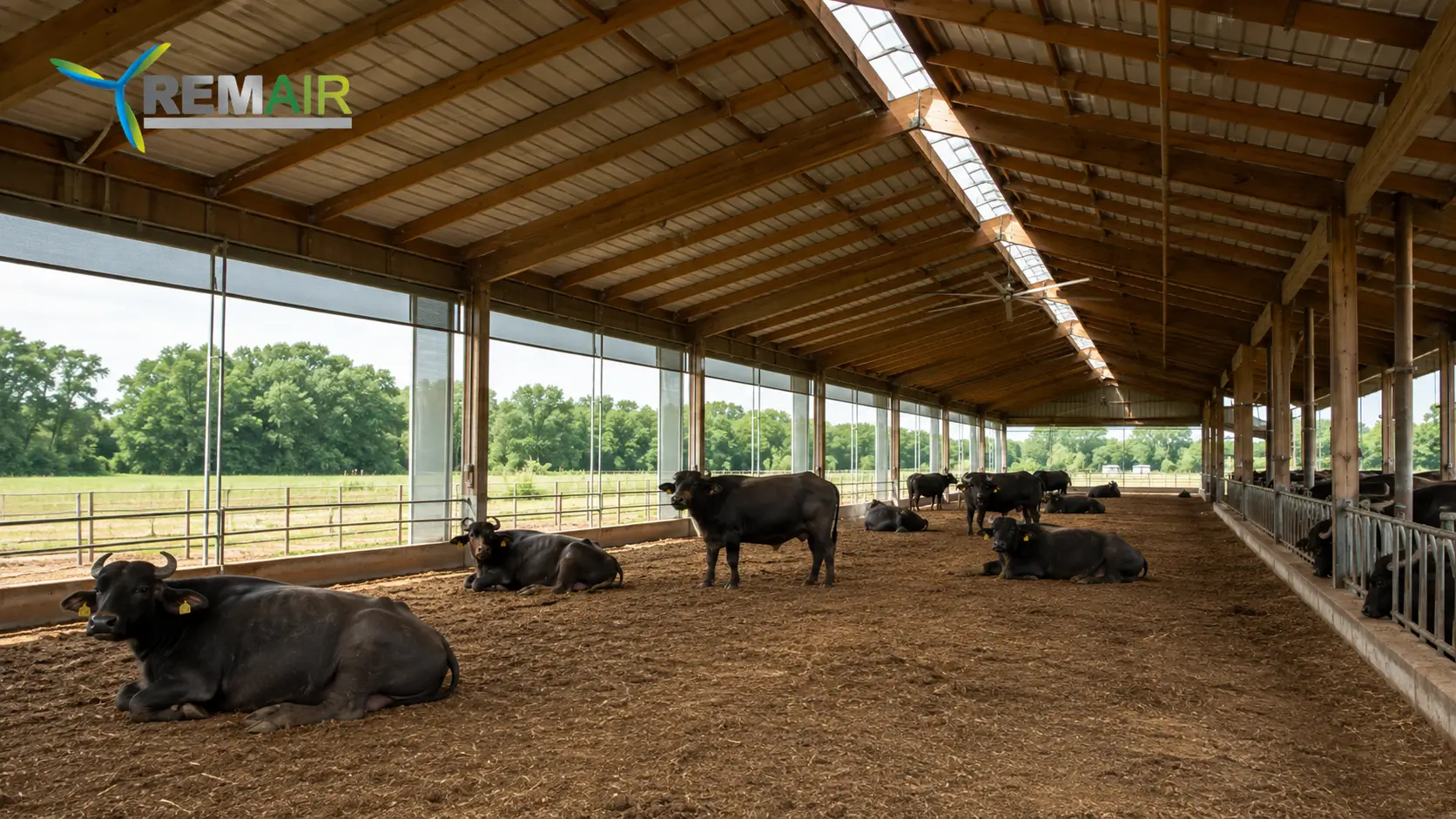
Natural ventilation forms the basis of ventilation in open or semi-open buffalo barns. Leaving side walls open, correctly sizing the ridge opening and providing sufficient roof slope allow warm air to rise and escape. In a properly designed barn, this system operates without additional energy consumption for a significant part of the year.
However, natural ventilation depends on wind. On still summer afternoons, especially in valleys and at facilities surrounded by trees or other structures, the air mass remains stagnant. These are exactly the hours when heat stress reaches its peak. In other words, the system becomes ineffective precisely when it is needed most.
Barn orientation is also decisive. A shelter whose long axis is positioned perpendicular to the prevailing wind receives much better airflow than a similarly sized shelter positioned parallel to the wind. In new projects, this detail should be resolved during the design stage; correcting it later is expensive.
For this reason, the common approach today is to use natural ventilation as the base and add mechanical support. If you would like to compare different methods, our content on types of barn ventilation discusses the systems in detail.
Target Air Speed and Temperature Inside the Barn
In buffalo barns, the target air speed at animal level during summer is between 2 and 3 meters per second. This range significantly increases convective heat loss from the skin without disturbing the animal. Measurements should be taken not at the roof or wall edge, but at the bedding and feeding alley level—at the height of the animal’s body.
For temperature, the comfort range is generally considered to be between 10 and 22°C. Above 25°C, especially when relative humidity exceeds 70%, respiratory rate increases and the first productivity losses begin. Relative humidity should ideally be kept between 50% and 70%. You can find these values in detail in our article on what the barn temperature should be.
Air exchange volume should not be overlooked either. In summer, the target is to renew the barn air volume 40 to 60 times per hour, while in winter this value falls to around 4 to 6 air changes per hour. We explain step by step how to calculate this according to volume and animal count in our guide on calculating air changes in barns and factories.
Helicopter Fan Use and Placement Plan
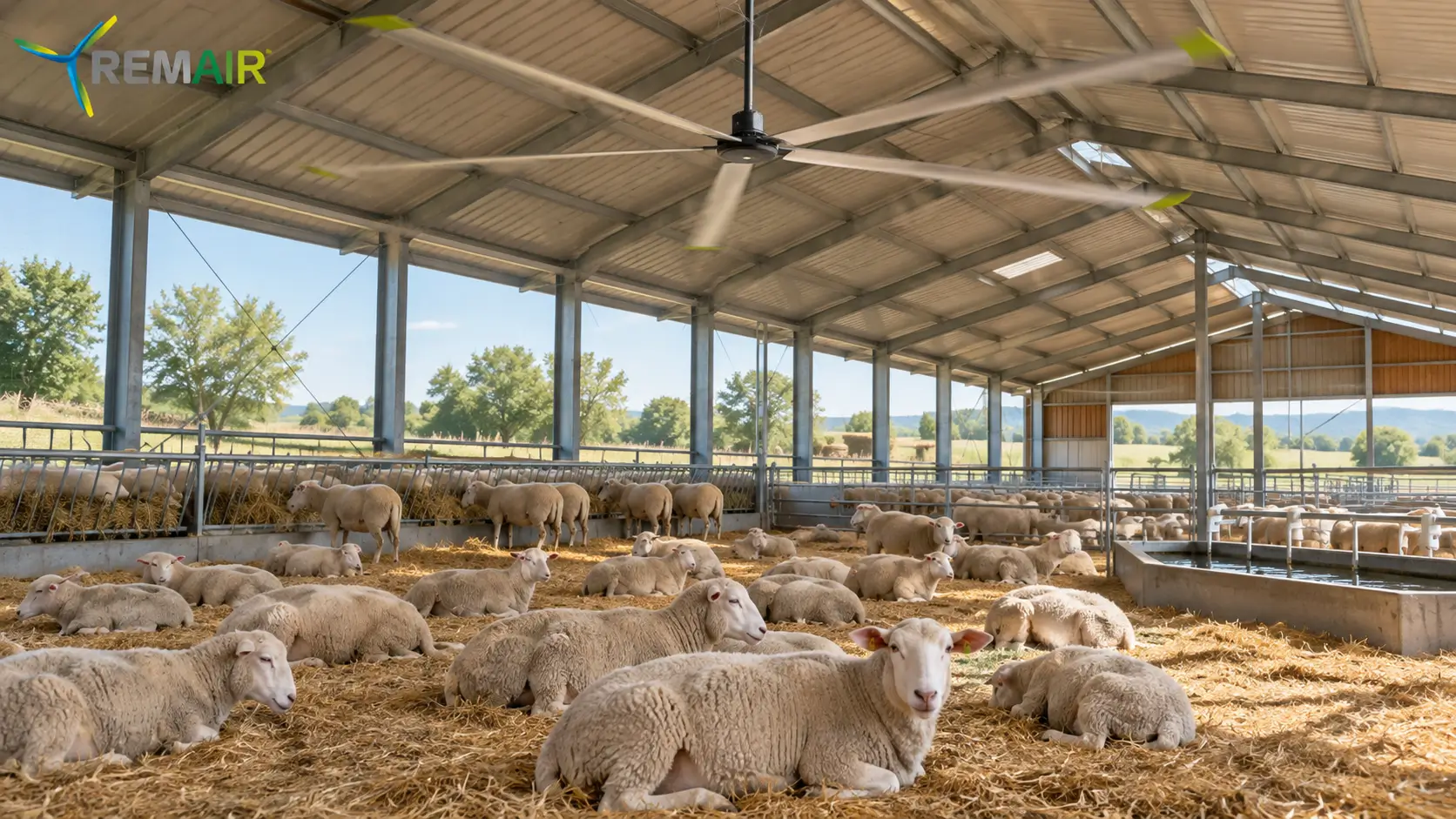
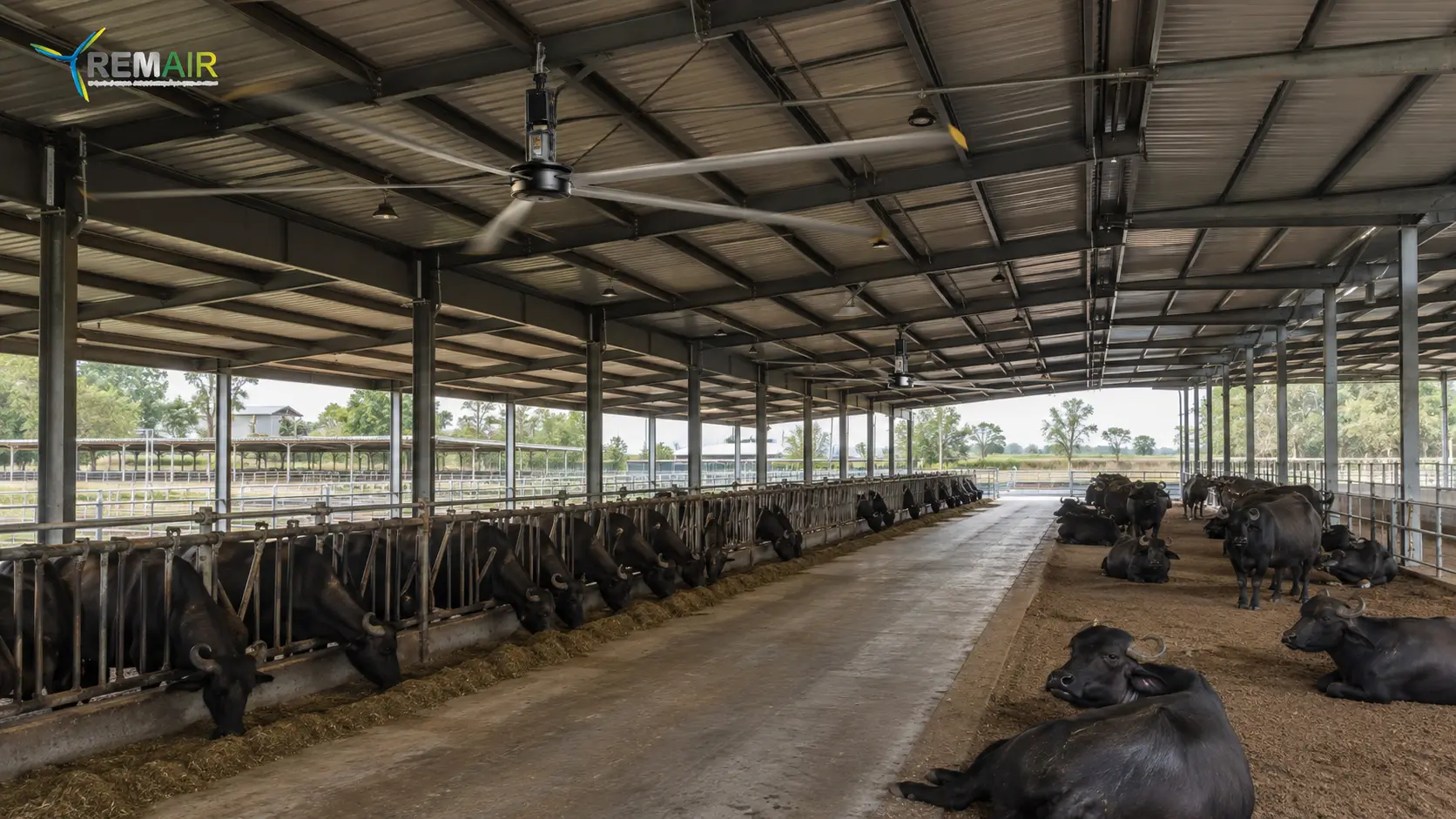
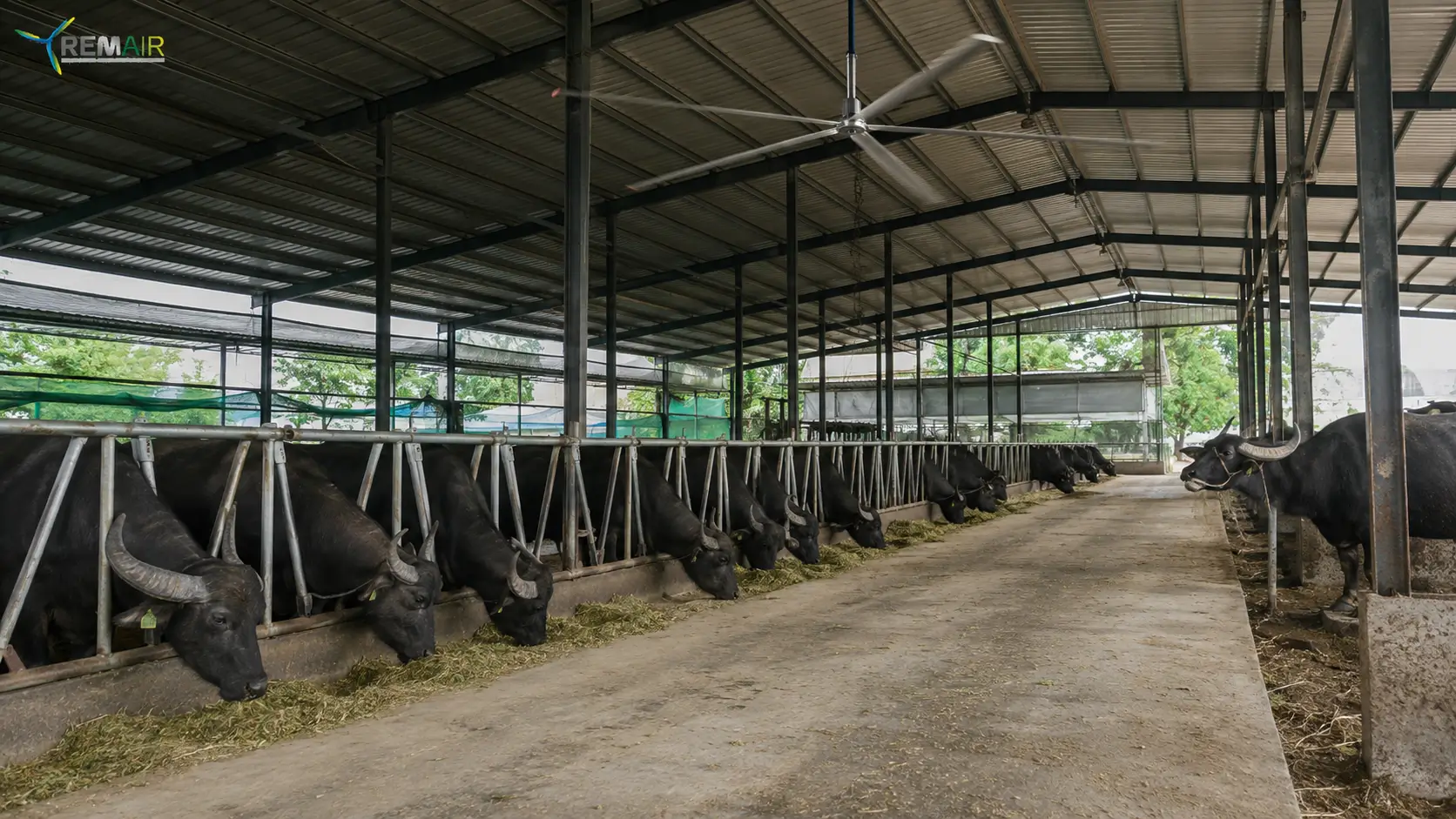
A solution that has become prominent in buffalo barns in recent years is large-diameter, low-speed helicopter fans. With blade diameters ranging from 4 to 7.3 meters, these fans create a gentle and uniform airflow across a large area. Unlike small, high-speed fans, they affect the entire barn cross-section rather than only a narrow zone directly in front of them.
The difference in energy use is also significant. A single helicopter fan consumes far less electricity than the total consumption of the number of small fans needed to cover the same area. Because they operate at low speed, noise levels are also low; this directly affects buffalo lying time and therefore rumination comfort. For product details, you can review our helicopter fan models page.
The basic placement rule is that the distance between fans should not exceed approximately 2.5 times the blade diameter. Installation height is generally kept between 4 and 6 meters above the floor; mounting too low can create uncomfortable turbulence, while mounting too high can result in insufficient air speed at animal level. Bedding areas, feed lines and waiting areas should be evaluated separately, with priority given to the most heavily used zone.
The number of fans required varies according to barn volume, ceiling height and animal density. For a rough idea, you can review our content on how many HVLS fans are needed for a 1,000-square-meter area, and you can send us your project for an exact calculation.
Humidity, Ammonia and Floor Management
One of the biggest factors that makes ventilation difficult in a buffalo barn is the moisture load created by manure and urine on the floor area. A buffalo produces more manure per day than cattle, and this moisture evaporates into the barn air. If the air is not exhausted, moisture condenses on walls and under the roof, and dripping begins.
Ammonia is released from manure accumulated on wet floors. Because it is lighter than air, it rises, but if there is no air movement it can accumulate in the upper part of the barn. It causes respiratory irritation and watery eyes. The permanent solution is to remove manure regularly and maintain continuous air exchange.
Floor design complements ventilation at this point. No matter how many fans are operated, moisture cannot be fully controlled on a floor with insufficient slope and poor drainage. Our article on how a barn floor should be designed provides practical measurements on this subject. If there is an existing moisture problem in the barn, our content on how to reduce barn humidity will also be helpful.
Winter Ventilation: Protecting Against Moisture, Not Cold
When winter arrives, many producers close all barn openings. The aim is to prevent the animals from getting cold, but the result is often the opposite. Humidity rises in the closed barn, water condenses on the ceiling and wets the bedding, and animals feel the cold much more severely on a wet floor.
Buffalo tolerate low temperatures quite well in a dry environment. The main threat is not cold air, but humid air and drafts blowing directly onto the animal. Therefore, the goal in winter is not to stop ventilation but to continue it at a reduced rate. The ridge opening is left open, side curtains are partially closed, and incoming air is directed above animal level.
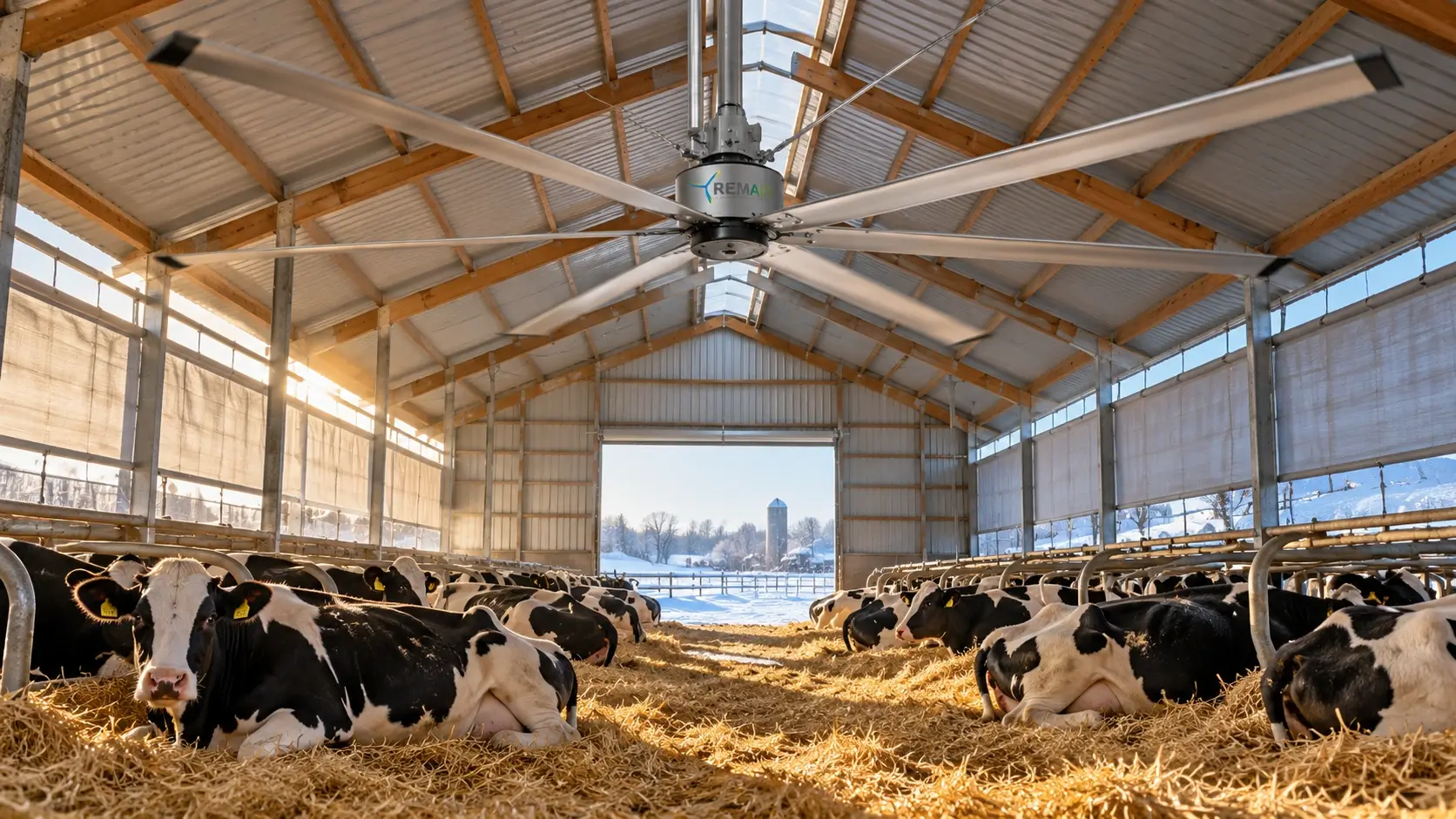
Helicopter fans also remain useful in winter. When operated in reverse at low speed or very slowly, they bring the warm air accumulated under the roof back down and balance the temperature difference inside the barn. This reduces both fuel costs and condensation. For operations experiencing condensation problems, our article on how to prevent condensation in barns may be useful.
Key Points in a Buffalo Barn Ventilation Project
Most problems we observe in the field arise not from system selection, but from inadequate planning. When designing ventilation for a buffalo barn, the following items can be used as a checklist:
- Barn volume and animal count should be calculated together. Selecting a fan based only on floor area is misleading; ceiling height directly changes the air volume.
- Measurements should be taken at animal level. Air speed and temperature values should be verified at the height where buffalo stand and lie.
- Feed and bedding areas should be evaluated separately. The zone where the animals spend most of the day should receive ventilation priority.
- Natural ventilation should not be shut off. The mechanical system should be designed to complement natural airflow, not replace it.
- Energy consumption should be calculated from the outset. The payback period should be assessed by considering productivity gains and electricity costs together.
- Ease of maintenance should be considered. Fan mounting points should be accessible for cleaning and periodic inspection.
In short, ventilation in buffalo barns is an engineering task that must account for the animal’s physiological limits. The most effective way to keep an animal with few sweat glands and a high heat load cool is to create continuous, uniform air movement throughout the barn. When fans of the correct diameter are positioned in the right locations, productivity is protected and operating costs remain under control. For a solution suitable for your barn, you can contact us.
Frequently Asked Questions About Buffalo Barn Ventilation
Can in-barn shower and misting systems be used together with fans to cool buffalo?
Yes, but humidity management must be handled very carefully. Because buffalo cool themselves by evaporating water from their skin, shower/wetting systems work extremely efficiently with fans. However, to prevent relative humidity in the barn from exceeding 70%, wetting cycles should be kept short and helicopter fans should continuously maintain sufficient airflow to evaporate the water from the skin.
Does heat stress in summer affect the fat and protein values of buffalo milk?
Yes. Buffalo milk has industrial value because of its high fat and total solids content. When buffalo experience heat stress, they reduce roughage intake and focus on lowering body temperature, so not only daily milk volume but also fat and total solids levels decline noticeably. Proper ventilation directly prevents this loss in milk quality.
How should buffalo ventilation be arranged in pre-milking holding areas?
Holding areas are critical zones where buffalo stand closest together and body heat reaches its highest level. Because animal density per square meter is high in these areas, concentrated fan support should be provided to maintain air speed at 2.5–3 meters per second at animal level and prevent suppression of milk let-down hormones (oxytocin) before milking.
What should be considered when operating ventilation fans in buffalo calf pens?
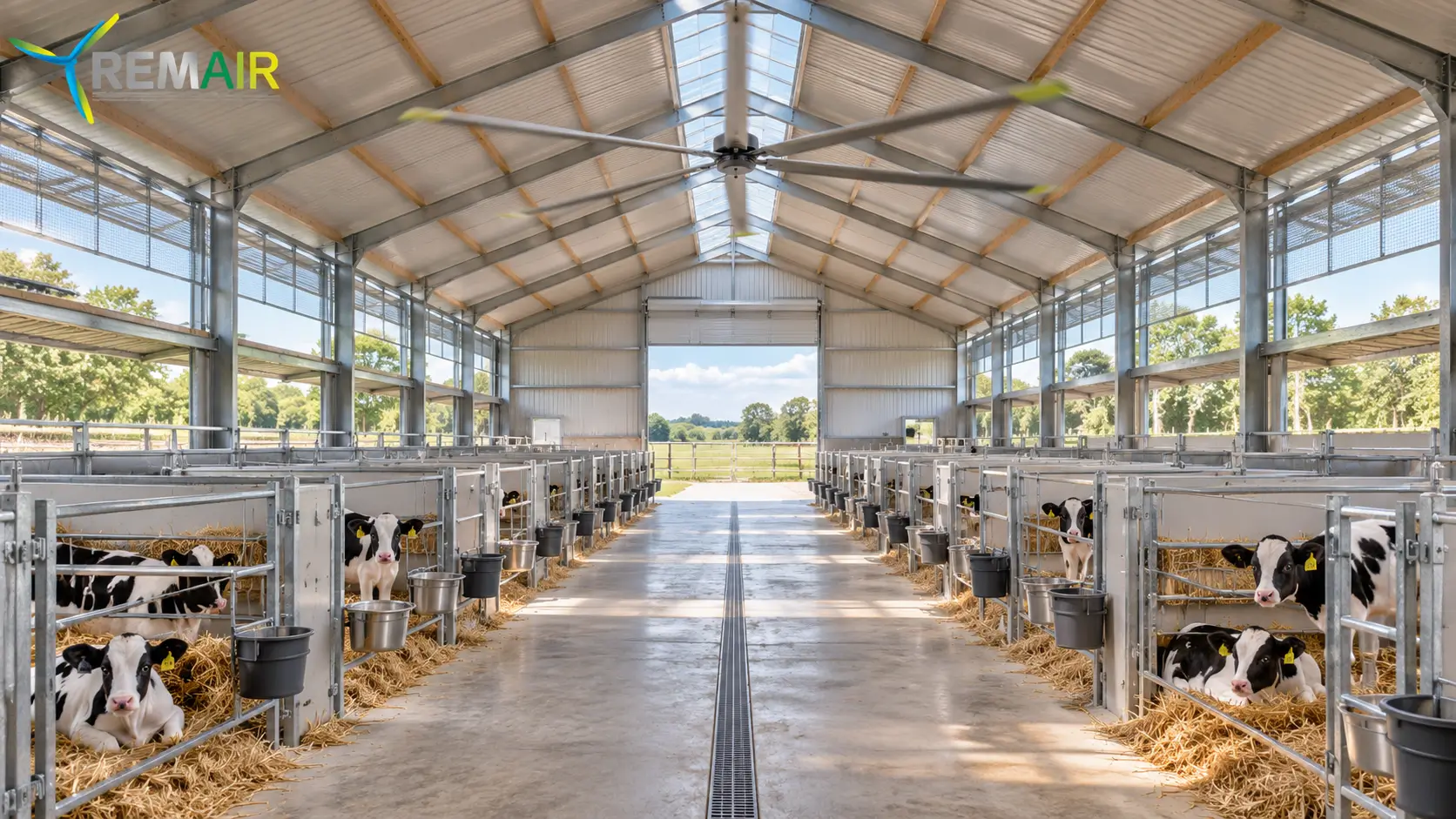
Buffalo calves are much more sensitive to cold airflow and drafts than adult buffalo. In calf pens, fans should not blow directly onto the young animals; instead, they should provide very low-speed circulation from above to remove ammonia and moisture, or be operated with speed-control panels.
Is it necessary to connect the ventilation system in buffalo barns to automation and sensors?
Yes. Automation systems linked to Temperature-Humidity Index (THI) sensors provide a major advantage in buffalo operations. Because buffalo are affected by increases in humidity very quickly, inverter-controlled fans that automatically increase speed according to humidity help prevent unnecessary electricity use and reduce the risk of sudden stress events.
Why are conventional small high-speed fans not preferred in buffalo barns?
Small high-speed fans create a hard airflow only along a narrow line in front of them and produce high noise levels. Because humidity and manure loads are high in buffalo barns, small fans may dry limited local areas but cannot affect the barn as a whole. Their noise can also startle buffalo and shorten their lying time.

Leave a Comment