
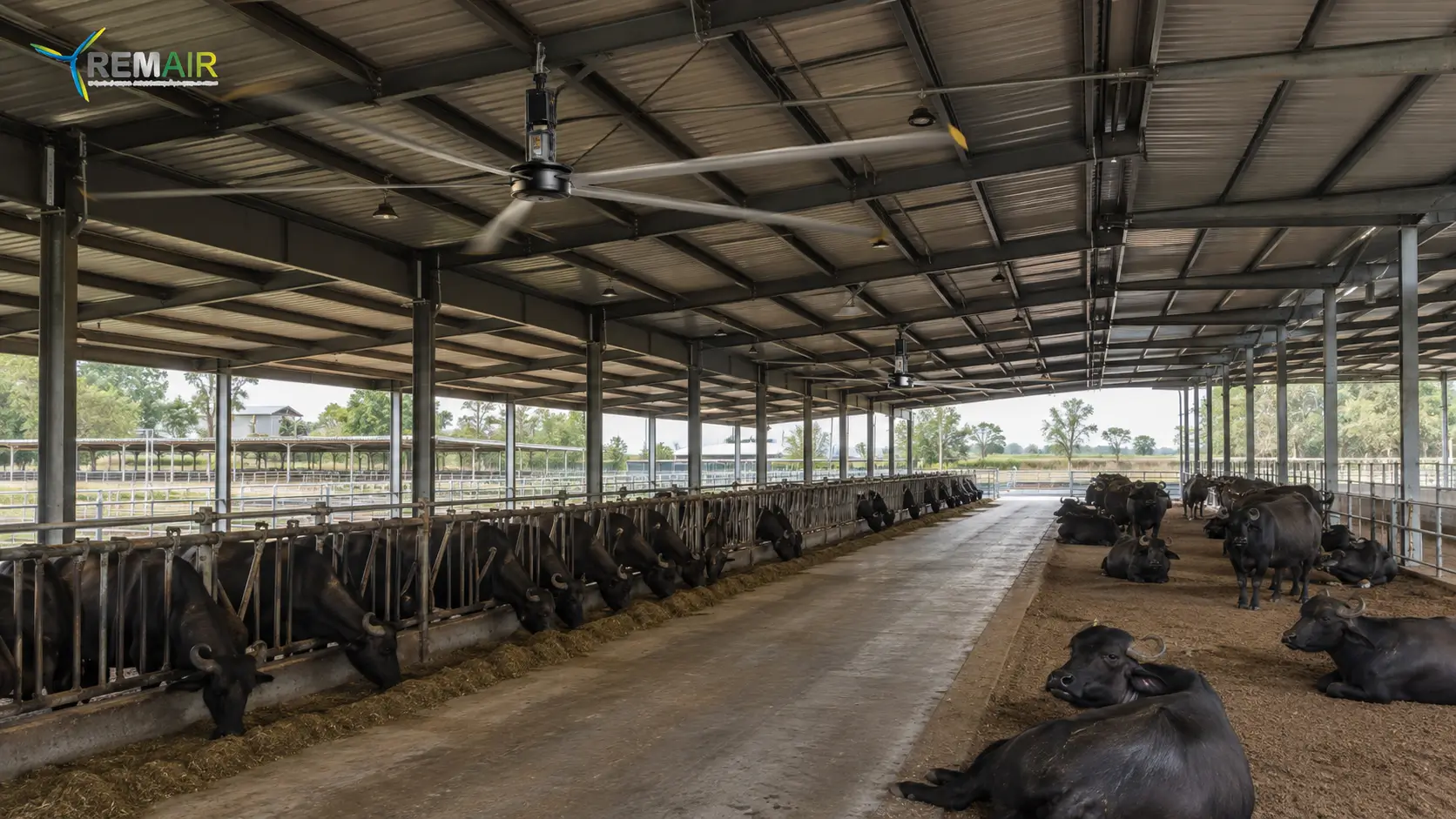
The primary purpose of ventilation in horse stables is to remove dirty, humid air from the stalls and replace it with fresh air. A horse releases an average of 10 to 15 liters of water vapor into the environment each day through breathing and sweating. When ammonia rising from bedding, dust and hay particles are added, the air in a closed stable can reach levels that irritate the respiratory tract within just a few hours. Horses have far more sensitive lungs than cattle, so stable ventilation is not a matter of comfort but directly a matter of health.
In a properly designed system, the target is to provide 8 to 10 air changes per hour in summer and 4 to 6 air changes per hour in winter. While doing this, it is important not to create a strong direct airflow over the animal. A horse can be harmed by drafts just as much as by heat. In other words, the goal is not to accelerate the air, but to establish balanced and gentle circulation throughout the stable.
Below, we explain step by step how horse-stable ventilation should be planned, which equipment is used and the most common mistakes made in practice.
Benefits of Ventilation in Horse Stables
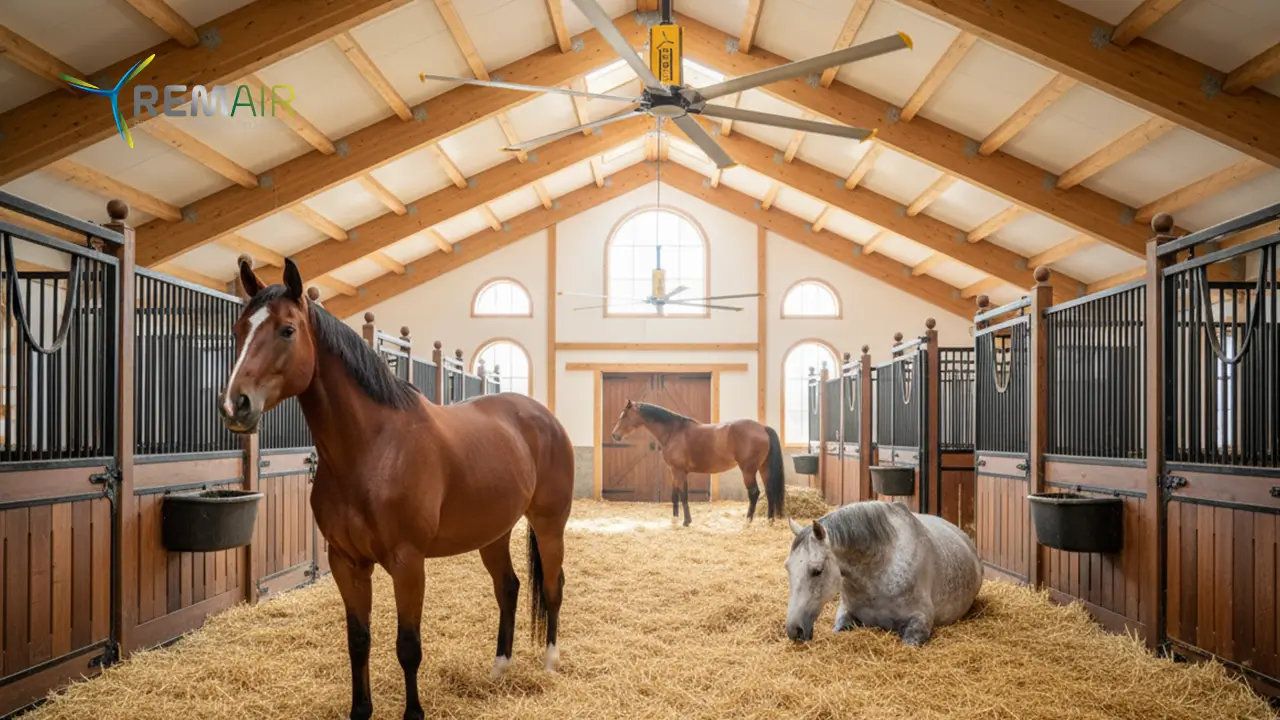
When ventilation is mentioned, cooling usually comes to mind first, but in a horse stable the main benefit is respiratory health. Ammonia that accumulates in closed, stagnant air irritates the protective lining inside the horse’s nose and on the bronchial surfaces. Repeated coughing, reduced performance and, at advanced stages, respiratory disorders often begin here.
The second benefit is moisture control. Water condensing on walls and ceilings rots wooden partitions, rusts metal components and causes bedding to deteriorate quickly. In a stable where air is continuously moving, bedding stays dry longer and hoof and skin problems decrease significantly.
The third benefit is related to behavior. A horse kept in a hot, airless environment becomes restless, eats less and spends less time resting. In a stable with regular air circulation, it is easy to observe that horses lie down for longer periods and their feed intake becomes more consistent. For general information about horse housing conditions, you can also review our article on where horses are housed .
Main Factors That Reduce Air Quality Inside the Stable
Poor air quality in a horse stable is not caused by a single factor. Usually several factors overlap and make the environment heavier. Correctly identifying the source of the problem also determines the equipment needed for the solution.
- Ammonia accumulation: It is released when urine comes into contact with bedding. It concentrates 30 to 50 cm above the floor, meaning it accumulates in the zone where the horse breathes.
- High relative humidity: It increases because of breathing, sweating and wet bedding. When it exceeds 80 percent, mold and fungal growth accelerates.
- Organic dust: It becomes airborne when dry hay, wood shavings and feed are moved. It is one of the most common causes of respiratory irritation.
- Carbon dioxide: It silently accumulates in a closed stable, is difficult to notice because it has no odor, and can cause lethargy in the animal.
- Stagnant air pockets: These are motionless zones that form in corners, under the ceiling and between partitions. If fan placement is incorrect, they become unavoidable.
Among these factors, moisture is especially important because it leaves visible damage in the stable. Our detailed content on how to reduce humidity in a barn provides practical guidance.
Is Natural Ventilation Sufficient in Horse Stables?
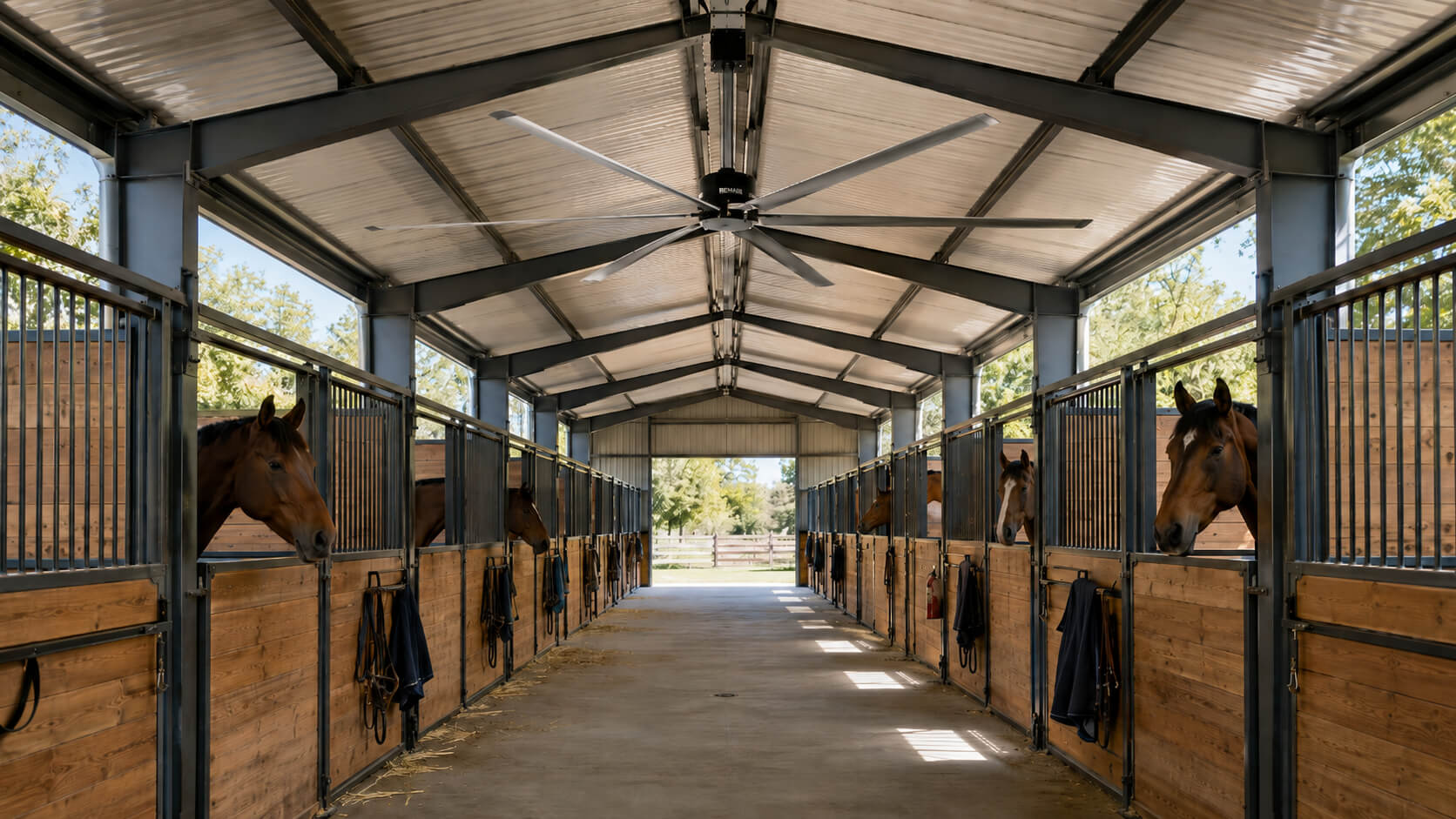
Natural ventilation is based on warm air rising and leaving through roof openings while fresh air enters through openings in the side walls. In a well-designed stable with a ridge opening and openable side facades, this system works effectively in spring and autumn.
However, natural ventilation requires wind and a temperature difference between indoors and outdoors. In summer, when the wind drops at midday and the outdoor temperature approaches the indoor temperature, air movement almost completely stops. The system becomes ineffective precisely during the hours when horses need cooling the most.
In winter, the opposite problem occurs. All openings are closed to protect against cold, air exchange stops, and moisture and ammonia accumulate rapidly. At this point, the operator is forced to choose between exposing the horse to cold or keeping it in polluted air. The correct approach is to use natural ventilation as the foundation and add mechanical support during these two critical periods.
Air Circulation Inside the Stable with Helicopter Fans
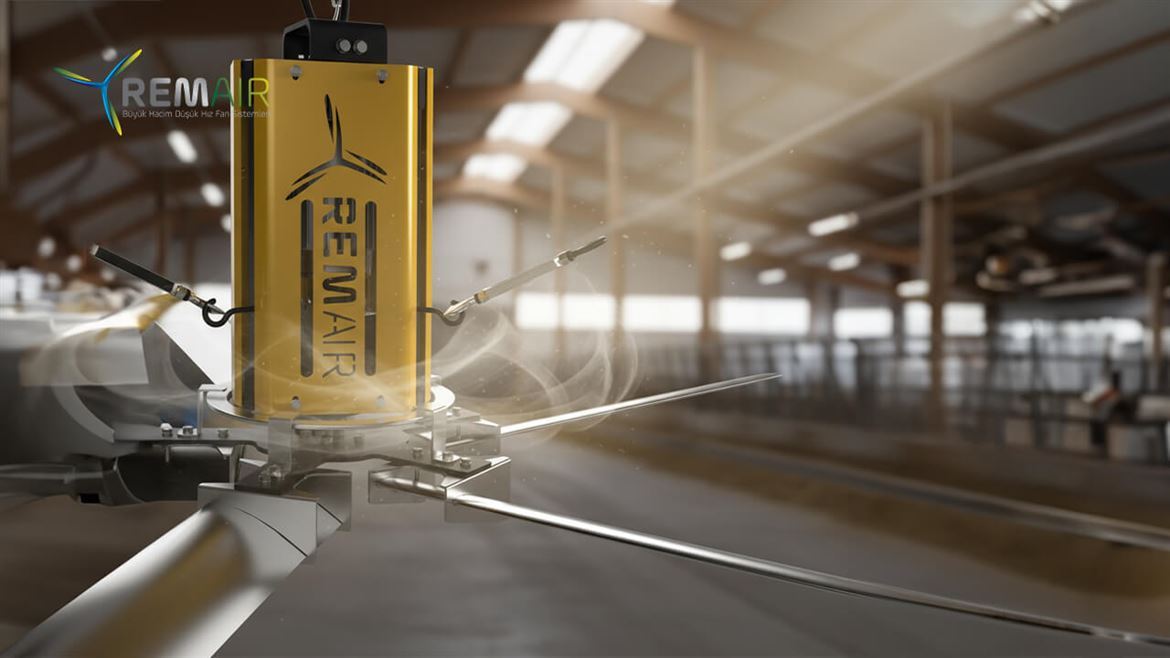
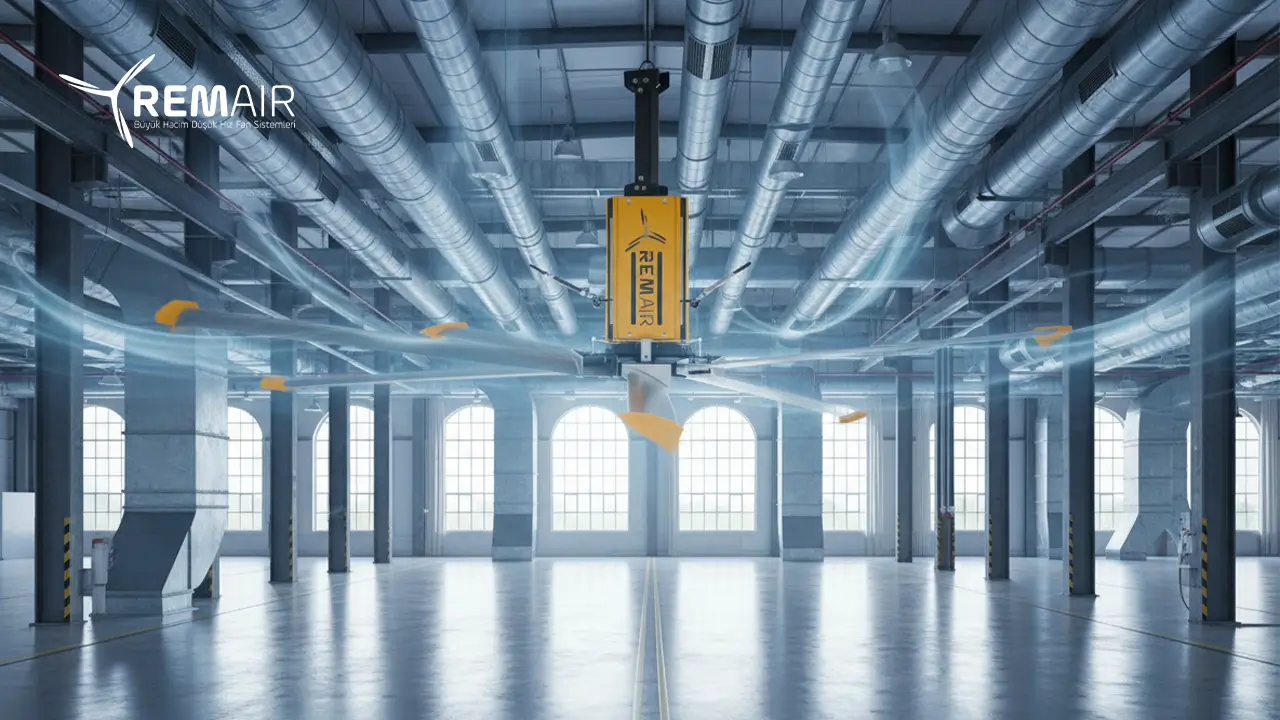
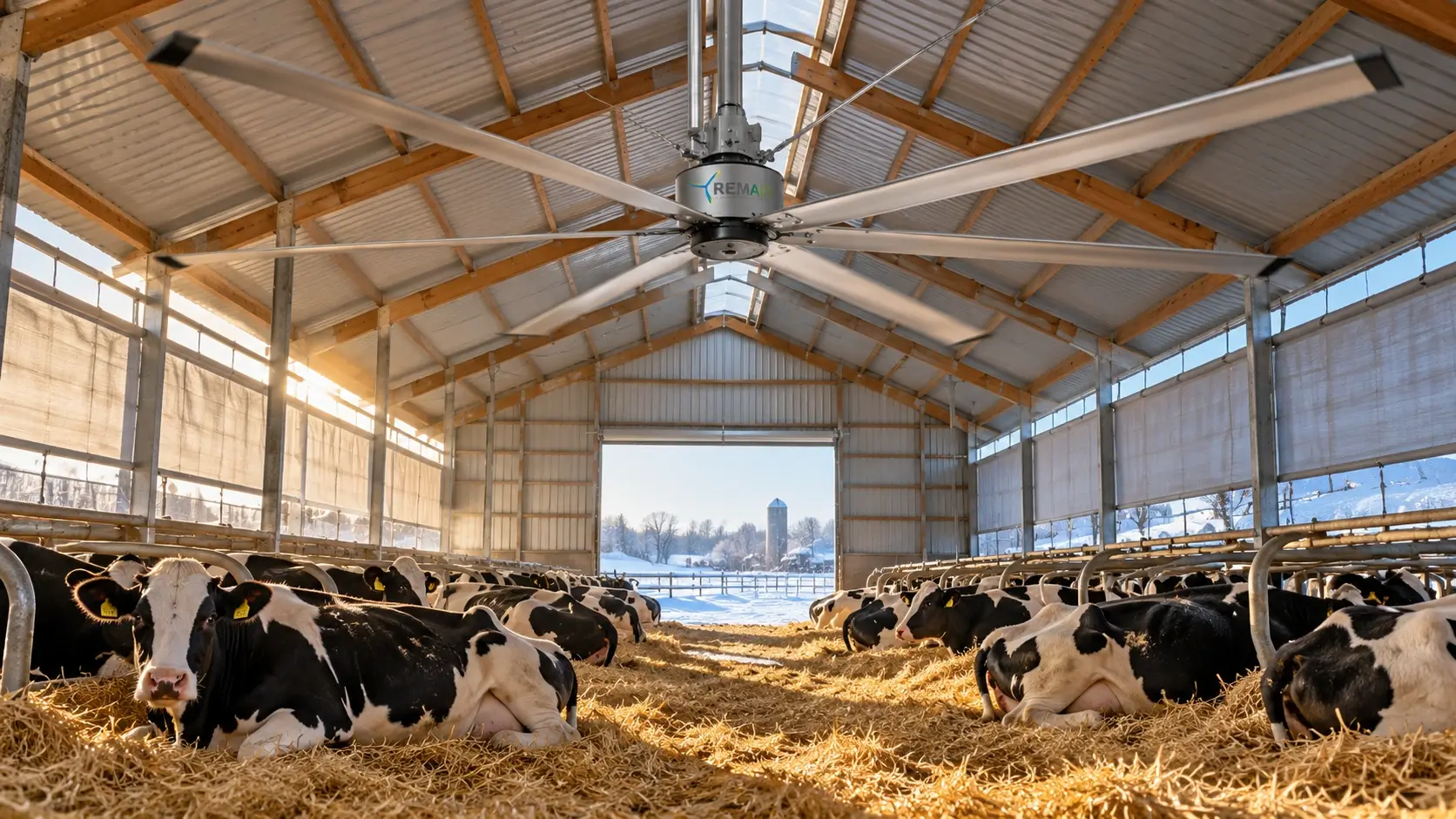
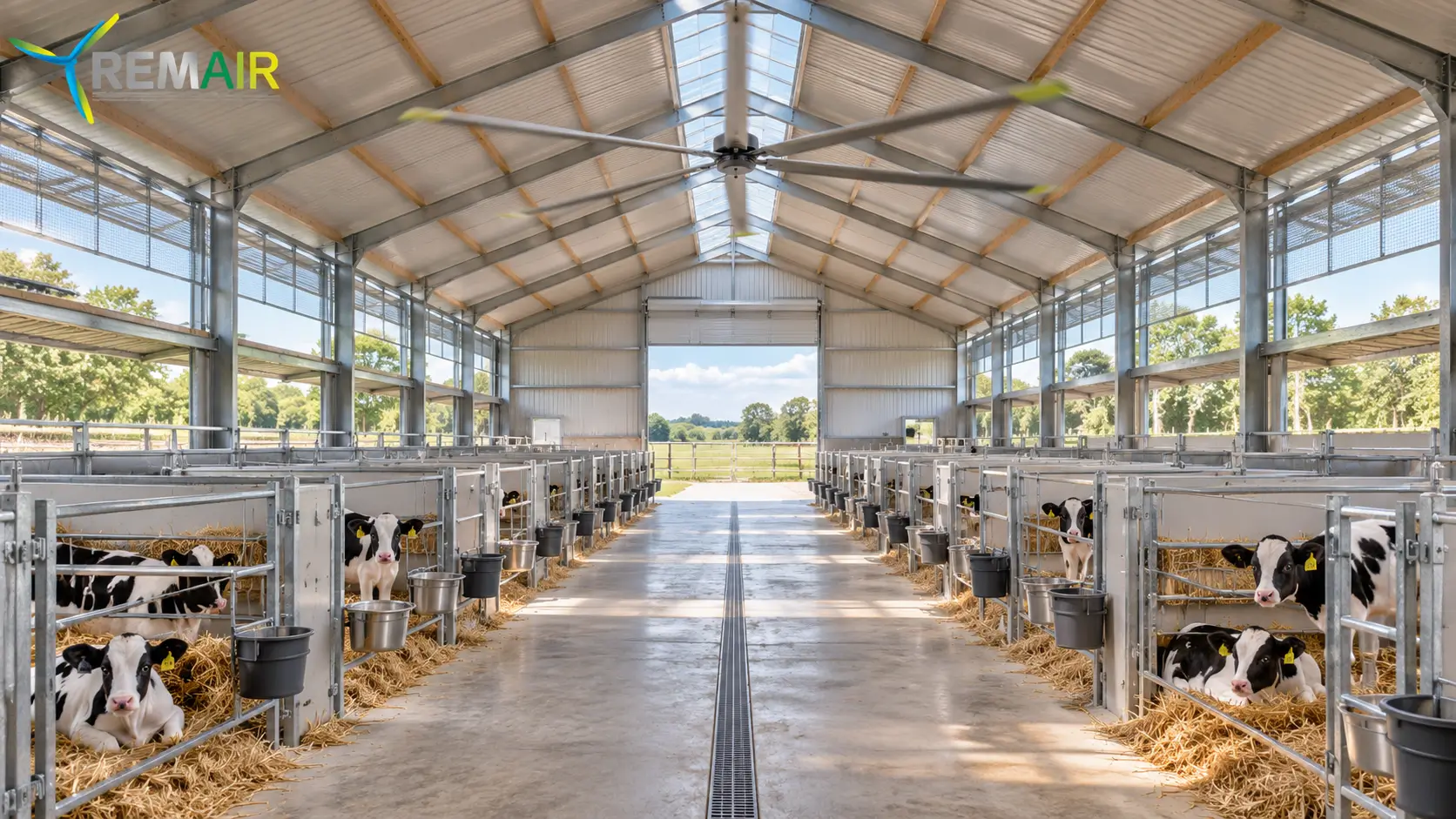
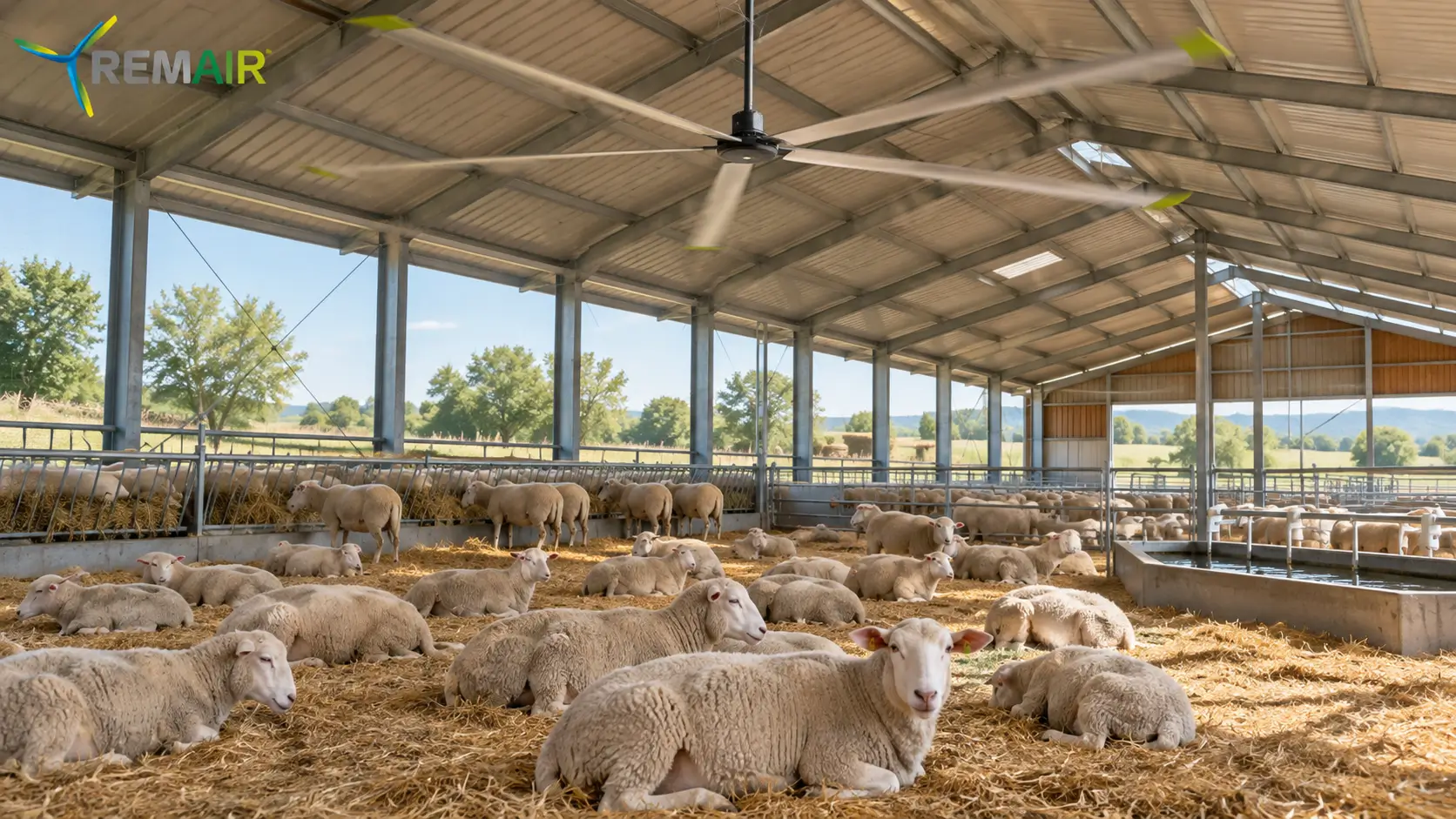
The mechanical solution that delivers the most efficient results in horse stables is large-diameter helicopter fans operating at low speed. These fans are produced in diameters of up to 4 to 7 meters and rotate at 40 to 70 revolutions per minute, sending a soft column of air over a wide area. Unlike the harsh, noisy airflow created by small high-speed fans, they do not cause discomfort for horses.
The most notable advantage of a helicopter fan is that a single unit can cover an area of 800 to 1,500 square meters. Covering the same area with conventional wall-mounted fans requires many units, multiplying both electricity consumption and maintenance workload. For appropriate capacity calculations, you can adapt the approach in our article how many HVLS fans are needed for a 1000 m² area to your stable dimensions.
Quiet operation is another important benefit for horses. High-decibel fans can keep the animal in a constant state of alert. Low-speed fans, on the other hand, produce a barely noticeable background hum and horses become accustomed to it quickly. You can find technical details of our product family on the helicopter fans page.
Planning Stall Layout and Fan Placement
Where the fan is installed is just as important as selecting the fan itself. In horse stables, stalls are usually arranged on both sides of a corridor, so airflow needs to be designed along the corridor. When fans are placed on the corridor axis between stall doors, air is distributed evenly to the compartments on both sides.
Installation height is generally kept between 4 and 6 meters above the floor. Below this range, the airflow strikes the horse’s back too strongly; above it, the flow reaching the ground becomes weak. If roof height is limited, reducing fan diameter and increasing the number of units is a better choice.
The distance between two fans is calculated at approximately 2.5 times the fan diameter. If this spacing is not maintained, the fans interfere with each other’s airflow and a dead zone forms between the two units. In long, narrow stables, positioning fans in the same direction creates a single airflow moving along the corridor and improves efficiency.
What Should Be Done for Moisture and Ammonia Control
Ventilation alone is not a magic wand. If bedding management is poor, even the most powerful fan cannot prevent ammonia at its source. Removing wet bedding daily, frequently cleaning areas where urine accumulates and using highly absorbent materials directly reduces the chemical load.
Floor construction is also part of this equation. An impermeable, slightly sloped floor directed toward a drainage channel prevents urine from pooling in the bedding. For details on floor construction, we recommend reviewing our content on how a barn floor should be designed .
Roof insulation should also be reviewed in stables with condensation problems. Under an uninsulated metal roof, warm humid air meets the cold surface and water droplets fall onto the animals. We explained in detail how to prevent this in our article on how to prevent condensation in barns .
Ventilation Settings by Season
In summer, the aim is to reduce heat load. Horses begin to show signs of heat stress above 25°C. During this period, fans are operated close to full capacity, side openings are fully opened and air speed is increased to 1.5 to 2 meters per second. Reducing capacity in the early morning and evening both saves energy and prevents unnecessary airflow.
In winter, the target changes. The priority is no longer cooling, but removing moisture and gases. Fans are operated intermittently at their lowest speed. The reverse-rotation feature available on some models can also reduce heating costs by bringing warm air accumulated at the ceiling down to animal level.
During transitional seasons, the temperature difference within a single day can be very high. Operating at a fixed setting is inefficient in a stable that is 8°C in the morning and 24°C at noon. A speed controller or automation connected to temperature and humidity sensors manages these fluctuations without burdening the operator.
Points to Consider in a Horse-Stable Ventilation Project
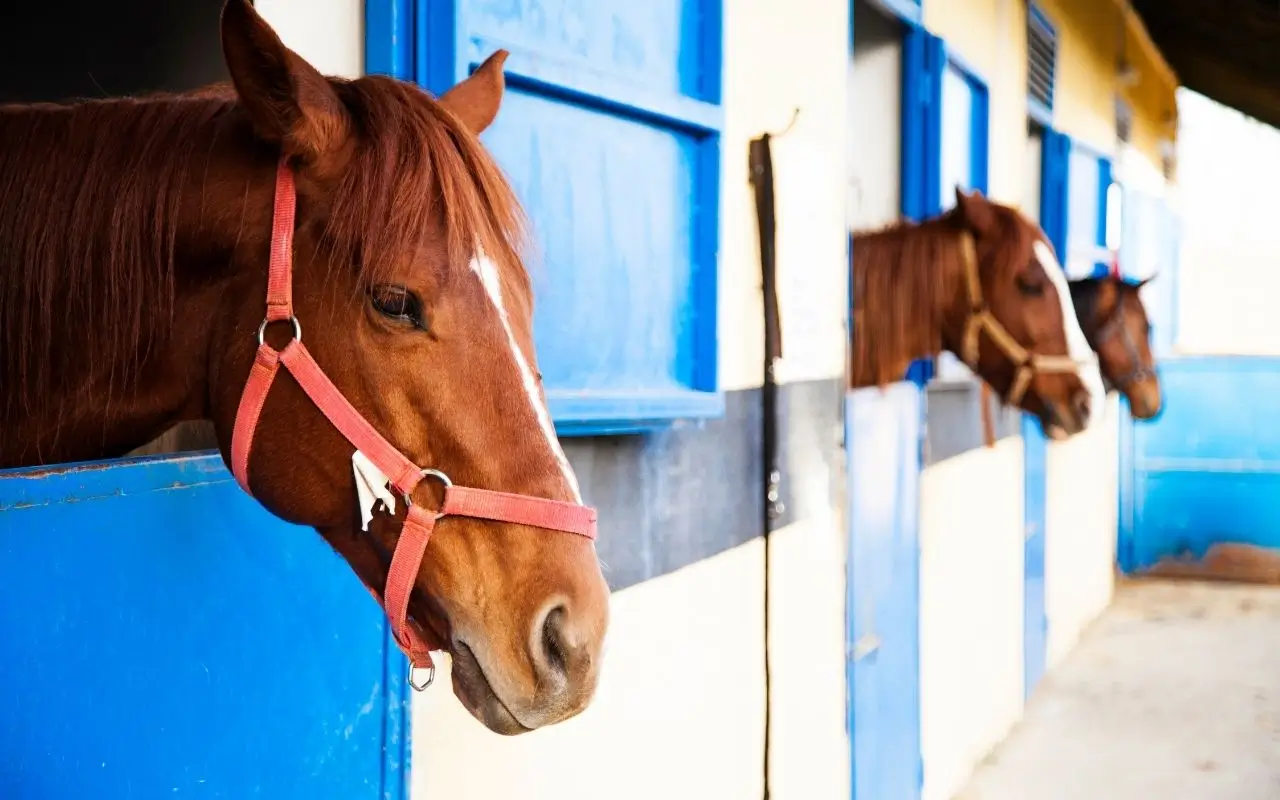
Selecting equipment without taking on-site measurements before starting a project is one of the most common mistakes. The following points must be evaluated during the planning stage.
- Stable volume and number of stalls: Calculations should be based on cubic meters, including ceiling height, rather than square meters alone.
- Roof height and truss structure: The load-bearing capacity and vibration resistance of the fan suspension point should be checked in advance.
- Location of existing openings: In a stable with no fresh-air inlet, a fan only recirculates the same polluted air.
- Prevailing wind direction: A layout that works with natural airflow significantly reduces the load on the mechanical system.
- Electrical infrastructure: Cable cross-sections and protective equipment suitable for the number of fans should be prepared before installation.
- Maintenance access: Ensuring that fans are accessible for cleaning and inspection reduces downtime in the long term.
In short, horse-stable ventilation is a complete system that succeeds when accurate measurement, suitable fan selection and regular maintenance come together. You can review the applications we have implemented in different building types on our application areas page and contact our team for a solution tailored to your own stable.
Frequently Asked Questions About Horse-Stable Ventilation
Can noisy fans and high airflow cause stress or behavioral problems in horses?
Yes. Horses are extremely sensitive both audibly and visually. Small fans operating at high decibel levels and strong air currents striking their backs directly can keep horses in a constant state of alert, cause restlessness and lead to feed refusal. For this reason, low-speed, brushless-motor and quiet HVLS helicopter fans should be preferred.
Can operating stable ventilation in winter cause horses to get cold and become ill?
No. Horses have a relatively high tolerance for cold; the factors that make them ill are primarily high humidity, ammonia and organic dust accumulating indoors rather than cold itself. In winter, fans are operated at very low speed to remove only the polluted air and moisture accumulated near the ceiling without creating drafts, thereby helping prevent respiratory infections.
What should be considered when using ventilation fans in foaling stalls for pregnant mares and mares with foals?
Because newborn foals have not yet fully developed their immune systems and body-temperature regulation mechanisms, they are extremely sensitive to airflow. In foaling stalls, fan placement should be designed so that air is not blown directly onto the foal, but instead provides very slow circulation from above or operates with proportional speed-controlled sensors.
Can running a ventilation fan alone completely eliminate ammonia odor in the stable?
No. Fans prevent ammonia gas from accumulating at the horse’s breathing level and help exhaust it outdoors, but the source of ammonia is wet bedding and urine. For complete effectiveness, regular bedding cleaning, proper floor drainage and mechanical ventilation must be applied together.
How often should stable ventilation fan blades be cleaned and maintained?
In horse stables, hay, wood-shaving dust and high humidity can combine to form layers on fan blades. To prevent imbalance and motor strain, fan blades and the motor housing should be cleaned of dust at least every 3 to 6 months using damp cloths that reduce static buildup.
When selecting a ventilation fan for an existing stable, does the electrical infrastructure need to be single-phase or three-phase?
Large-diameter industrial helicopter fans generally operate more efficiently with three-phase electrical infrastructure. However, for facilities with single-phase 220V electrical supply, models with integrated drives or inverters can provide the necessary power conversion and allow installation without changing the existing electrical system.

Leave a Comment